Samsung Shares Surge as Tentative Wage Deal Suspends 18-Day Strike
Shares climbed up to 6.5% in morning trade as the benchmark KOSPI index rose 5.3%, though analysts warn higher labour costs may pressure future operating profits.
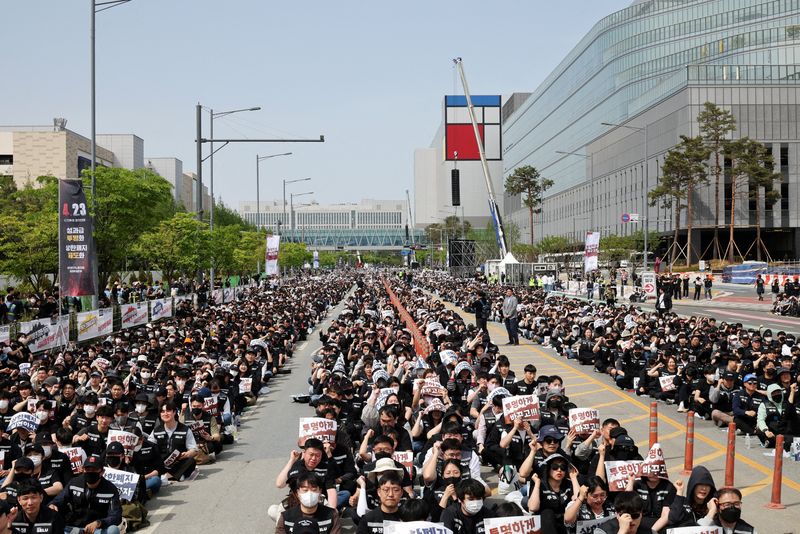
Samsung Electronics shares rose as much as 6.5% in morning trade on Thursday after the company and its South Korean union reached a tentative pay deal, potentially averting an 18-day strike by nearly 48,000 members. The agreement suspends the planned industrial action while the deal is put to a vote between May 22 and 27. The benchmark KOSPI index rose 5.3% as of 0030 GMT, reflecting investor relief at the easing of uncertainty surrounding the prospect of a strike that had threatened to hit the economy and undermine global chip supply chains.
Ryu Young-ho, a senior analyst at NH Investment & Securities, noted that investors were relieved that uncertainty had eased, though he cautioned that the agreement was not entirely positive for market participants. Ryu stated that Samsung would likely need to set aside provisions tied to higher labour costs, which could weigh on operating profit. The company’s proposal to pay performance bonuses primarily in company stock rather than cash appeared to reflect management’s preference, as stock-based compensation could lower the immediate financial burden on the company.
The two sides had been at odds over how performance bonuses would be distributed between the conglomerate’s hugely profitable memory business and its loss-making logic chip businesses. The union had previously demanded a larger share of bonuses distributed equally among all staff, differing from the company’s unit-based approach. The average annual bonus is approximately $340,000, with a worker earning a $50,000 base salary potentially eligible for a total bonus of $416,000 under the new terms.
Payouts under this agreement remain slightly lower than those offered by local competitor SK Hynix, which allows bonuses to be issued in either shares or cash. The resolution comes as Samsung recently achieved a $1 trillion valuation, with profits increasing eightfold largely due to memory chip sales driven by the artificial intelligence industry boom. The company accounts for approximately a quarter of South Korea’s exports.
The final terms of the wage deal are contingent on the outcome of the union vote scheduled between May 22 and 27. While the broader market context included US stock markets rising during a summit between US President Donald Trump and Chinese President Xi Jinping, the immediate focus for Samsung investors remains the finalisation of labour cost provisions and their impact on future earnings.