Saban warns Senate college sports bill vital to preserve non-revenue athletics
Nick Saban tells lawmakers unchecked financial competition threatens scholarships and Olympic sports, urging passage of the Protect College Sports Act despite significant legislative opposition.
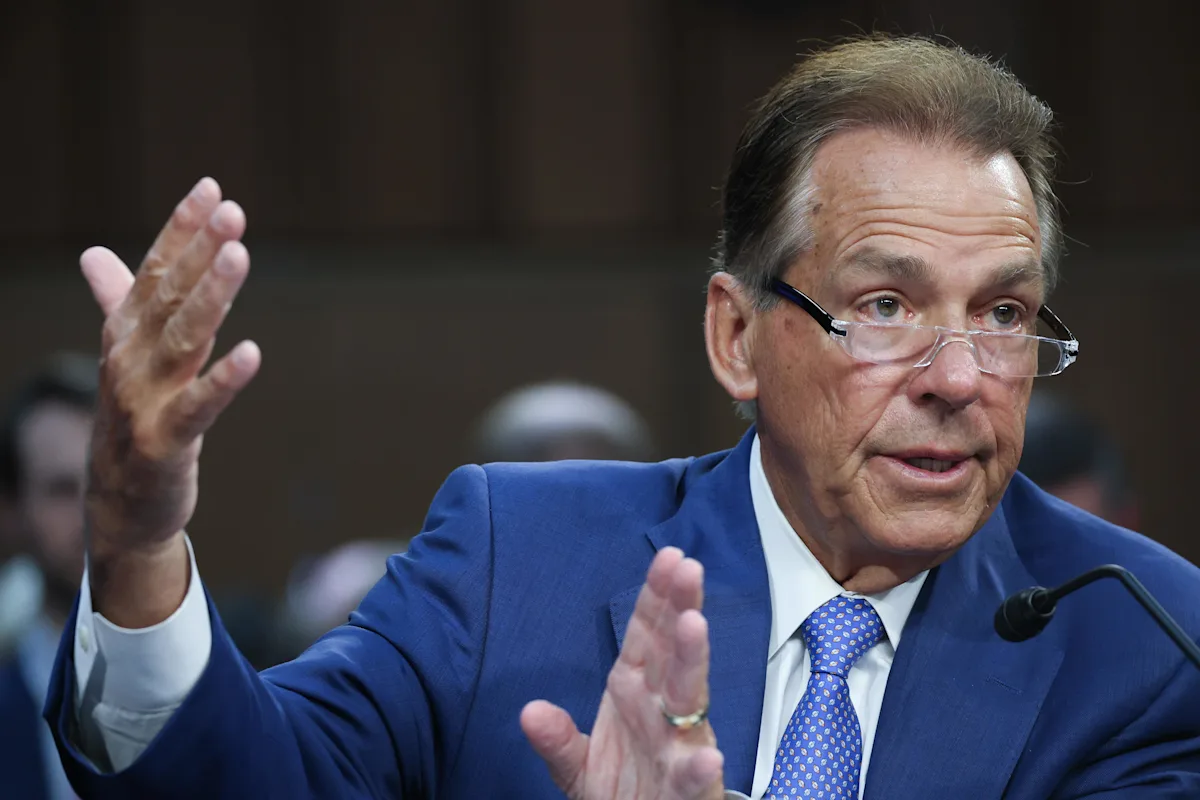
Former Alabama head coach Nick Saban testified before the US Senate on Thursday, advocating for the Protect College Sports Act, legislation designed to grant the National Collegiate Athletic Association (NCAA) an antitrust exemption. Co-sponsored by Senators Ted Cruz and Maria Cantwell, the bill seeks to codify rules regarding athlete transfers, eligibility caps, and coaching poaching, which have faced legal challenges in recent years.
The proposed legislation would limit athletes to one penalty-free transfer, cap eligibility at five years, prohibit former professional athletes from competing in college, and ban schools from recruiting coaches during their sport’s season. Cruz referred to the latter provision as the “Lane Kiffin rule,” referencing the controversial hiring of Kiffin by LSU from Ole Miss in November.
During his testimony, Saban highlighted the rapid escalation of financial costs in college athletics, presenting specific data from his tenure at Alabama. He noted that collective roster spending rose from $2.7 million in his first year to $7 million the following season, reaching $10 million in his final season in 2023. By the subsequent year, costs had climbed to $17 million, with projections for the 2025 season estimating $24 million.
Saban warned that current roster costs are approaching $40 million, a trajectory he argued jeopardises the viability of non-revenue Olympic sports and scholarships. He stated that without regulation, the financial model would prioritise football and basketball, leaving other sports as club-level activities without scholarship support. “The pie is sufficient, we just have to determine the size of each slice,” Saban said, emphasising the need to balance revenue generation with broader athletic support.
The bill faces substantial opposition and uncertainty regarding its passage. Senator Bernie Moreno expressed “grave concerns,” particularly regarding the legislation’s failure to address issues surrounding biological women in sports, a topic previously handled by executive orders. Senator Tommy Tuberville indicated that changes would be necessary for his support, while House Republican leadership had previously worked on a separate SCORE Act that faced unanimous opposition from the Congressional Black Caucus.
Despite the legislative hurdles, Saban maintained his support for the bill, acknowledging it was not perfect and required adjustments. The testimony occurred amid broader discussions on college sports regulation, with President Donald Trump yet to comment publicly on the Protect College Sports Act. The outcome remains uncertain as lawmakers navigate the complex intersection of financial sustainability and athletic governance.