Russell’s Canadian Grand Prix retirement underscores 2026 F1 power unit fragility
George Russell’s battery failure at the Canadian Grand Prix highlights a sharp contrast to the mechanical stability of the previous hybrid decade, with teams struggling to agree on technical adjustments.
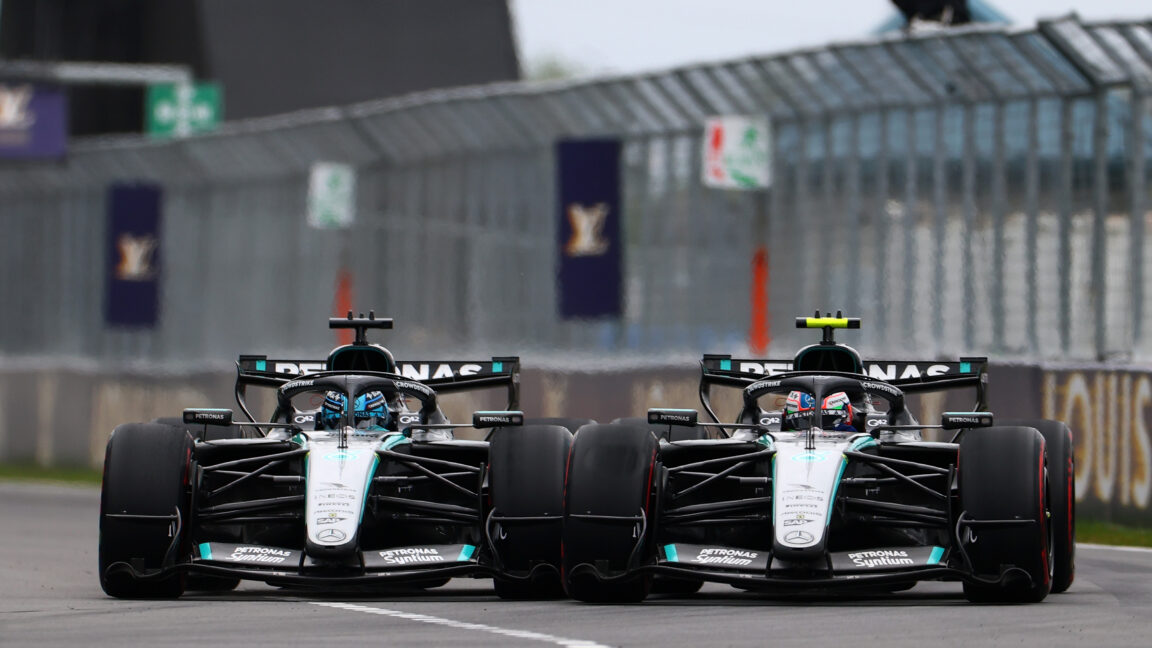
George Russell’s retirement from the 2026 Canadian Grand Prix on lap 30 has brought into sharp focus the reliability challenges plaguing the new Formula One power units. The Mercedes driver was leading the race when a catastrophic battery failure ended his weekend, a result that underscores a significant departure from the mechanical stability characterised by the 2017–2025 hybrid era. While Russell’s exit was immediate, the incident reflects broader systemic issues affecting the grid as teams grapple with the complexities of the new regulations.
The current landscape stands in stark contrast to the previous decade, which was defined by hyper-stable power units. Historically, reliability was far more precarious; in the 2000s, drivers faced a roughly 40 per cent chance of retirement due to mechanical failure. Even in the early years of the hybrid era, such as 2014, retirements were common. The recent period of stability was an outlier, aided by practices such as nightly car teardowns and strict engine longevity rules that are no longer in effect. The 2026 cars, now left parked overnight with mechanics off-site, are facing the growing pains of entirely new hardware.
The technical shift involves replacing the electronic MGU-H turbochargers with conventional units and introducing new MGU-K and lithium-ion battery designs. These components are engineered to deliver increased power and energy, but they have proven fragile. A critical operational constraint is that the battery holds enough energy for only a fraction of a lap, requiring power to be diverted from the V6 engine to recharge it. This dynamic has altered racing strategies, particularly in qualifying, where drivers can no longer simply flat-out the entire lap without managing energy distribution.
Efforts to resolve these issues have stalled due to a deadlock among manufacturers regarding potential rule changes. A proposal to adjust the power split between the V6 engine and the MGU-K from 53:47 to 60:40 was supported by Mercedes and Red Bull but rejected by Ferrari, Audi, Honda, and Cadillac. Ferrari opposes the change, fearing it would widen the performance gap to Mercedes. Instead, Ferrari is leveraging the Additional Development and Upgrade Opportunities (ADUO) process, which allows underperforming teams to make upgrades, to catch up under the current regulations.
The human cost of these technical disputes is evident in the championship standings. Kimi Antonelli, a 19-year-old Italian sophomore, has won four consecutive races and leads Russell by 43 points. Russell’s retirement in Canada, where he threw his neck surround onto the track in disgust, highlights the precarious nature of his position. With only five races completed, the season remains open, but the fragility of the current cars suggests that finishing races will remain the primary challenge for competitors heading into the Monaco Grand Prix.
