Roscosmos turns to space advertising as sanctions bite
With Western sanctions eroding international contracts and launch numbers hitting a 60-year low, Russia’s space agency is seeking private investment through on-rocket advertising, though revenues are expected to fall short of covering the $2.5 billion in losses.
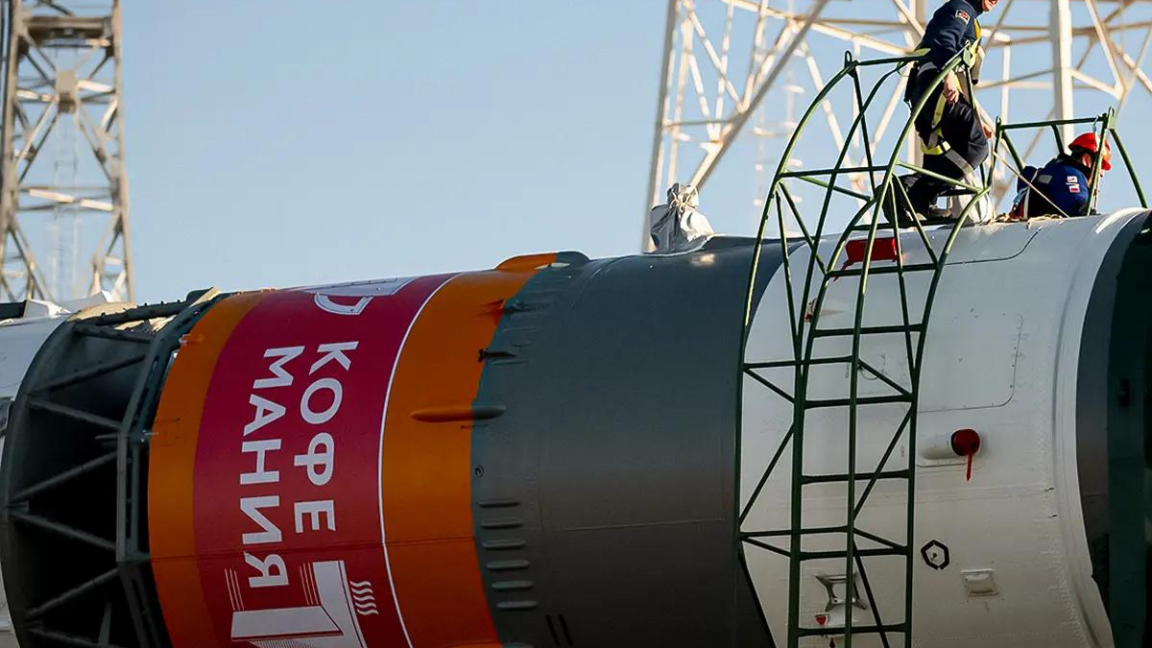
Russia has formally integrated commercial advertising into its space operations, with legal amendments allowing the state-owned space corporation Roscosmos to place branding on rockets and spacecraft from 1 January 2026. The move, approved by President Vladimir Putin last autumn, is designed to attract private investment and alleviate pressure on the state budget as the agency grapples with the financial fallout of Western sanctions.
The Russian business newspaper Vedomosti reported that six large advertisements have already been placed on Russian rockets in 2026. The campaign features brands including PSB Bank, the Kofemaniya restaurant chain, the Russian Media Group, and the Russian Olympic Committee, alongside two public service announcements. While space advertising has historical precedent, such as Pepsi’s 1990s campaign and Pizza Hut’s 2000 logo placement on a Proton vehicle, this marks the first time the practice has been codified into official Russian space policy.
The initiative comes against a backdrop of severe economic contraction and isolation. Sweden’s foreign minister, Maria Malmer Stenergard, recently noted that the Russian economy has likely shrunk over the past five years and is now smaller than that of Texas. International sanctions imposed since February 2022 have cost Russia an estimated $450 billion, with defence spending consuming a post-Soviet record of approximately 7 percent of government expenditure.
For Roscosmos, the impact has been particularly acute. The loss of key international partners, including the European Space Agency and various commercial customers, has halted purchases of Soyuz and Proton launch services. The agency has suffered an estimated $2.5 billion in losses due to these sanctions. Despite the new advertising revenue stream, industry sources suggest annual earnings will amount to only a few million dollars, a fraction of the capital required to offset the shortfall.
Operational metrics further highlight the decline of the Russian launch industry. In both 2024 and 2025, the total number of Russian launches fell to 17 annually, the lowest figure since 1961, excluding the pandemic year of 2020. At its peak in the early 1980s, Russia regularly conducted 100 orbital launches per year. To conserve resources, the agency has also extended human spaceflight missions to the International Space Station from six to eight months, reducing the frequency of Soyuz spacecraft usage.
