Rivian CEO warns R2 SUV success is existential for company’s business model
With the new R2 electric SUV critical to scaling operations, Rivian’s leadership details its in-house autonomous driving roadmap and deepening ties with Volkswagen Group.
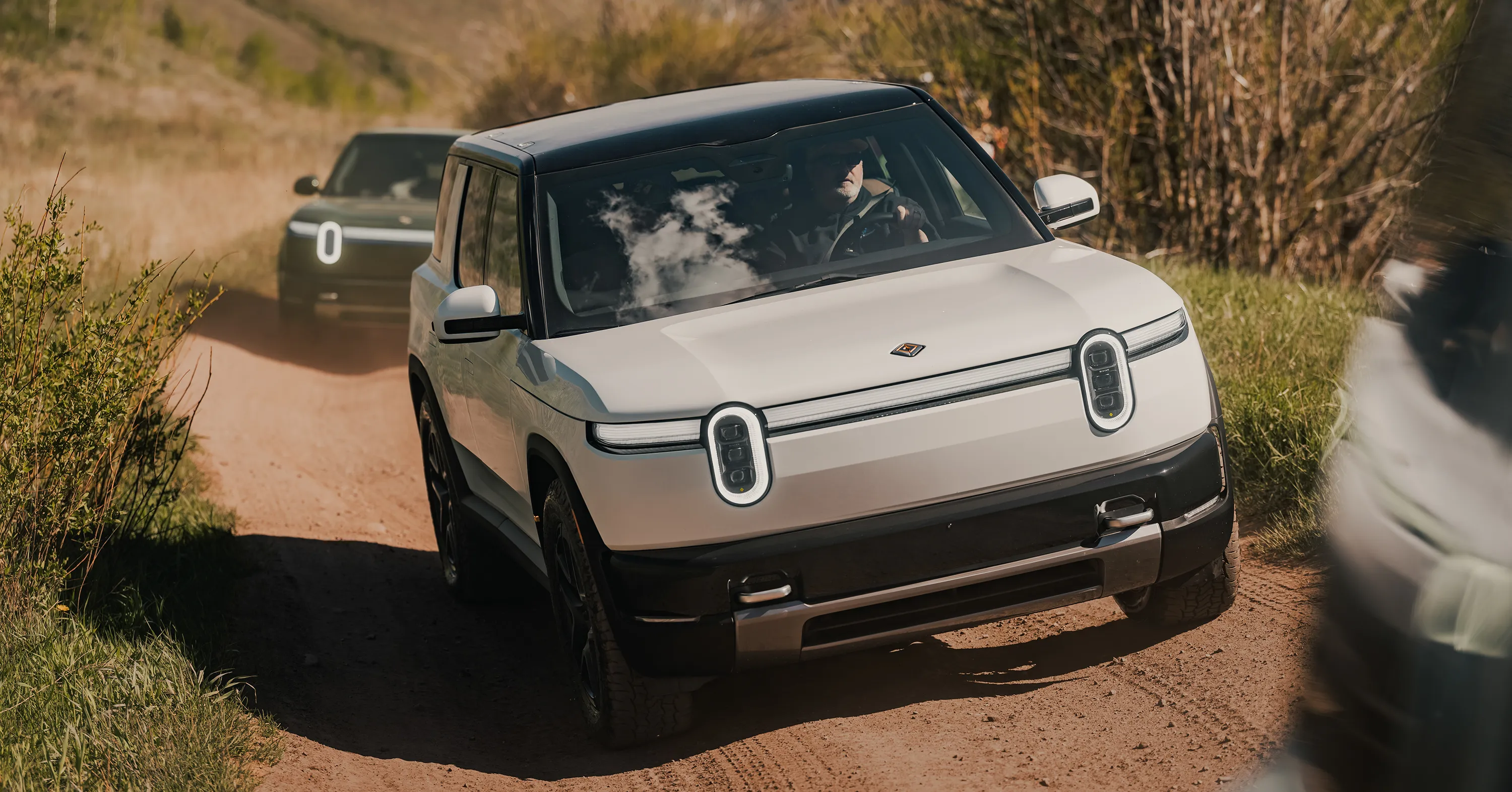
Rivian Automotive has reported a net loss of $3.6 billion for 2025, adding to nearly $25 billion consumed over the past eight years. CEO RJ Scaringe has stated that the company’s long-term viability and current operational structure depend entirely on the commercial success of its upcoming R2 electric SUV. Scaringe warned that if the R2 fails to achieve high-volume sales, the company would be forced to significantly reconfigure its business, as its current vertically integrated model would be financially unsustainable at lower production levels.
Since the launch of its first vehicle, the R1, in 2021, Rivian has sold 175,000 units, a stark contrast to Tesla’s 8 million sales over the same period. To support the anticipated scale of the R2, Rivian has expanded its manufacturing footprint. The existing facility in Normal, Illinois, has a capacity of 155,000 units, while construction is underway for a new plant in Georgia. The initial phase of the Georgia facility has been increased to 300,000 units to accommodate the R2 and potential future variants, with production targeted to begin by the end of 2028.
Scaringe also detailed Rivian’s autonomous driving technology roadmap, confirming that the initial R2 launch will feature Gen 2.5 software. This version utilises the company’s large driving model but lacks the hardware for unsupervised Level 3 autonomy. A more advanced Gen 3 system, expected later, will incorporate in-house silicon delivering 1,600 trillion operations per second, a fourfold increase over current Nvidia-based solutions, and will include lidar for enhanced perception capabilities.
To mitigate competitive pressures from Chinese manufacturers such as BYD and Xiaomi, Rivian has deepened its partnership with Volkswagen Group. Following a 2024 commitment of up to $5.8 billion for a joint venture on software and electrical architecture, Rivian’s technology will be deployed in the Volkswagen ID.1, a low-cost European EV. This collaboration allows Rivian to test its tech stack against Chinese competitors in a market where Western brands are struggling on cost.
The company has also attracted significant investment from Uber, which announced in 2024 an investment of up to $1.25 billion for autonomous robotaxis. Despite the financial headwinds, Scaringe remains focused on the R2 as the cornerstone of Rivian’s strategy, noting that the company’s extensive in-house engineering and distribution networks were built with the intention of scaling to a large-volume manufacturer.
