Rio Tinto secures $2.5bn government deal to decarbonise Tomago aluminium smelter
The agreement, announced by Prime Minister Anthony Albanese and NSW Premier Chris Minns, provides a 10-year below-market power guarantee from December 2028, aiming to cut emissions by 7.1 million tonnes annually.
Rio Tinto has secured a $2.5 billion subsidy arrangement with the Australian federal and New South Wales governments to prevent the potential closure of the Tomago aluminium smelter. The agreement features a 10-year below-market power supply guarantee commencing in December 2028, following the expiry of the smelter’s existing coal-focused electricity contract with AGL. This transition ensures the facility operates entirely on renewable energy by 2033, aiming to reduce annual greenhouse gas emissions by 7.1 million tonnes. The deal underpins approximately 3,000 megawatts of new renewable and firming capacity across New South Wales, including wind and solar projects backed by batteries.
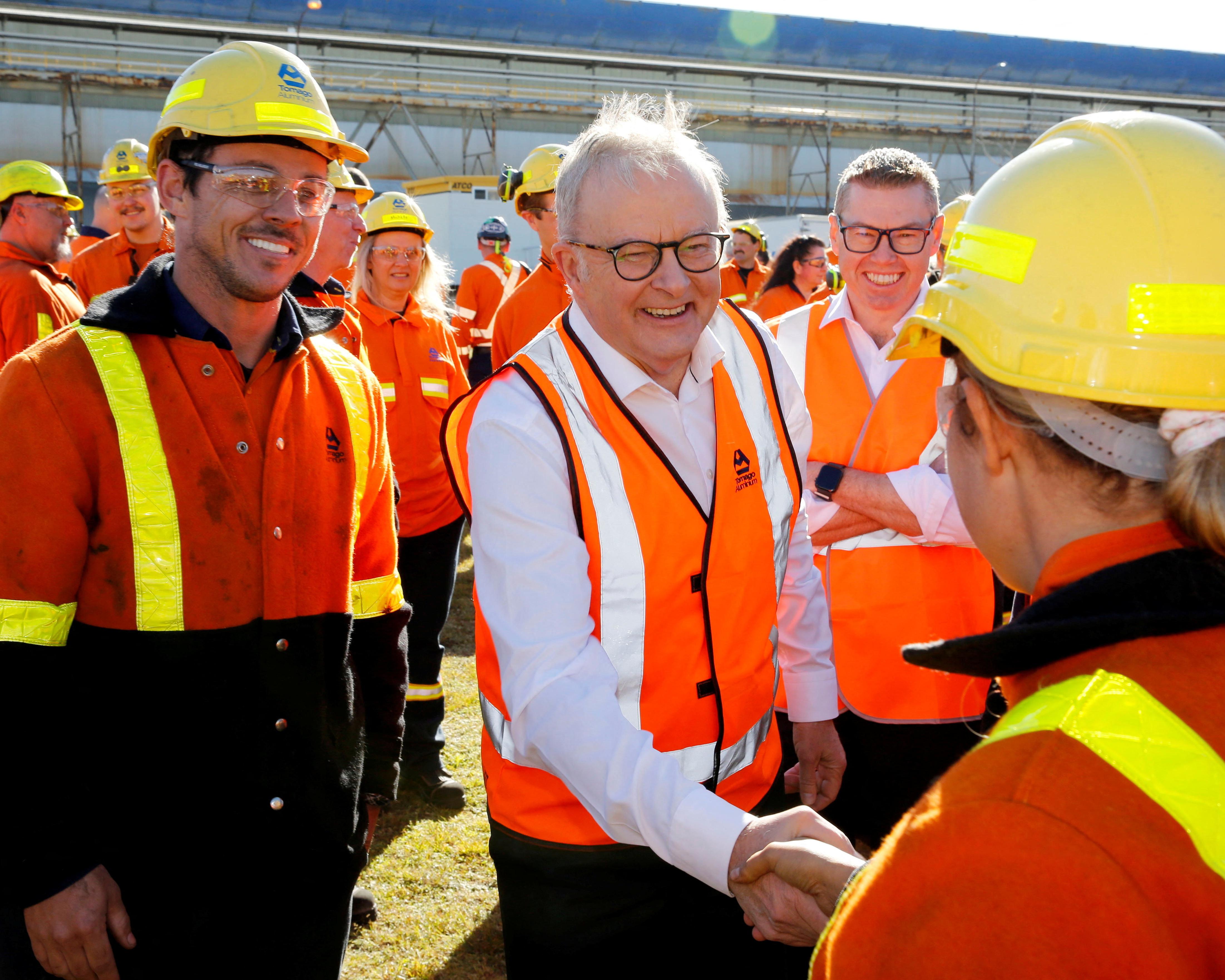
Federal Prime Minister Anthony Albanese and NSW Premier Chris Minns announced the deal at the Tomago smelter near Newcastle on Thursday. Federal Climate Change and Energy Minister Chris Bowen confirmed the arrangement involves government agencies, the Clean Energy Finance Corporation, and Snowy Hydro to facilitate final investment decisions for renewable projects. Bowen noted that the renewable energy developments would be spread predominantly throughout New South Wales rather than being confined to the Hunter Valley, targeting projects that have received environmental approval but have not yet reached a final investment decision.
Rio Tinto Aluminium and Lithium chief executive Jérôme Pécresse stated the smelter has a pathway to long-term, cost-competitive, low-carbon power. As part of the agreement, Rio Tinto has committed to investing $1.1 billion in the Tomago facility over the next 12 years, including $100 million specifically allocated for decarbonisation activities. The smelter, which directly employs about 1,000 people and indirectly supports approximately 5,000 more, is Australia’s largest single electricity user, consuming more than 10% of total generation in New South Wales.
The agreement follows a series of bailout packages by the Albanese government designed to keep major industries operating, including $2 billion for Rio Tinto’s Boyne aluminium smelter in Queensland and $2.4 billion for steelworks in Whyalla, South Australia. Aluminium production is particularly vulnerable to rising power prices due to its intensive electricity requirements, and the Australian industry has historically relied on cheap long-term supply deals.
Political reaction to the deal was mixed. Federal opposition leader Angus Taylor characterised the cost as a $2.5 billion admission of failure on energy policy, blaming Labor’s net zero targets for pushing up electricity prices. Conversely, independent MP Nicolette Boele attributed the cost to a decade of inaction by successive governments, arguing that Australia should be leveraging its superior sun and wind resources rather than buying its way out of a power shortage. Greens senator Penny Allman-Payne argued the government should have taken a stake in the smelter to ensure Australians share in the wealth from their resources.