Researchers engineer E. coli to function with a 19-amino-acid genetic code
By leveraging artificial intelligence to redesign ribosomal proteins, a team from Columbia and Harvard has created a bacterial strain that survives and reproduces without one of the 20 standard amino acids.
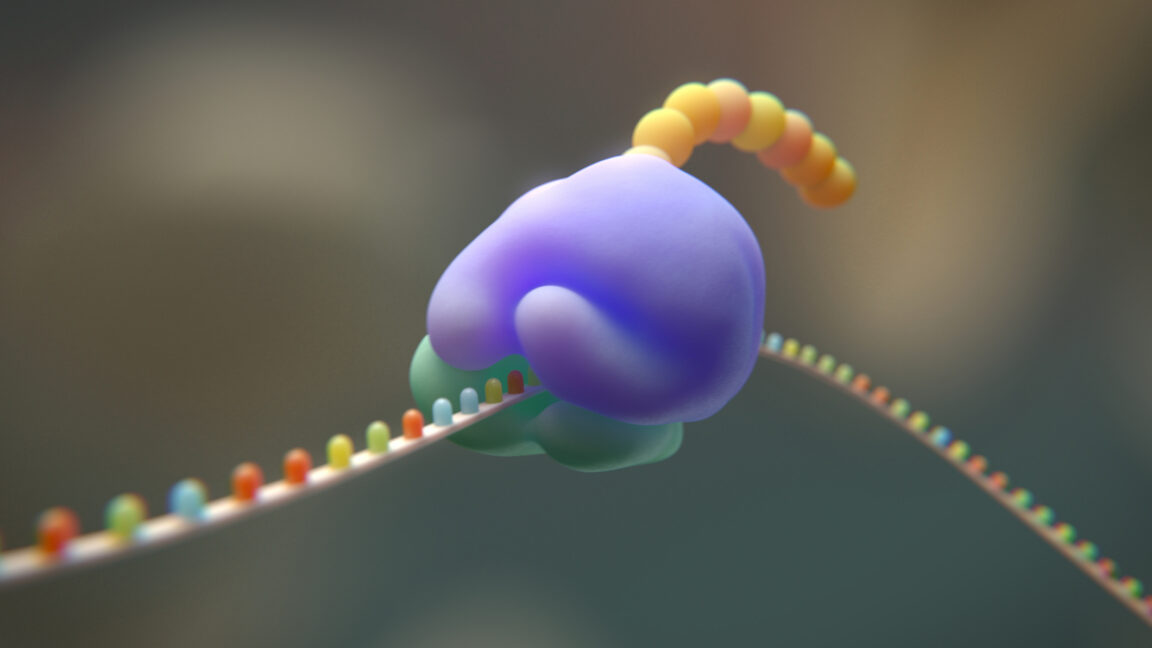
Researchers from Columbia University and Harvard University have successfully engineered a strain of E. coli that operates with a reduced genetic code containing only 19 amino acids. In a significant departure from the standard biological norm, the team eliminated the requirement for the amino acid isoleucine by substituting it with valine. This achievement demonstrates that life can function with a simplified genetic system, challenging the long-held view that the 20-amino-acid code is immutable.
To achieve this, the team utilised deep-learning software and AlphaFold 2 to redesign 21 ribosomal proteins within the small subunit of the ribosome. The ribosome acts as a stringent test for genetic modifications because it must translate genetic information into proteins while interacting with mRNA, tRNA, and other cellular components. The researchers identified the protein rplW as a critical bottleneck, requiring specific deletions and brute-forced alternative combinations to ensure functionality in the absence of isoleucine.
The modified bacteria maintain their new genetic configuration over 400 generations without reverting to the original amino acid requirement. However, the trade-off for this genetic simplification is a reduction in metabolic efficiency. The engineered cells grow at approximately 60 per cent of the rate of standard, unmodified E. coli. Despite this slower growth, the strain remains stable, with none of the accumulated mutations restoring the need for isoleucine in the ribosomal proteins.
This project marks a shift in the field, moving away from previous attempts to alter the genetic code by adding new amino acids to focus on removing existing ones. The study highlights the growing capability of AI tools to solve protein design problems that were previously considered intractable. While the feat was achieved in a couple of years, the complexity of the cellular environment presents significant challenges for future modifications involving other large protein complexes.
A notable aspect of the research is the opacity of the decision-making processes within the AI models used. The software made suggestions that most biologists might have shied away from, such as replacing structurally flexible isoleucine with charged or rigid amino acids. While the results show that functional proteins can be designed, the models cannot fully explain the reasoning behind their outputs, leaving researchers to interpret the neural networks inside the software themselves.
Ultimately, the study serves as a reminder that while current AI packages are powerful tools for creating things that would otherwise not be possible, they do not yet provide complete insight into biological phenomena. The researchers acknowledge that the revised ribosome may be less accurate or catalytically slower, acting as a bottleneck for cell growth. Further experimentation will be required to determine if the strain can evolve to regain its speed or if this remains a permanent trade-off for a reduced genetic vocabulary.
