Red Sox pinch-hitting unit eclipses starting roster in offensive output for 2026 campaign
Collective pinch hitters achieve a .318 batting average and .875 OPS, surpassing the team's best individual hitter
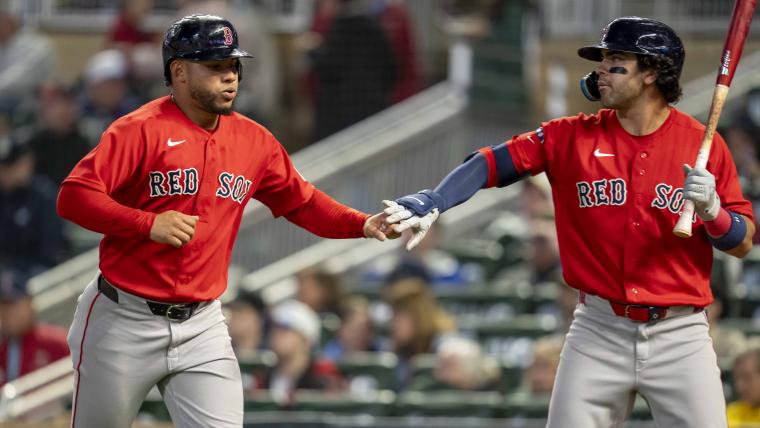
The Boston Red Sox are enduring a disastrous 2026 season, characterised by a depleted pitching staff and a lacklustre offensive display from their regular starters. Despite these significant struggles, a specific facet of the team's batting order has emerged as the most productive unit on the roster. The collective group of pinch hitters has recorded a .318 batting average and an .875 on-base plus slugging percentage, figures that exceed the statistics of any individual player in the starting lineup.
This statistical inversion highlights the severity of the team's offensive crisis. The .875 OPS achieved by the pinch-hitting subgroup surpasses the output of Willson Contreras, who holds the highest individual OPS on the team at .856. Furthermore, the group's average significantly outpaces that of Wilyer Abreu, who leads the regulars in batting average at .297, while also exceeding the OPS of Masataka Yoshida at .785.
Key contributors to this anomaly include Roman Anthony, Marcelo Mayer, and Masataka Yoshida, who have produced effectively when called upon to pinch-hit. Anthony notably hit a home run in this role, adding to the group's impressive tally. When aggregated, the performance of these specialists is so robust that if they were considered a single individual player, they would hold the highest OPS mark on the entire roster.
The disparity between the Red Sox's specialists and their regulars is stark when viewed against league benchmarks. The league-average OPS for pinch hitters sits at .659, yet the Red Sox group has posted a .875 figure, significantly outpacing this standard. This suggests that the team's management has found a temporary solution to their offensive woes by relying on players who do not occupy regular starting positions.
However, analysts caution that this statistical trend is unlikely to persist as a sustainable strategy. The phenomenon is described as a temporary anomaly rather than a reflection of a balanced team structure. The fact that the team's best offensive output comes from players not in the starting lineup serves as a grim indicator of the overall quality of the Red Sox's main batting order this year.
Ultimately, the 2026 season for Boston is defined by this contradiction. While the pinch hitters have provided a glimmer of hope with their superior production, the reliance on them to outperform the starting lineup underscores the profound difficulties the franchise faces in maintaining a competitive offensive unit amidst widespread injuries and underperformance.