Real Madrid president dismisses sale claims amid election row
The club president argues proposed ownership changes are designed to protect value, not cede control to external investors.
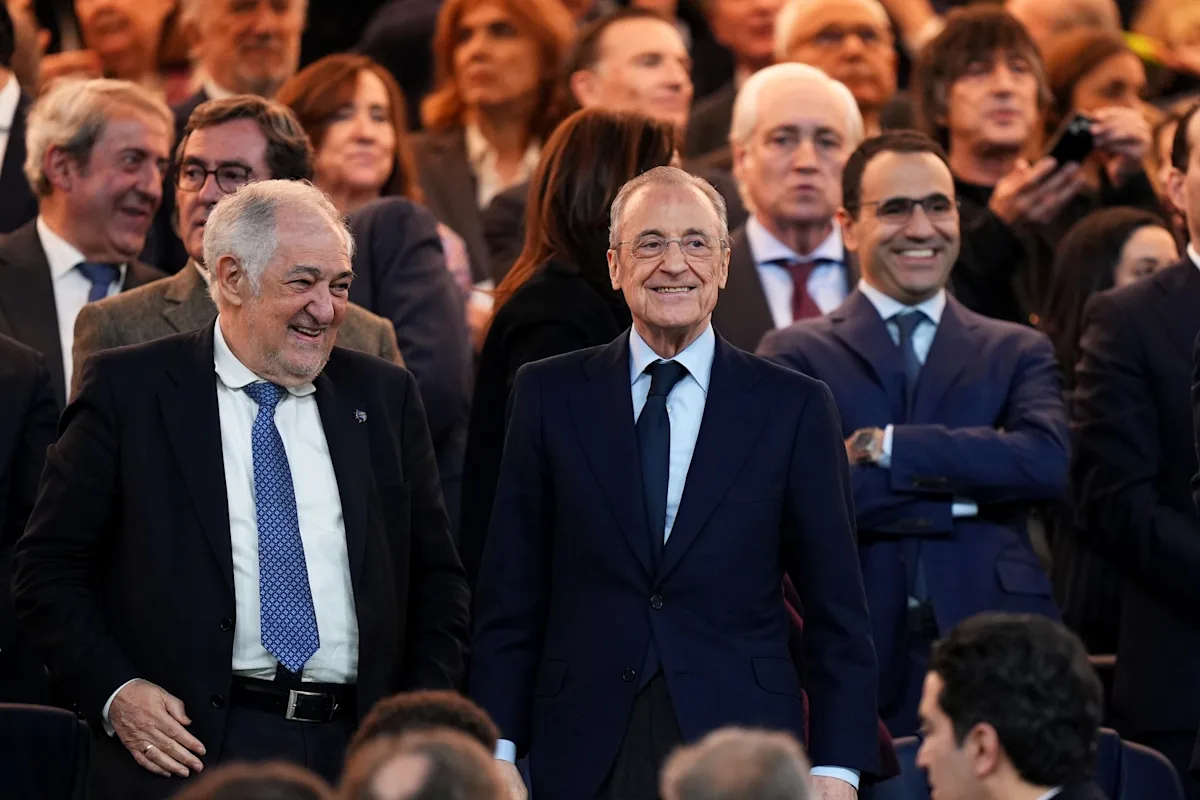
Real Madrid president Florentino Perez has publicly rejected allegations from presidential candidate Enrique Riquelme that the institution is preparing for a future sale or privatisation. Addressing the concerns directly, Perez released a video titled ‘Madrid is not for sale’, asserting that the club will remain member-owned and denying suggestions that its fundamental structure is undergoing a shift.
Perez argued that the proposed ownership framework is intended to safeguard the club’s value and prevent debt, rather than transferring power to external investors. He clarified that under the current model, the club retains its president, Board of Directors, and General Assembly of Delegates, with the latter body continuing to be elected every four years. He stated that any potential investor would be restricted to a maximum 5% stake and would hold no decision-making authority or control over club operations.
The dispute has emerged as a central theme in the ongoing Real Madrid presidential election campaign. Riquelme has made opposition to the alleged privatisation of the club a cornerstone of his campaign, repeatedly warning members about potential risks to the institution’s future. Perez responded to these criticisms by stating that those claiming a change in direction are either misinformed or deliberately misleading supporters.
Explaining the rationale behind the proposed changes, Perez distinguished between the club’s sentimental identity and its economic reality. He noted that while the club belongs to its members in a romantic sense, it currently lacks defined economic ownership. He warned that the existing situation is dangerous, citing his experience upon arriving in 2000, where he found the club vulnerable to an unscrupulous board that could ruin its value and leave members with nothing of economic worth.
To address this, Perez outlined a structure where a company would own 100% of the club to manage football and basketball activities. He described this as a mechanism to assess the club’s value, potentially granting a symbolic stake to an external party for valuation purposes. He emphasised that this framework is designed to protect the institution’s worth while ensuring that any future investor participation remains strictly limited and devoid of governance power.