RBA raises cash rate to 4.35% as governor warns of anaemic growth and inflation peak
The Reserve Bank of Australia has reversed 2025 cuts with a third rate hike of the year, prioritising price stability over full employment if energy prices remain elevated
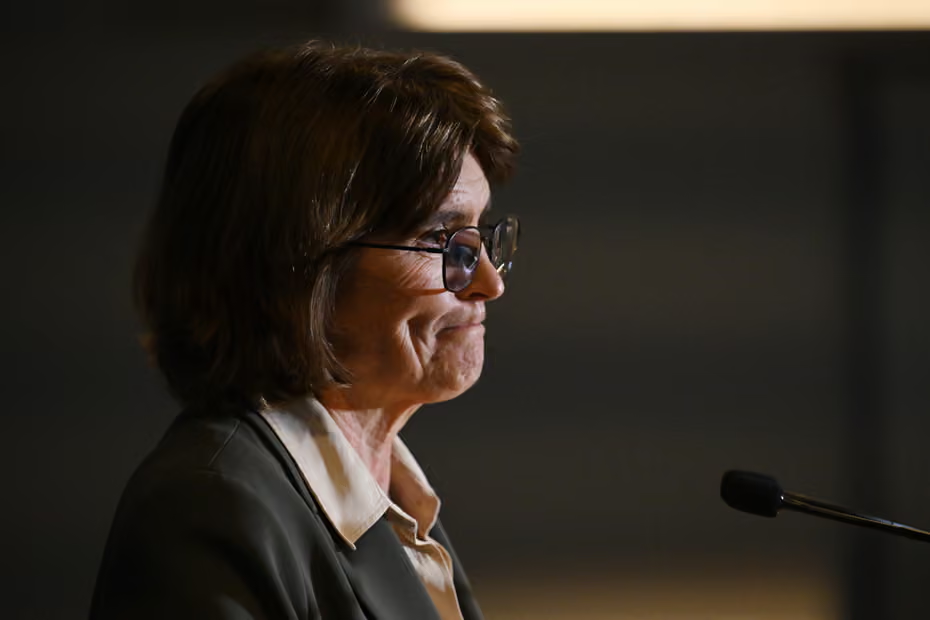
The Reserve Bank of Australia has increased the official cash rate by 0.25 percentage points to 4.35%, marking the third rate hike of 2026 and a complete reversal of the cuts implemented in the previous year. During the post-decision press conference, Governor Michele Bullock delivered an assessment described as unusually blunt, warning that headline inflation could peak at 4.8% by June before returning to the 2–3% target band only by mid-2027. This forecast represents a significant upward revision from the 4.2% peak predicted in February, reflecting the bank's best-case scenario where the Strait of Hormuz blockade resolves quickly.
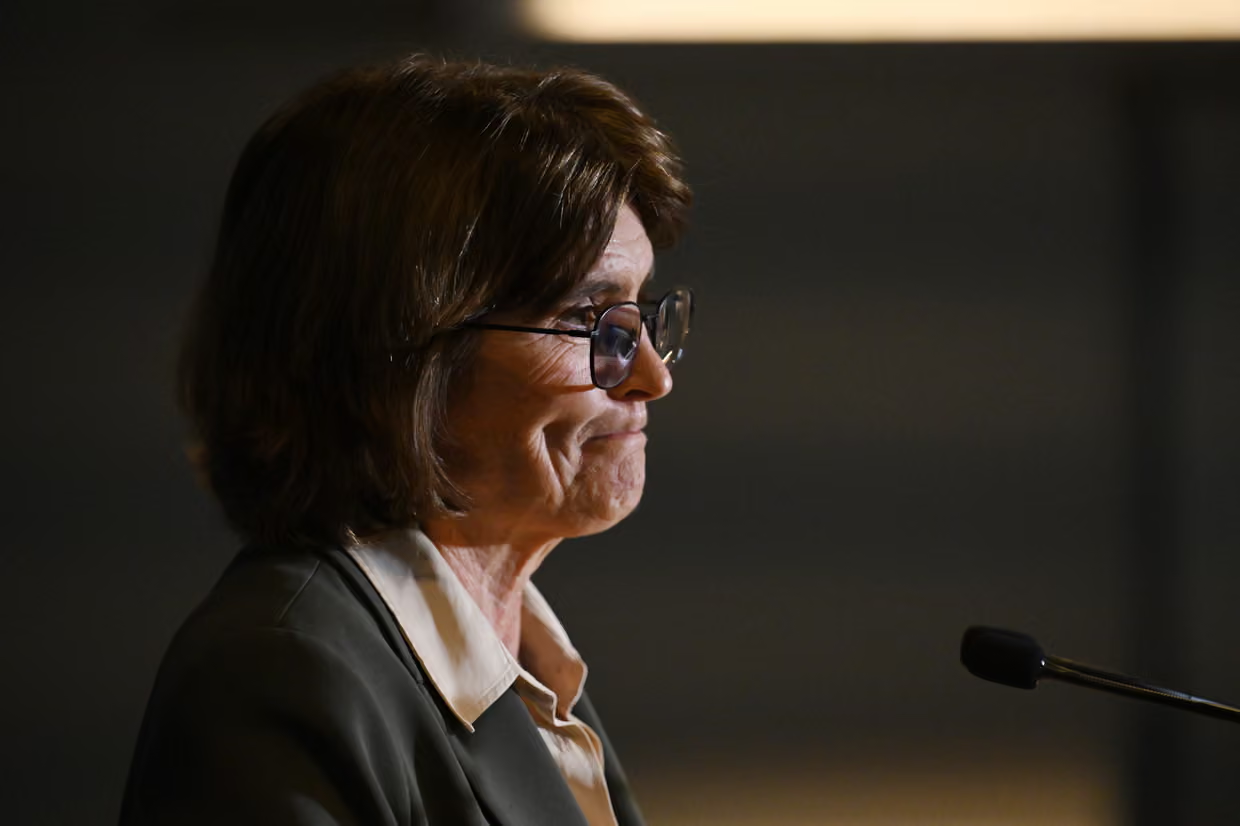
Bullock explicitly abandoned her usual practice of avoiding forward guidance, stating that the three rate rises this year are sufficient to address pre-war inflationary pressures. She noted that monetary policy is now considered "a bit restrictive," yet the economic outlook remains grim under current conditions. Growth is forecast to crawl at just over 1% from the second half of 2026 through to mid-2028, with unemployment expected to rise from 4.3% to 4.7%. The governor described this trajectory as "not a great outcome for Australia" and characterised the period as a very tough time.
The bank's projections are heavily contingent on the resolution of the Strait of Hormuz blockade. Without it, energy prices are expected to average above US$100 a barrel, a scenario the RBA models as adverse. Under such conditions, economic growth could slow to 0.5% and unemployment could breach 5%. Governor Bullock acknowledged that while the RBA's mandate includes both price stability and full employment, the institution does not give equal weight to both. She stated that if the impacts of the energy crisis or inflationary expectations worsen, the RBA will prioritise price stability over full employment.
Treasurer Jim Chalmers pledged that the government would play a "helpful, not harmful" role in the fiscal response to the economic pressures. However, the government faces increased scrutiny regarding the upcoming budget as it considers how to manage the rising cost of living and potential fuel shortages. Bullock noted that while some pass-through of higher energy prices to consumer prices and wages is expected, the RBA would remain vigilant to ensure inflationary expectations are reined in and any pass-through is a one-and-done event.
The decision comes as the RBA notes that the board is focused on its dual mandate, yet the practical application of that mandate has shifted in response to external shocks. Bullock highlighted that the resulting economic medicine is hard to swallow, particularly for young households with lower incomes and higher mortgages. With the cash rate now at 4.35% and further increases possible later this year, the focus remains on whether global geopolitical tensions will allow for a softer landing in the Australian economy.