Razer Viper V4 Pro delivers iterative gains in competitive gaming hardware
The latest iteration of Razer’s flagship esports mouse reduces weight by five grams and doubles battery life, targeting desktop PC users seeking marginal latency improvements.
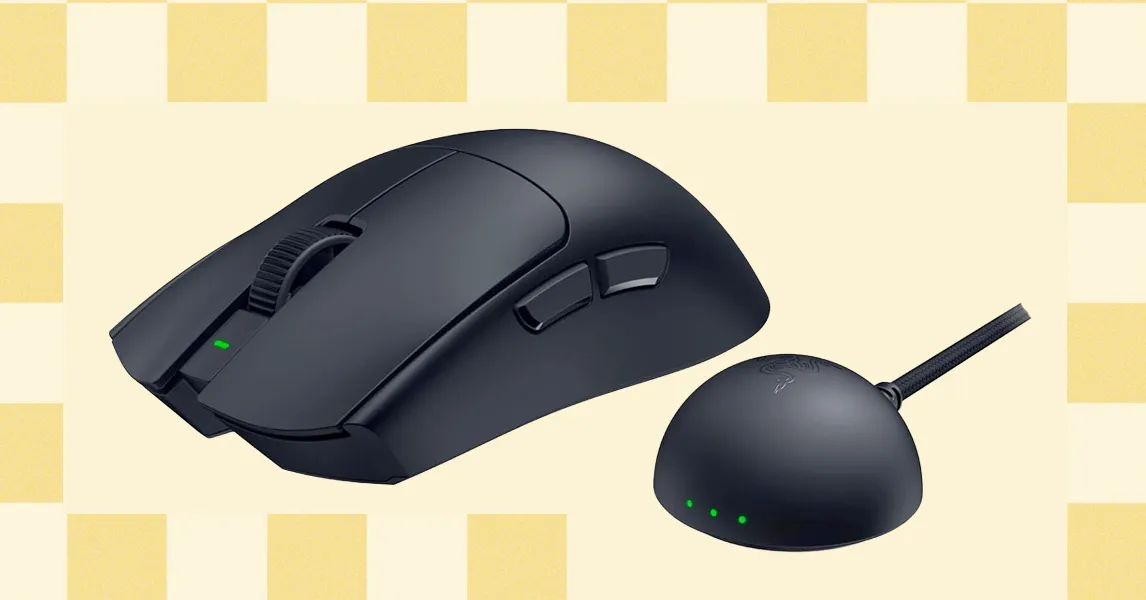
Razer has released the Viper V4 Pro, an iterative update to its competitive gaming mouse line that debuted in 2019. The device focuses on marginal performance refinements rather than radical design changes, featuring a five-gram weight reduction, optical switches to lower latency, and new 'Frame Sync' technology to synchronise the optical sensor with the computer's polling rate. Battery life has nearly doubled compared to the V3 generation, reaching up to 180 hours at a 1,000 Hz polling rate.
The Viper V4 Pro reduces latency and improves consistency without breaking new tech barriers in polling rates or DPI compared to the prior generation. Razer moved from mechanical switches to optical sensors for the buttons and scroll wheel to reduce latency and increase durability. The new hemispherical dongle includes three programmable RGB indicators to display connection quality, battery level, polling rate, and DPI stage, providing users with immediate visual feedback on device status.
Frame Sync technology eliminates latency created by mismatches between the sensor and computer polling rate, achieving an average click latency of 0.204 milliseconds and motion latency of 0.36 milliseconds. While these margins are small, the engineering aims to reduce the potential for errors or mis-inputs. The mouse supports granular customization via Razer Synapse, including dynamic sensitivity curves and mouse rotation, allowing tracking on frosted or transparent glass surfaces.
Engineering sacrifices for lightness mean the mouse is not very repairable; internal plastic components are brittle and prone to breaking during disassembly. The V4 Pro lacks Bluetooth connectivity, limiting its usability to desktop PCs. This exclusion was a deliberate choice to maintain the lightweight profile, though it restricts the device’s versatility for users requiring multi-device connectivity.
The release positions the Viper V4 Pro against competitors such as Logitech’s Pro X Superlight 2 and Pro X2 Superstrike. The article notes that human error typically has a larger impact on performance than the marginal latency improvements offered by the V4 Pro. Despite the lack of Bluetooth and repairability concerns, the V4 Pro remains a compelling option for desktop gamers prioritising weight and responsiveness.