Putin and Lukashenko conduct first direct joint nuclear drills amid regional tensions
The exercises, which saw the launch of Yars, Zircon and Sineva missiles, mark a significant escalation in military coordination between Moscow and Minsk, prompting heightened alerts along the Ukrainian frontier.
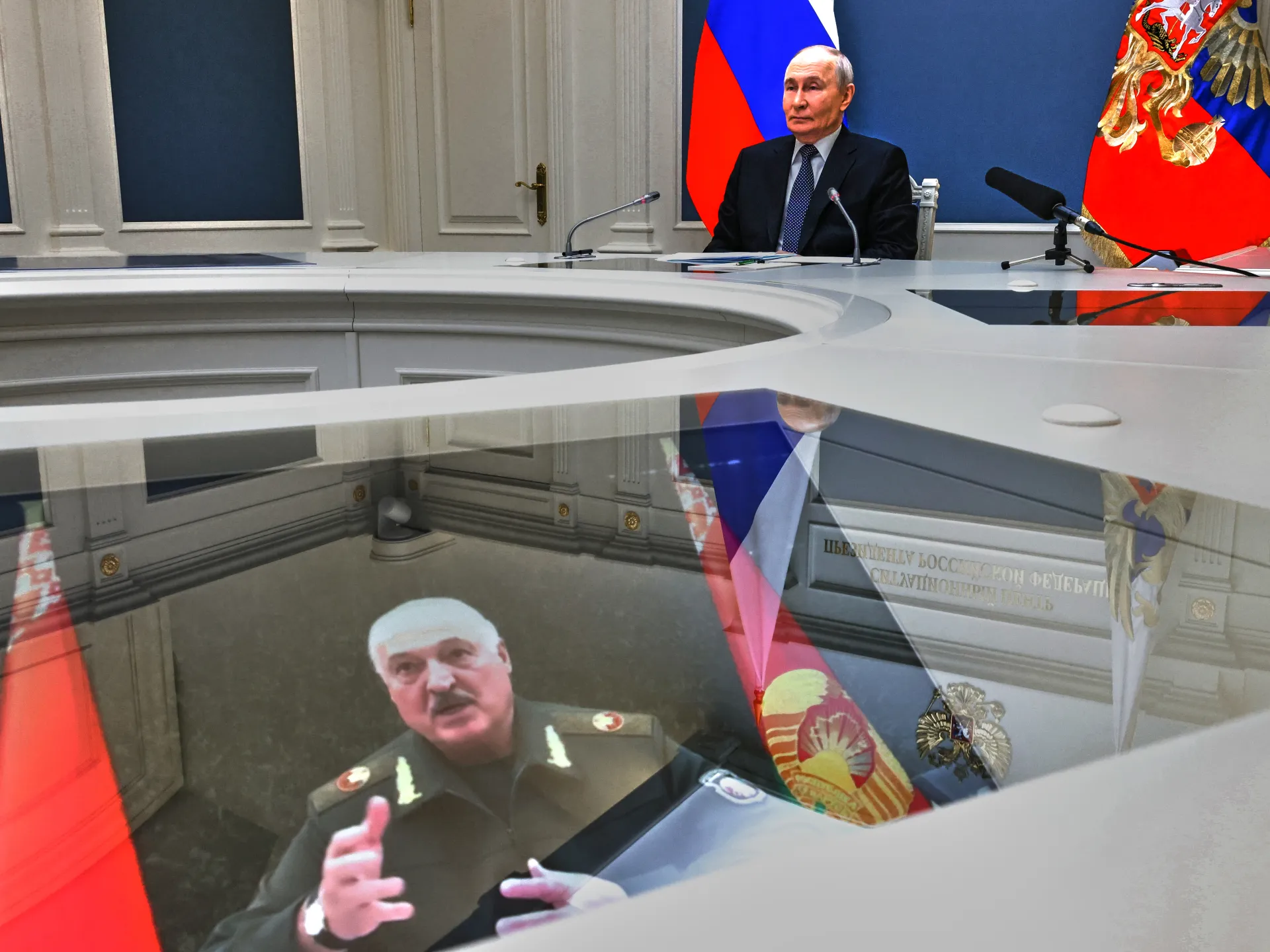
Russian President Vladimir Putin and Belarusian President Alexander Lukashenko have participated via video conference in joint strategic nuclear forces exercises, marking the first time both leaders have directly monitored such drills. While senior military officials from both nations have conducted similar quarterly training events, the direct involvement of the heads of state underscores the deepening integration of the Union State’s defence capabilities.
Held from Tuesday to Thursday, the exercises focused on practising coordination and interaction between military officials in the event of nuclear weapons use. Putin described the drills as a defensive measure necessary to ensure national security, stating that the Russian-Belarusian nuclear triad serves as a “reliable guarantor of the sovereignty” of the two countries. He emphasised that the use of nuclear weapons remains an “extreme and exceptional measure,” while Belarusian President Lukashenko insisted the drills “absolutely threaten no one” but are vital for defending their common territory.
The Russian Ministry of Defence reported that forces launched a Yars ballistic missile and a Zircon hypersonic missile during the tests. Additionally, a nuclear-powered submarine crew fired a Sineva intercontinental ballistic missile from a submerged position, while a Yars missile was launched from the Plesetsk Cosmodrome towards a testing range in the Kamchatka region. Belarusian armed forces also conducted a practical launch of a ballistic missile using an Iskander-M system at the Kapustin Yar testing range.
Air-based components of the exercise included hypersonic strikes from Tu-95MS strategic bombers launching air-launched cruise missiles, and a MiG-31 aircraft firing a Kinzhal hypersonic missile. The comprehensive display of capabilities was designed to demonstrate the readiness of both nations to utilise their strategic assets, with Lukashenko noting that countries possessing such power must know how to deploy them effectively.
The drills have triggered a robust security response from Ukraine, which has long accused Moscow of planning attacks from Belarusian territory. Ukraine’s Security Service (SBU) announced on Thursday that it was implementing a comprehensive set of enhanced security measures in northern regions bordering Belarus. These measures include intensified checks of individuals and properties, aimed at deterring any aggressive actions by Russian or Belarusian forces.
Tensions in the region remain high, with recent incidents highlighting the spillover of the conflict. On Thursday, a Ukrainian drone attack on a locomotive at the Unecha station in Russia’s Bryansk region killed three rail workers. This follows a significant drone barrage towards Moscow earlier in the week, which Russian officials reported resulted in multiple casualties.
As the exercises concluded, NATO foreign ministers convened in Helsingborg, Sweden, to discuss long-term support for Ukraine. The meeting aims to ensure that assistance remains substantial and sustainable, reflecting growing concern among allies regarding the militarisation of Belarus and the potential for further escalation in Eastern Europe.