Private equity deal sizes double as volume falls, forum hears
Speakers at the New Jersey event noted a 7 per cent drop in transaction activity alongside a doubling of deal values, stressing the need for robust value creation plans and early founder-investor alignment.
CorpGov hosted the second Princeton Corporate Governance Forum on May 21, 2026, at The Nassau Inn in Princeton, New Jersey. The event convened industry leaders and Princeton alumni to discuss university endowments, shareholder activism, private equity, venture capital, and the finance of college sports. A central panel examined governance trends in private equity, noting a 7 per cent decline in deal volume alongside doubled deal sizes over three years.
Speakers emphasised the necessity of value creation plans and strong founder-investor alignment as firms navigate a market where private markets hold approximately $6.4 trillion in unrealised value and $2.1 trillion in dry powder. The discussion highlighted a shift in focus towards exits, continuation vehicles, and private credit growth as firms seek competitive advantage in a more selective environment.
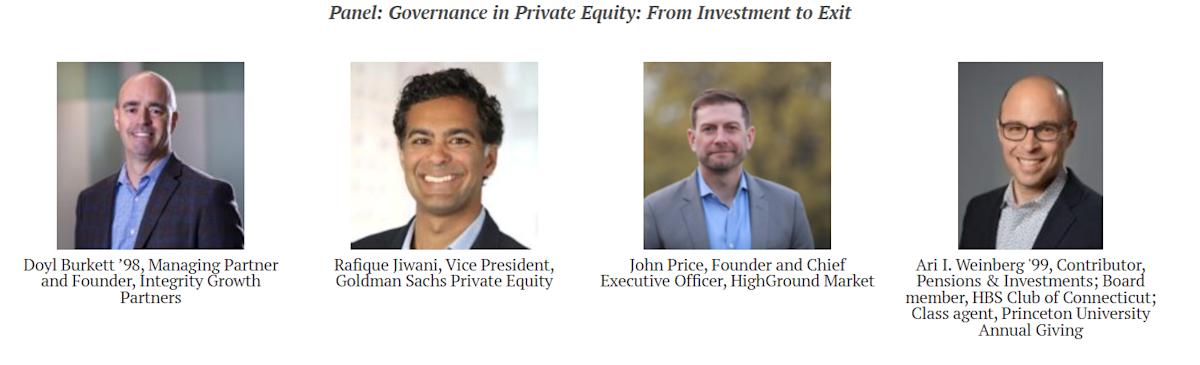
Doyl Burkett, managing partner and founder of Integrity Growth Partners, Rafique Jiwani, vice president of Goldman Sachs Private Equity, John Price, founder and chief executive officer of HighGround Market, and Ari I. Weinberg, contributor to Pensions & Investments, led the panel on governance in private equity. They addressed the complexities of moving from investment to exit in a landscape defined by larger transactions and fewer deals.
Investors stressed the importance of building trust early, often years before funding, to assess alignment, transparency, and long-term compatibility. Founders were advised to seek investors with domain expertise and clear goals, while maintaining honest communication regarding growth plans, exits, and board expectations. This early engagement is seen as critical for reducing risk and ensuring smooth governance structures.
Best governance practices discussed included the use of long-term planning, independent expertise where helpful, and strong investor-management alignment. The panel advocated for a “trust but verify” oversight approach to mitigate the risk of fraud and misalignment, particularly as deal sizes increase and the stakes for value creation become higher.
The event was moderated by John Jannarone, chief executive officer of CorpGov, and John G. Quigley, co-founder and former managing partner of Nassau Capital. The forum brought together a diverse group of speakers, including representatives from Capital Research and Management Company, Star Mountain Capital, and Sullivan & Crom LLP, reflecting the broad interest in corporate governance across the financial sector.
Participants also touched on broader themes such as the finance of college sports and the role of university endowments in the broader capital markets. The gathering underscored the enduring connection between Princeton alumni and the finance industry, with speakers spanning five decades of graduation years sharing insights on navigating the evolving landscape of private and public capital.