Police commissioner warns pro-Palestinian marches ‘feel like’ anti-Semitism
Metropolitan Police commissioner links specific London demonstrations to anti-Semitism, prompting urgent calls from analysts to distinguish between community intimidation and political protest.
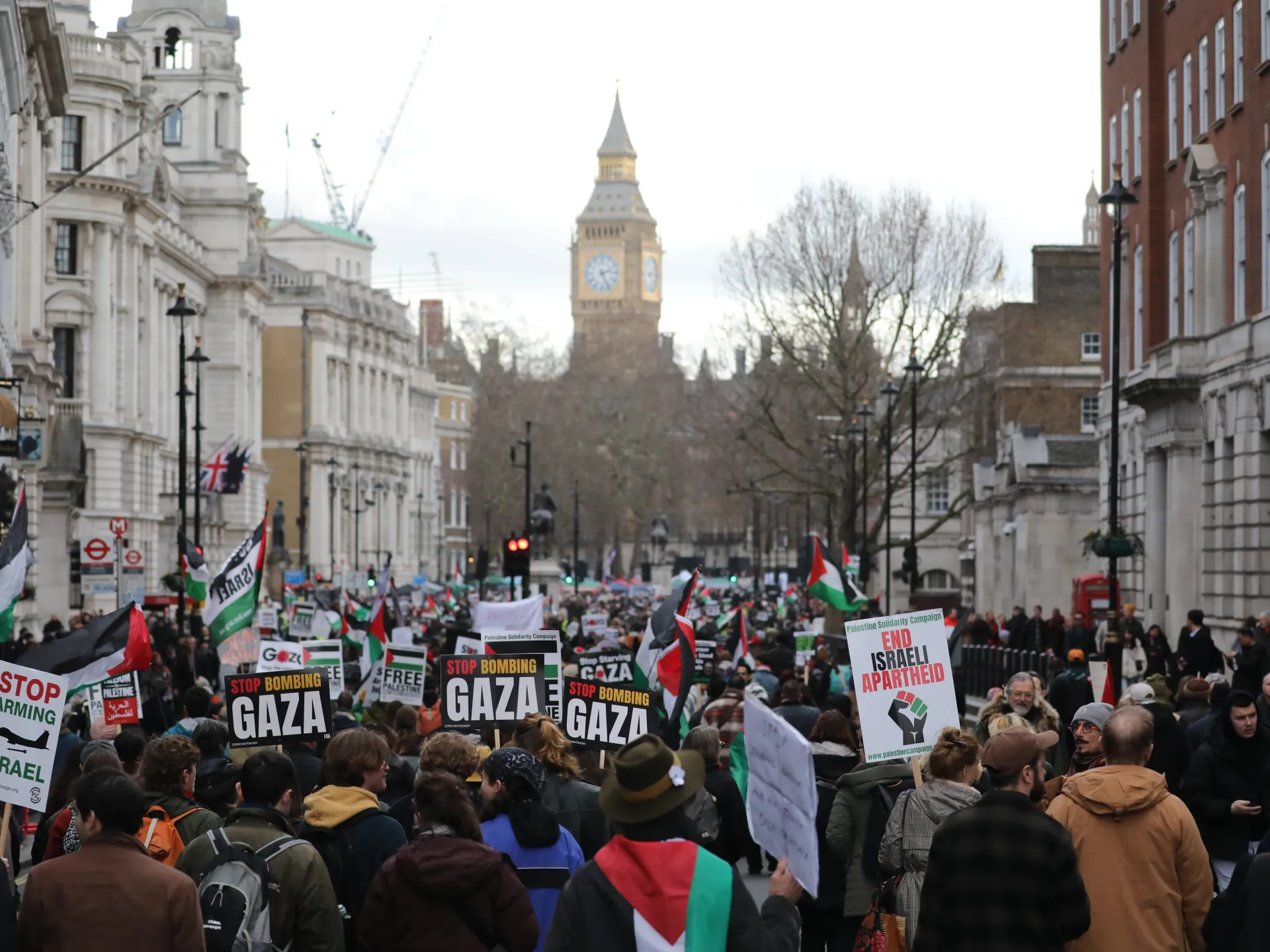
Sir Mark Rowley, the Metropolitan Police commissioner, has stated that certain pro-Palestinian demonstrations in London send a message that “feels like anti-Semitism”. The comments, made in the context of ongoing unrest, highlight a growing tension within British public life regarding the distinction between legitimate criticism of the Israeli state and hatred directed at Jewish communities.
Rowley suggested that some protest organisers are deliberately routing marches near synagogues in a manner intended to intimidate British Jews. The Metropolitan Police commissioner acknowledged that anti-Semitism is real, dangerous, and rising across Britain and parts of Europe, emphasising that any genuine intimidation of Jewish communities must be treated with seriousness.
However, the remarks have intensified a debate over whether political dissent is being conflated with anti-Semitism. An opinion piece published by Al Jazeera on 16 May 2026 argues that this conflation risks deepening tensions for Jewish communities while simultaneously suppressing democratic protest against the war in Gaza. The author contends that treating opposition to Israeli state violence as inherently suspicious is a dangerous trend that undermines the protection of both Jewish safety and free speech.
The article notes that hundreds of thousands of people have marched in Britain demanding a ceasefire and accountability for actions in Gaza. These demonstrations have included diverse groups such as Jews, Muslims, Christians, atheists, students, pensioners, trade unionists, and Holocaust survivors. The author draws parallels between the current treatment of Palestinian grief and historical narratives that justified Palestinian dispossession, arguing that Palestinian suffering is increasingly treated as a source of discomfort requiring management rather than a subject of political debate.
Legal experts, human rights organisations, and genocide scholars have described the situation in Gaza using terms such as “ethnic cleansing”, “collective punishment”, “extermination”, and “genocide”. The text highlights that entire neighbourhoods in Gaza have been erased, hospitals bombed, journalists killed, and civilians starved under siege. Despite this, the article argues that much of Britain’s political and media conversation has focused on the perceived threat posed by protesters rather than the destruction itself.
The author contrasts the treatment of pro-Palestinian protests with the general acceptance of criticism towards other states, such as Russia, the United States, and China. The argument posits that the distinction between state policy and people is uniquely collapsed regarding Israel, implying that Jewish identity is inseparable from the conduct of the Israeli state. This, the article suggests, is neither fair nor accurate, as many Jewish people in Britain and globally have publicly opposed Israel’s war on Gaza.
The piece concludes that political leaders, police authorities, and media institutions carry a responsibility to draw careful distinctions rather than erase them. It argues that suppressing pro-Palestinian protests will not reduce tensions and that a healthy democracy must be capable of recognising the difference between hatred and the refusal to stay silent in the face of mass civilian slaughter.