PitchBook: 2021 US VC funds face low DPI but remain viable
Despite the 2021 vintage recording the lowest distributions to paid-in capital multiple since 1997, analyst Kyle Stanford says total value to paid-in capital offers a more accurate mid-term picture.
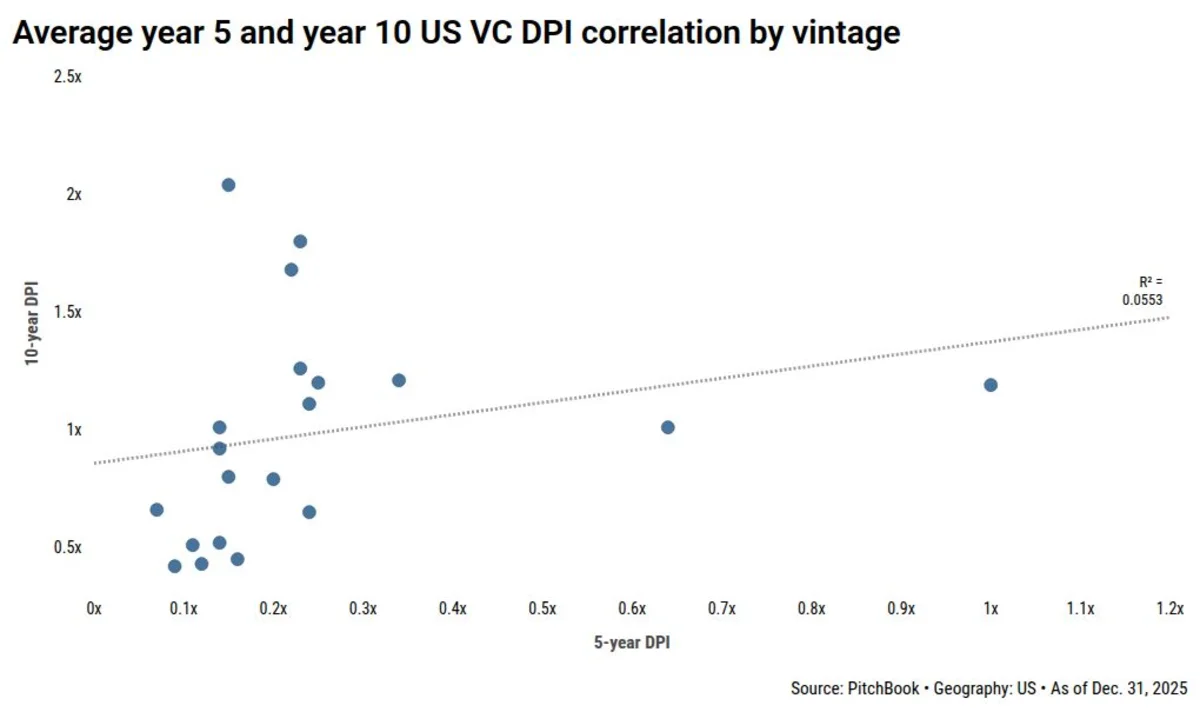
According to new analysis from PitchBook, 2021 vintage US venture capital funds are currently experiencing the lowest distributions to paid-in capital (DPI) multiple recorded since at least 1997. Kyle Stanford, Director of US VC Research at PitchBook, advises fund managers and investors against panic, noting that the funds have reached the halfway point of their standard 10-year term. Stanford argues that year-five DPI is not a reliable predictor of future performance, particularly given the current economic climate.
The subdued cash returns to limited partners (LPs) are attributed to a combination of high valuations, economic uncertainty, and a lack of liquidity. These factors have created significant obstacles for general partners attempting to manufacture distributions. While low DPI figures often raise red flags for LPs evaluating funds, Stanford contends that the metric has become an imperfect guide at this stage of a fund’s lifecycle.
In recent years, DPI has supplanted internal rate of return (IRR) as the preferred return metric for many investors, with general partners using their own DPI multiples to demonstrate their ability to select winners and secure new commitments. However, Stanford suggests that total value to paid-in capital (TVPI) serves as a more accurate mid-term indicator of where a vintage is headed. From a TVPI perspective, the 2021 vintage is described as mediocre but remains far from the worst-performing vintages of the century.
The 2021 vintage holds $166 billion in commitments, a figure that surpassed the previous record set in 2020 by $70 billion. This capital influx was characterised by a structural shift towards larger vehicles, with more than 75% of commitments directed to funds exceeding $500 million in size. This concentration in large-cap funds provides a substantial base of paid-in capital that exceeds most vintages seen this century.
Looking ahead, Stanford highlights that the next five years will be critical for recovery. Potential upside is linked to the expansion of artificial intelligence and anticipated improvements in market liquidity. While distributions remain king for current investor sentiment, the mid-term data suggests that the 2021 vintage retains significant potential for value creation before the end of its term.