Physics study suggests 2026 World Cup ball may reduce long-distance kick range
Independent researchers from Purdue University and the University of Tsukuba found the official ball for the US, Canada, and Mexico tournament may travel a few metres shorter on long kicks, though players have had months to adapt.
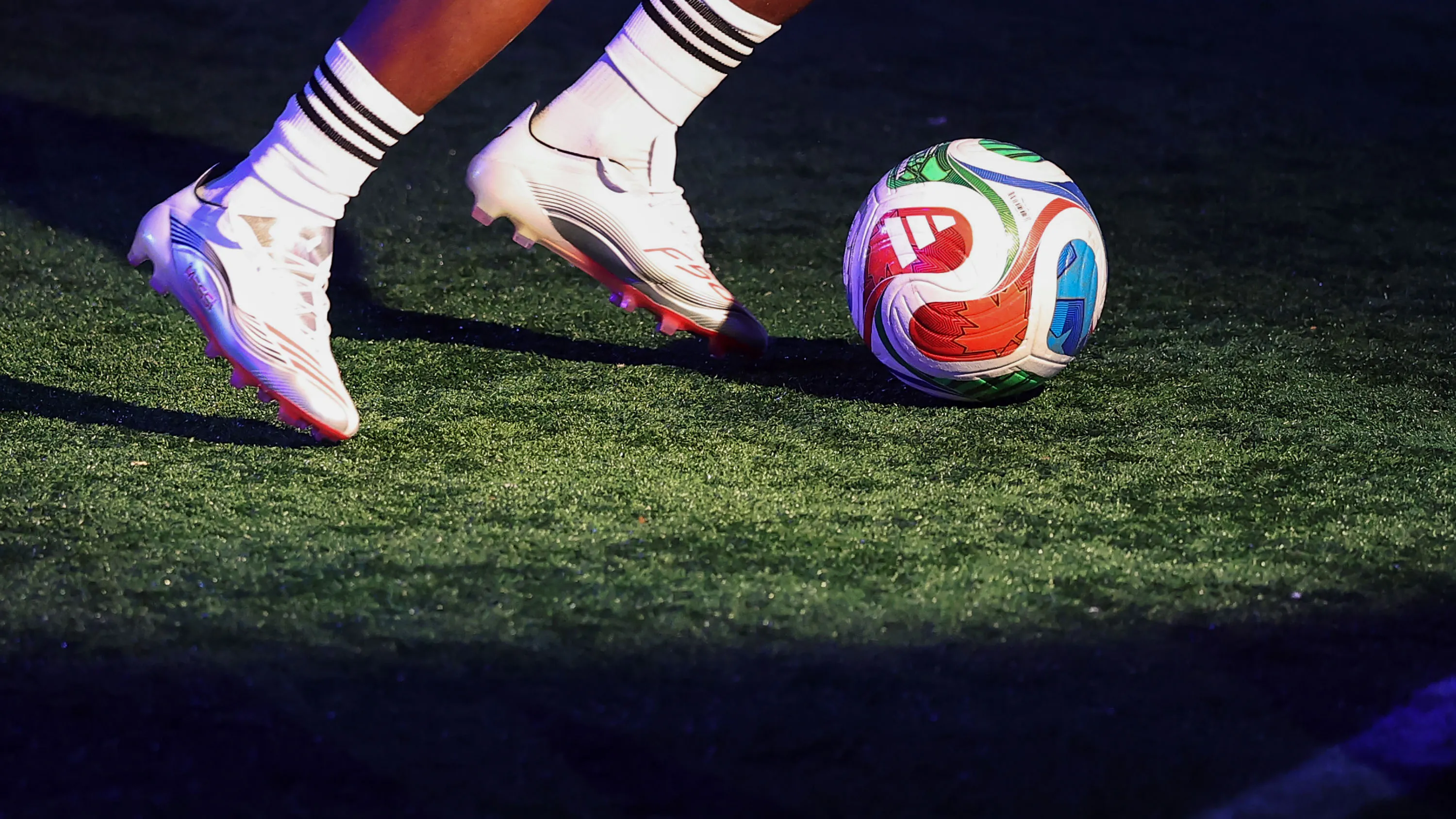
Independent researchers led by John Eric Goff of Purdue University have analysed the aerodynamics of the Adidas Trionda, the official ball for the 2026 FIFA World Cup in the US, Canada, and Mexico. Wind-tunnel experiments conducted at the University of Tsukuba in Japan indicate that while the ball’s textured surface improves flight predictability and delays the drag crisis, it results in a higher drag coefficient at high speeds. Consequently, long-distance kicks may travel a few metres shorter than with previous designs. The study notes that players have had several months to adapt to the ball’s characteristics.
The Trionda features four panels textured with deep grooves and emblems representing the three host countries: a maple leaf, a green eagle, and a star. The research team, which has been testing World Cup balls for 20 years, found that this design experiences the drag crisis at the slowest speed since the 2010 Jabulani ball. However, the drag coefficient is higher at high speeds, causing the ball to slow down faster during the initial portion of its flight compared to its predecessors.
Goff, an incoming professor of engineering practice at Purdue University, described the trade-off inherent in the design. He noted that while the Trionda may very slightly punish extreme distance, it should reward clean technique and predictable flight. The team identified that goalkeepers, defenders hitting long passes, and long-range shooters are the players most likely to notice visible differences in performance.
The experiments were carried out using consistent methods to allow for comparison with historical datasets. The ball is attached to a metal rod connected to a force balance, which measures aerodynamic forces as the ball is exposed to wind speeds between seven and 35 meters per second. Professor Takeshi Asai of the University of Tsukuba emphasised that maintaining continuity is important for comparing new data with historical data sets, although the high cost of the ball limits the number of orientations that can be tested.
Adidas has been designing new balls for each World Cup since the 1970s, with significant structural changes occurring in 2006 with the +Teamgeist ball, which introduced thermally bonded curved panels to reduce water absorption. The 2010 Jabulani ball faced criticism for its deceptive trajectory due to being too smooth, causing a sudden drag crisis at higher speeds. Subsequent balls, such as the 2014 Brazuca, increased surface roughness via longer seam lengths to push the drag crisis to lower speeds, improving predictability.
The Trionda’s design is noted as being quite similar to Nike’s Flight ball, potentially giving players familiar with that ball an advantage. Adidas did not respond to a request for comment regarding the study. The research team continues to send their papers to FIFA and Adidas in hopes of providing external insights into the equipment used in the world’s most popular sport.
