Pershing Square USA fund trades at 20% discount to net asset value despite market rally
Bill Ackman’s $5 billion fund faces investor scepticism over its 2% management fee and exclusion of high-performing tech stocks, with shares trading in the $40 range against a $50.32 net asset value.
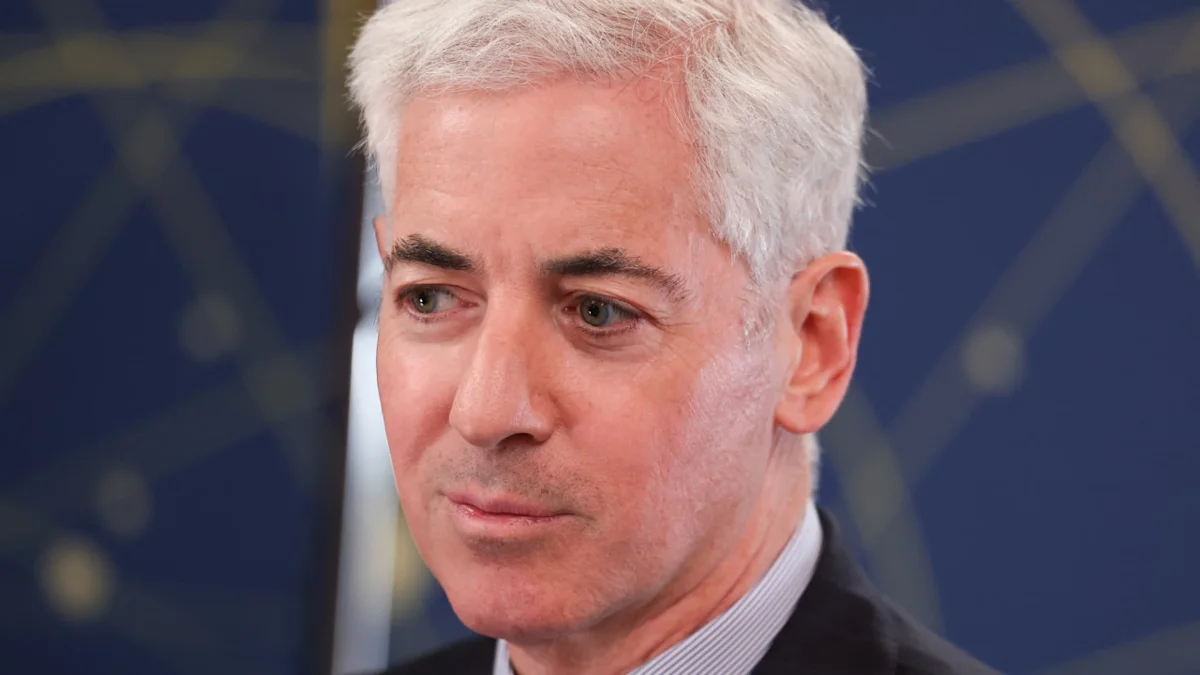
Bill Ackman’s $5 billion closed-end fund, Pershing Square USA (PSUS), is currently trading at a significant discount to its underlying assets, with shares hovering in the $40 range against a net asset value (NAV) of $50.32. This represents a discount of approximately 20%, a divergence Ackman has described as "frankly absurd" and the biggest challenge facing the fund since its initial public offering in April.
The underperformance of PSUS stands in stark contrast to the broader market, which has seen the S&P 500 rise nearly 14% year-to-date. While the fund’s share price has declined from its initial $50 offering, the disparity between the market price and the NAV has widened, creating one of the widest discounts recorded for a US closed-end fund invested in public securities.
Ackman attributes the discount to a combination of technical IPO factors and ineffective marketing. In a semi-annual report, he noted that the composition of the portfolio remained largely unknown to investors, hindering demand. He acknowledged that the firm needs to improve its efforts to generate interest among retail investors and financial advisors, urging current holders to help spread the word about the fund’s valuation.
A further point of contention for investors is the fund’s cost structure. PSUS charges an annual management fee of 2%, a figure that significantly exceeds the expense ratios of standard exchange-traded funds. For comparison, Vanguard’s popular S&P 500 ETF carries an expense ratio of just 0.03%, raising questions about whether the fund’s active management can justify the premium cost to shareholders.
The fund’s investment strategy also appears to be at odds with current market drivers. Ackman has stated that semiconductors and tech hardware have been the primary engines of the S&P 500’s outperformance, yet these sectors are absent from PSUS’s portfolio. The fund focuses on free-cash-flow-generative, North American large-cap growth companies at attractive valuations, a style that has excluded cyclical chipmakers such as Sandisk and Micron.
Despite the headwinds, Pershing Square has adjusted its holdings in recent months. New acquisitions include payment processors Visa and Mastercard, streaming giant Netflix, market infrastructure firms S&P Global and Intercontinental Exchange, and eyecare company Alcon. Conversely, the fund has divested from positions in Hertz and Universal Music.
Beyond the current vehicle, Ackman is reportedly working on a new fund designed to provide investors with access to venture capital. As Pershing Square continues to navigate the discount to NAV, the firm’s ability to market the fund effectively and deliver returns that outweigh its high fees will be critical to its long-term viability.