Perseverance rover reaches new western frontier on Mars as study flags satellite launch pollution
The Perseverance rover has completed its furthest westward excursion to date, investigating rocks potentially dating back 3.9 billion years. Concurrently, a new study warns that soot from satellite launches could deposit 870 metric tons of pollution in the upper atmosphere annually by 2029.
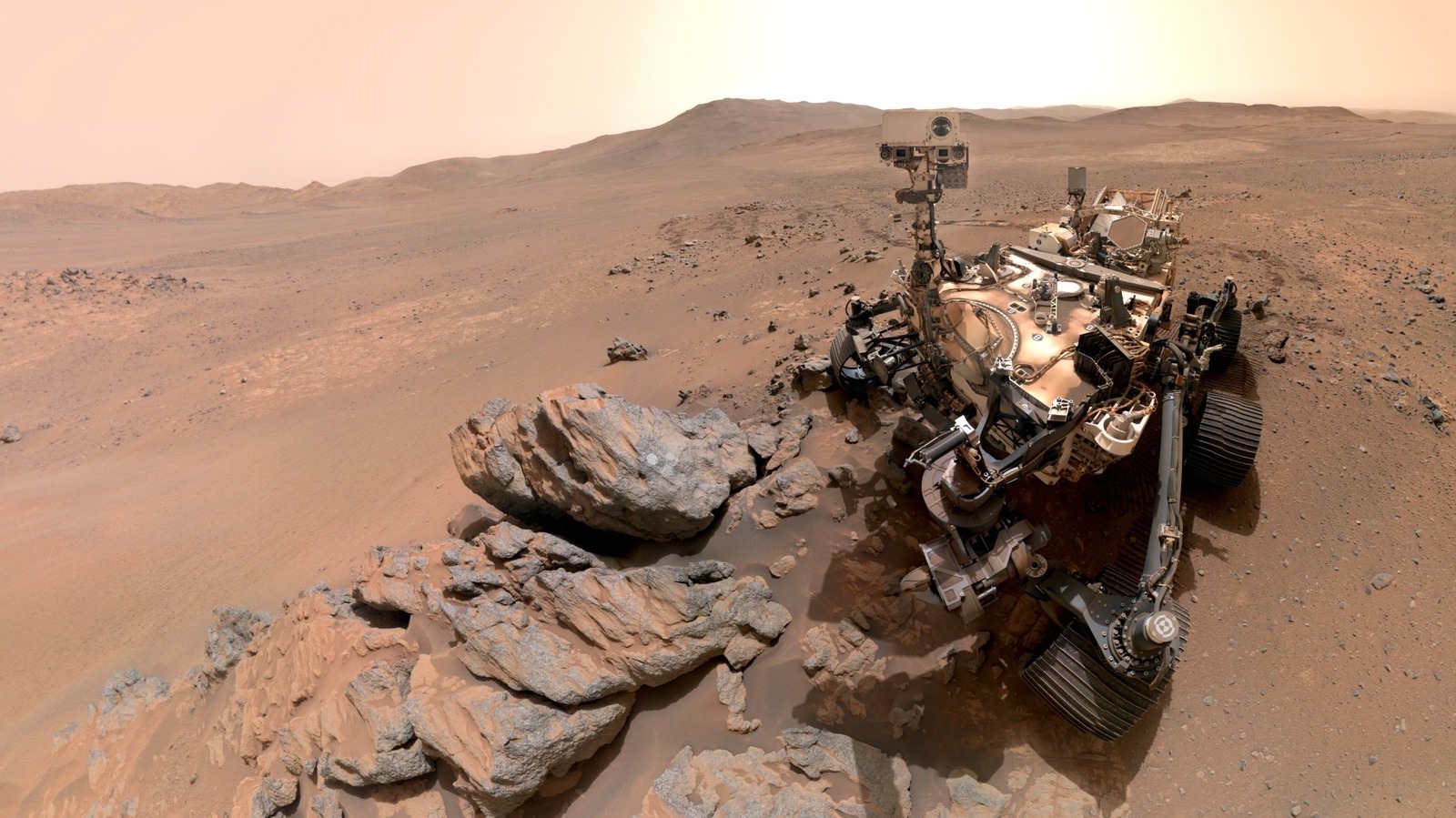
NASA’s Perseverance rover has undertaken its most significant westward journey to date, capturing a selfie at the Arathusa outcrop within the Lac de Charmes region, west of Mars’ Jezero Crater. The image, composed of 61 photographs taken by the rover’s robotic arm camera on 11 March, marks the farthest point the vehicle has explored in that direction. The rover has since relocated to the Arbot area, where it used its Mastcam-Z to capture a panoramic view on 5 April.
The terrain in Arbot presents what NASA describes as some of the most scientifically compelling ground visited by the mission. Ken Farley, the deputy project scientist for Perseverance at Caltech, noted that the area likely contains the oldest rocks investigated during the mission, potentially dating back 3.9 billion years from a meteorite impact. The landscape also features what may be a volcanic dike, a vertical intrusion of magma that has withstood billions of years of erosion.
Perseverance has spent the past five years studying Jezero Crater, a site considered promising for identifying signs of ancient microbial life. In addition to imaging, the rover collects rock core samples and grinds surfaces for compositional analysis. The team intends to continue examining the Arbot outcrops before moving south to a site known as Gardevarri.
Separately, research published in the journal Earth’s Future highlights the environmental toll of the expanding space industry. The study, led by Eloise Marais from University College London, warns that soot from satellite megaconstellation launches could deposit approximately 870 metric tons of pollution in the upper atmosphere annually by 2029. This pollution can persist for years, causing climate impacts more significant than those from lower atmospheric layers.
Jonathan McDowell provided data indicating that SpaceX has launched nearly 12,000 Starlink satellites since 2019, with over 10,300 currently operational. Other entities, including Amazon, are also accelerating their satellite fleet deployments. Megaconstellation launches accounted for 35 per cent of the space sector’s climate impact in 2020, a figure projected to rise to 42 per cent by 2029.
Marais cautioned that the resulting reduction in sunlight could cause mild cooling effects, describing the situation as a small-scale, unregulated geoengineering experiment. She emphasised the need for early action to prevent unintended and serious environmental consequences before the issue becomes more difficult to reverse.
