Penn State study quantifies how Olympic weightlifters exploit barbell 'whip'
Joshua Langlois, a graduate student at Pennsylvania State University, presented findings at the Acoustical Society of America meeting in Philadelphia regarding the mechanics of Olympic weightlifting.
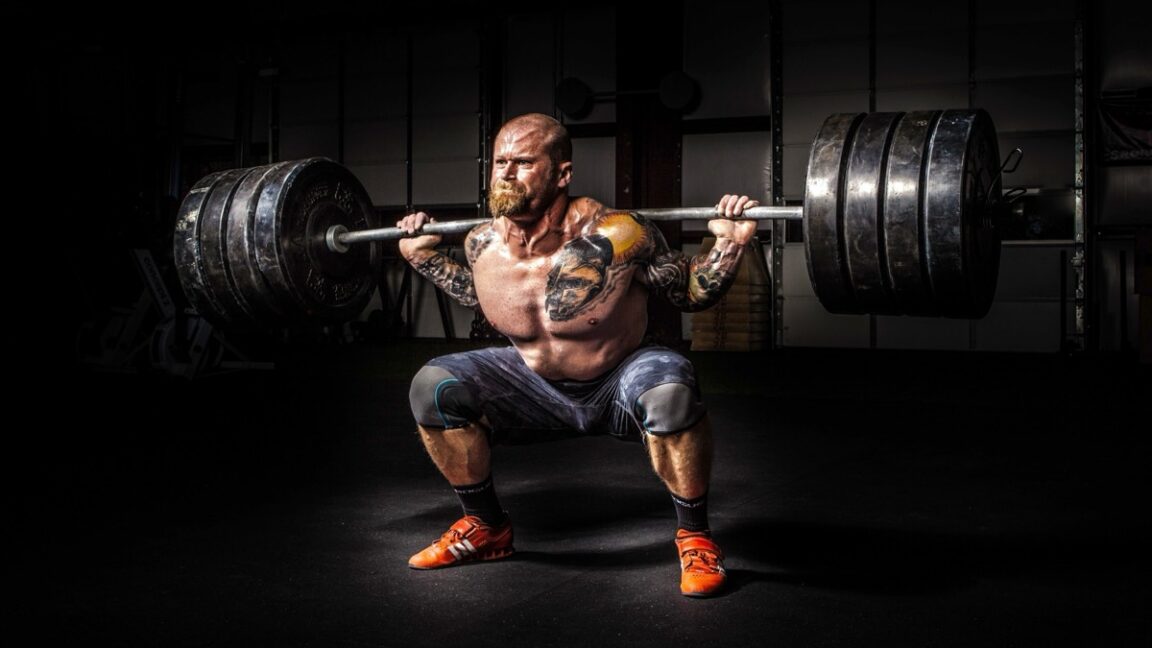
Joshua Langlois, a graduate student at Pennsylvania State University, presented findings at the Acoustical Society of America meeting in Philadelphia regarding the mechanics of Olympic weightlifting. Langlois conducted a modal analysis on four 20-kg men’s barbells to quantify the "whip," or flexural bending, which athletes use to accelerate lifts. The study found that while adding mass typically decreases oscillation frequency, higher bending modes increased in frequency at higher loads because the bar becomes more fixed. Although the effect is small, around one percent, it is significant for elite athletes. The research highlights that barbell design, including materials and sleeve coupling mechanisms, affects performance, though manufacturers keep specific details proprietary. Future research will involve data collection from real Olympic weightlifters.
Langlois, who competes in Strongman competitions as a hobby, was inspired to investigate the phenomenon after hearing how national-level Olympic weightlifters utilise the bar's recoil to increase lifting acceleration. To quantify this effect, he suspended four 20-kg men’s barbells from elastic resistance bands to simulate a floating state and used accelerometers to measure vibration patterns. By tapping set locations across the bar with a small hammer, he mapped out how the bars moved in response to force, comparing the vibrations of different barbells and a single barbell loaded with different weights.
The study found that while adding mass typically decreases oscillation frequency, higher bending modes increased in frequency at higher loads because the bar becomes more fixed. Langlois explained that as the bar becomes more fixed, the actual wavelength decreases. With a set wave speed, wavelength is inversely proportional to the rate of oscillation, resulting in a higher frequency. This unexpected finding contradicted the initial expectation that added mass would simply decrease oscillation rates across all modes.
Although the effect is small, around one percent, it is significant for elite athletes. Langlois compared the vibrations to the experience of elite golfers, who can feel how a club bends to alter ball impact, noting that casual lifters are unlikely to utilise this mechanic effectively. The research highlights that barbell design, including materials and sleeve coupling mechanisms, affects performance, though manufacturers keep specific details proprietary. Most Olympic barbells are made of steel with varying stiffness, known as Young’s modulus, but exact specifications are not disclosed.
Variation in the coupling mechanism between the shaft and the sleeve also plays a role. Sleeves can be fitted with bearings for faster rotation, bushings for slower heavy lifts, or be bare steel. Langlois noted that bearings seem to have the best coupling and are typically found in more expensive barbells. Future research will involve data collection from real Olympic weightlifters, including both men and women, to see exactly how they use the whip and how the bar matters for them.