Panasonic’s ‘Japanese Microwave’ Uses Sensor Tech to Eliminate Guesswork
The WIRED review highlights the appliance’s ability to heat food to 180 degrees Fahrenheit with a single button press, though performance varies with layered dishes.
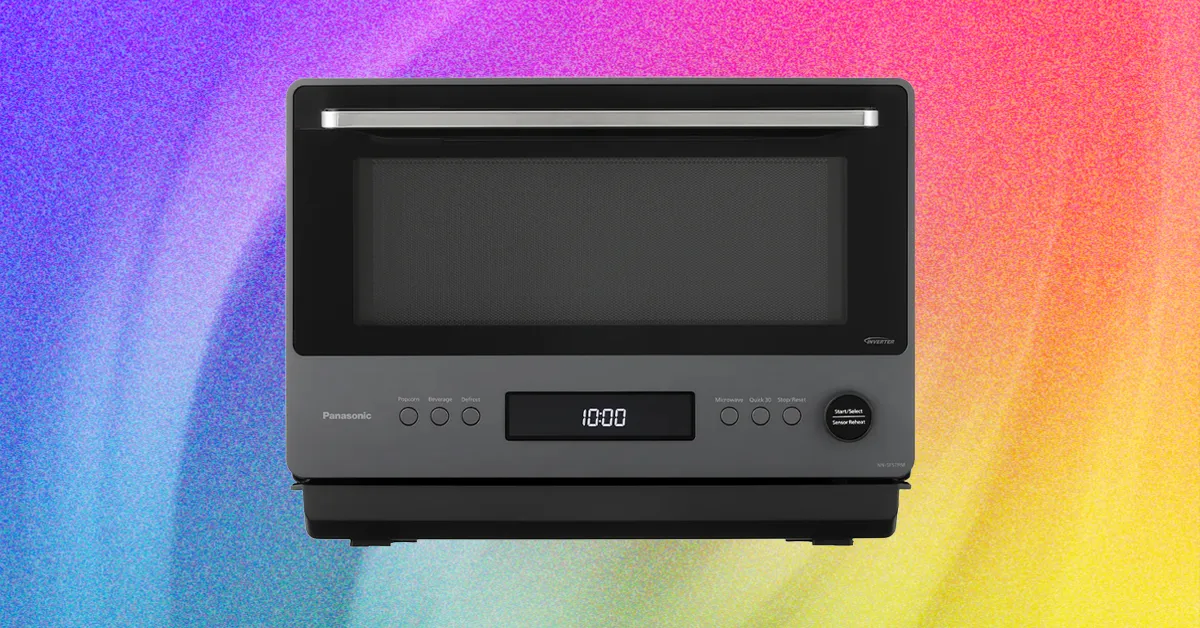
Panasonic has released a new microwave oven, model NN-SF57RM, marketed as the "Japanese Microwave." According to a recent review by WIRED, the device distinguishes itself by utilising a "Genius 2.0" multi-point temperature sensor that measures food surface temperature directly. This technology allows the unit to stop cooking automatically when the food reaches the desired heat, removing the need for user input regarding cook times.
The appliance employs a mobile antenna underneath the cooking chamber to direct energy, which eliminates the requirement for a rotating turntable. This design choice preserves interior space, allowing the one-cubic-foot unit to accommodate wider dishes without a large countertop footprint. The review notes that the absence of a turntable contributes to more even heating across the central cooking area, with temperature variations limited to approximately five degrees Fahrenheit in the main zone.
In testing, the microwave demonstrated an ability to heat leftovers and popcorn evenly to approximately 180 degrees Fahrenheit with a single button press. The interface features a glowing dial labeled "Sensor Reheat" that displays a loading bar rather than a timer, indicating progress toward the target temperature. The review highlights the device's reliability for standard tasks such as reheating chicken soup, rice, and frozen dinners, describing the experience as one where the user can "walk away" without anxiety.
However, the review identifies specific limitations regarding the sensor's functionality. The infrared sensor must have a direct line of sight to the food surface, meaning that covered dishes or layered bowls may not heat evenly. In tests involving layered Korean rice bowls, the cabbage did not reach the same temperature as the meat or rice, requiring the user to mix the food and reheat it. The review advises against covering food during sensor cooking to avoid interfering with temperature detection.
Beyond the primary sensor function, the unit includes dedicated buttons for popcorn, defrost, and beverages. The popcorn setting operates as a timer based on bag weight, as the sensors cannot see through packaging. While the review found the popcorn results acceptable, it noted that the appliance’s preprogrammed scratch-cooking recipes, such as spaghetti Bolognese, were less intuitive and yielded mixed results compared to traditional stovetop methods.
