Ouster Unveils Rev8 Native Color Lidar Lineup to Displace Camera Systems in Autonomous Hardware
The new OS1 Max and other Rev8 models aim to resolve industry debates on sensor fusion by offering pre-fused 3D colourised point clouds directly from the source.
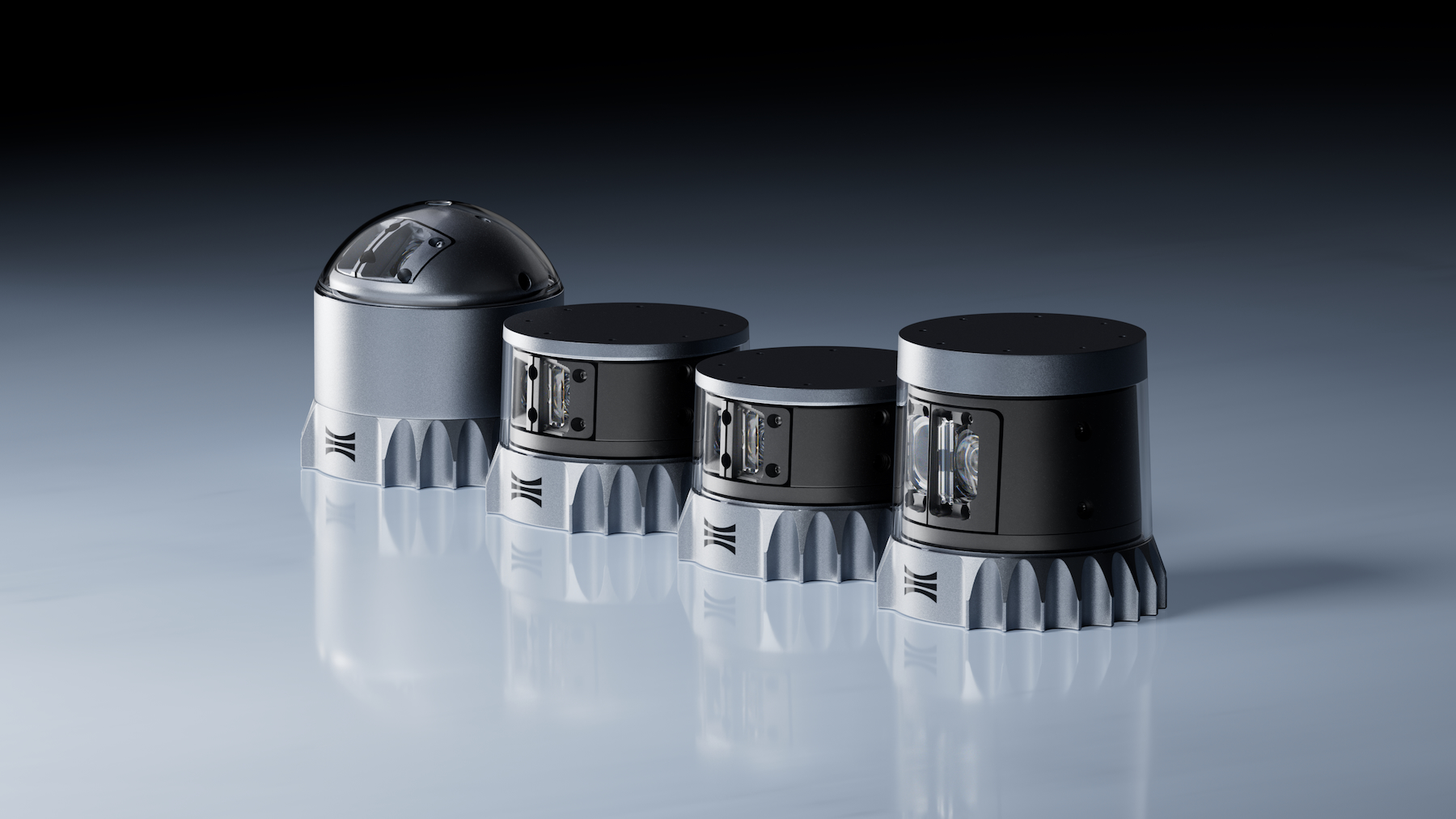
San Francisco-based lidar manufacturer Ouster has announced the launch of its Rev8 sensor lineup, introducing a capability it describes as native colour lidar. These devices are engineered to capture depth information and colour imagery simultaneously on a single custom chip, with the explicit objective of obviating the need for separate camera systems in autonomous vehicles and robotics applications.
The technology represents a decade of development centred on digital lidar architecture and single photon avalanche diode (SPAD) detectors. Ouster CEO Angus Pacala stated that this approach offers superior sensitivity and dynamic range compared to traditional cameras, claiming the system delivers 48-bit colour, 116 dB of dynamic range, and megapixel-level resolution. Unlike previous iterations where companies merely packaged separate lidar and camera units together, the Rev8 platform integrates the imaging technology directly onto the same chip to eliminate the complexity of calibrating and fusing disparate data streams.
To ensure the quality of the image capture, Ouster has collaborated with Fujifilm and DXOMARK to define the standards for high-quality imaging within the sensor. Pacala noted that the company is using the same SPAD technology to capture colour image data, asserting that the resulting pre-fused data stream functions as a 3D colourised point cloud while also allowing users to utilise just the lidar or camera data streams independently depending on the perception team's requirements.
The OS1 Max model is highlighted as a significant leap forward, offering a range of 500 metres while maintaining a smaller form factor than existing long-range lidar solutions. Pacala described this as a clear cut above previous offerings, suggesting it will see widespread adoption in high-speed robo-trucking, robotaxi applications, and drone operations. The company is currently accepting orders for the OS1 Max, alongside the OS0, OS1, and OSDome models within the Rev8 family.
This announcement arrives amidst a period of consolidation in the lidar market, evidenced by Ouster's acquisition of Velodyne and the bankruptcy-related acquisition of Luminar's assets. While major players like Waymo continue to scale robotaxi deployments and new entrants such as Teradar explore alternative modalities like terahertz imaging, Ouster positions its single-chip solution as a fundamental shift in the value proposition for customers seeking to reduce hardware complexity and cost.
Competitor Hesai has also announced a similar colour lidar platform, stating it targets mass production by the end of the year. However, Pacala distinguishes Ouster's approach by emphasising that the integration of lidar and imaging technology on the same chip dramatically reduces the workload for customers compared to other fusion methods, setting the stage for a future where cameras may be entirely eschewed in favour of this unified sensing modality.
