Orbital secures $5 million seed to build space-based data centres
Backed by a16z and a roster of angel investors, the Los Angeles-based firm bets on SpaceX’s Starship to make orbital compute economically viable by 2028.
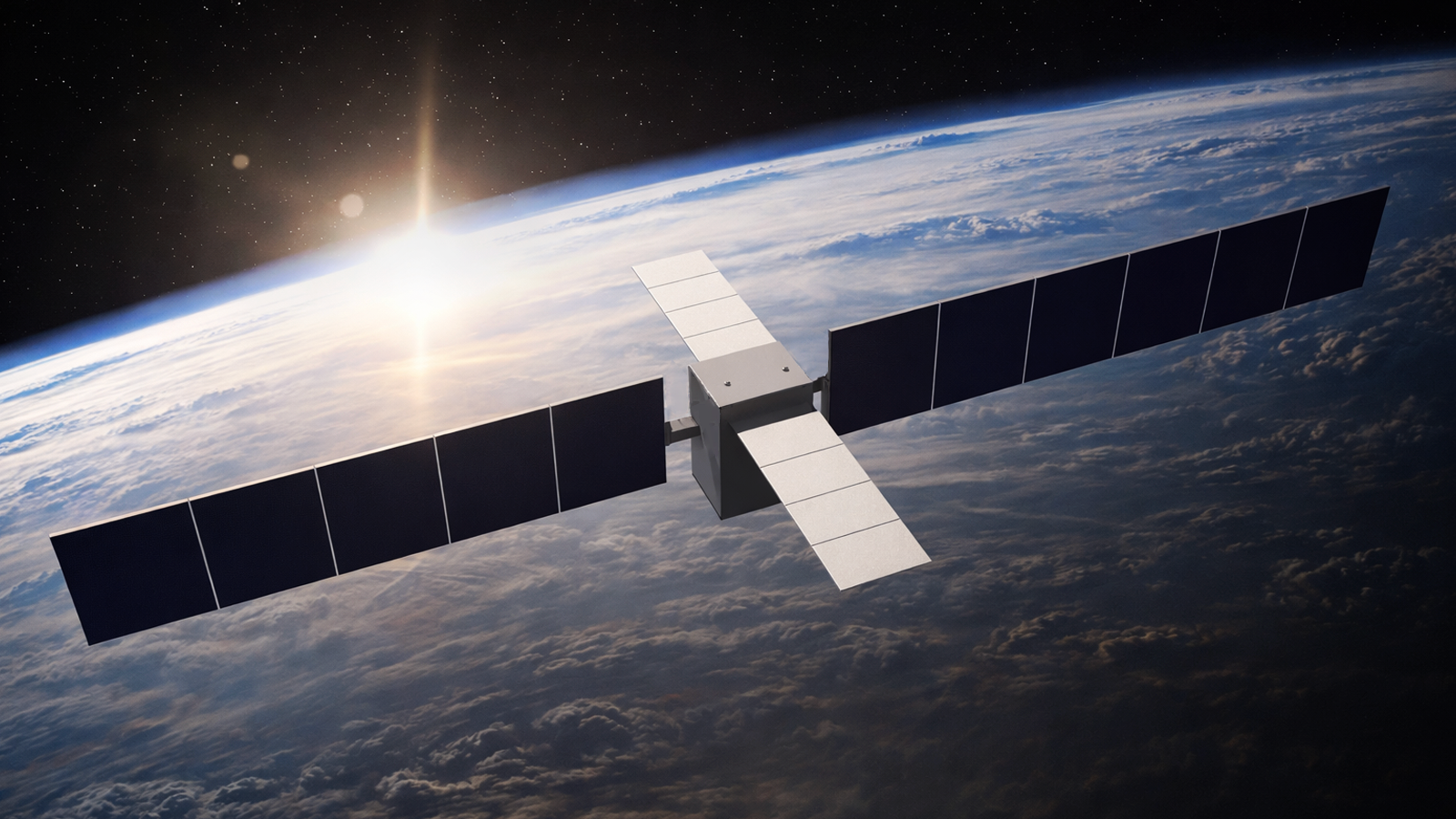
Orbital, a new aerospace venture founded by Euwyn Poon, has secured a $5 million seed round to develop space-based data centres. The funding was led by Andreessen Horowitz’s (a16z) Speedrun accelerator program, with participation from investors including Basis Set, Human Element, Wayfinder, Antler, Anti Fund, Ascent, Rubik, Zero Knowledge Ventures, LYVC, Feld Ventures, New Legacy, FNDR, UpHonest, and Asterisk.
Poon, who previously founded e-scooter company Spin in 2017 and sold it to Ford in 2018, aims to deploy a constellation of 10,000 satellites to provide distributed computing power. Each satellite is targeted to deliver 100 kW of power output, contributing to a total distributed gigawatt of capacity. The company’s team comprises approximately a dozen employees based in Los Angeles, with prior experience at Amazon LEO, SpaceX, and Northrop Grumman.
The business case for orbital data centres hinges on the anticipated commercial availability of SpaceX’s Starship rocket to reduce launch costs. Poon noted that the current pricing of Falcon 9 makes the economics unfeasible, stating, “We will get to full scale when Starship comes online.” The company plans to conduct a demo flight in the near term to test radiation shielding and thermal management technology on a partner’s satellite, utilising an Nvidia Blackwell chip.
Orbital hopes to launch its first data-processing spacecraft in 2028, utilising Nvidia’s Space-1 Vera Rubin-class GPUs. At that stage, the company intends to begin piece-wise inference work to generate revenue with each satellite launched. This approach mirrors the strategy of rival Starcloud, which already has a GPU in orbit and plans to launch further units to generate income before Starship enables full constellation deployment.
Competition in the sector is intensifying, with other firms adopting different timelines. Cowboy Space Company, also backed by a16z, has decided to build its own rockets rather than wait for Starship. Meanwhile, Blue Origin has announced plans to launch data centres into space using its New Glenn launch vehicle. Elon Musk has stated that SpaceX’s AI satellites are expected to produce up to 150 kW, while Starcloud targets 200 kW-rated spacecraft.
a16z partner Andrew Chen cited Poon’s track record of scaling Spin to deploy 250,000 scooters across 100 cities as evidence of his ability to manage complex aerospace operations. Chen noted that while such projects may take a decade and require billions in capital, venture firms are increasingly comfortable with these extended timelines, driven by the current energy and excitement in capital markets surrounding artificial intelligence.
