OpenAI, Nvidia adopt Google’s SynthID watermarking for AI content
Google expands its SynthID technology beyond its own ecosystem, with Nvidia and OpenAI integrating the watermark into their AI outputs, while detection tools roll out across Chrome and Pixel devices.
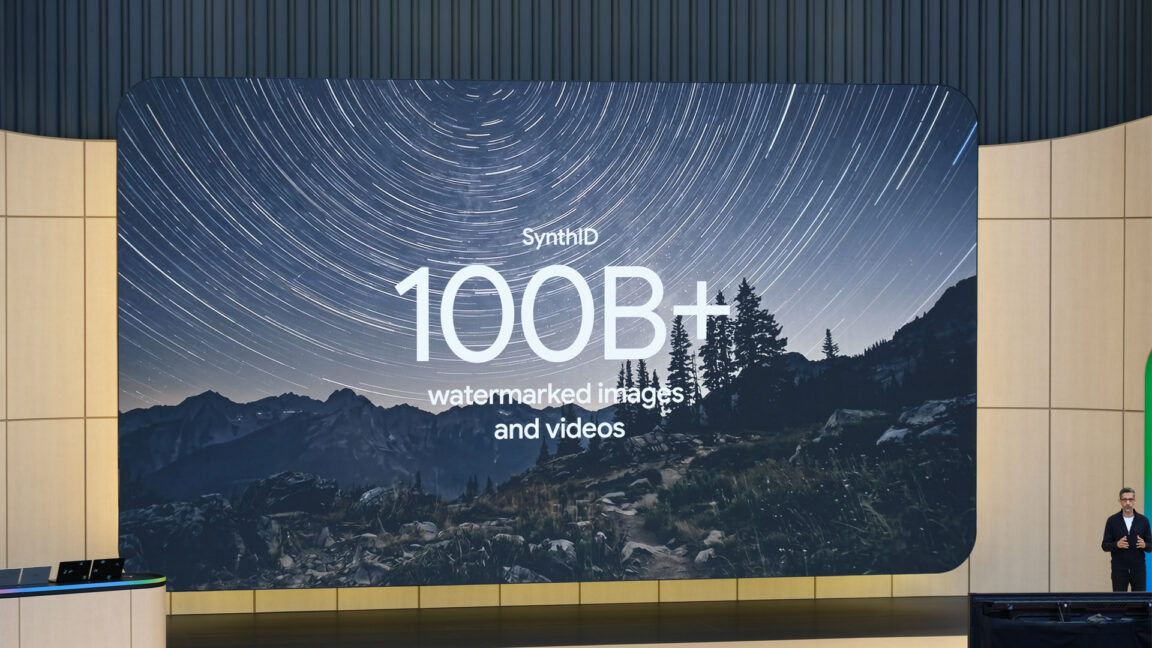
Google has announced that its SynthID AI content watermarking technology is being adopted by a growing list of external partners, including OpenAI, Nvidia, Kakao, and ElevenLabs. The move marks a significant expansion for the digital watermarking system, which embeds invisible markers into the pixels of images and videos, or the waveform of audio, designed to remain robust against compression, cropping, or rotation. Nvidia will implement the technology in its Cosmos world foundation models, while OpenAI will apply it to images generated by its GPT-2 model.
The adoption comes as Google seeks to distinguish authentic content from synthetic media in an era where AI-generated imagery and audio have become increasingly realistic. Google DeepMind scientist Pushmeet Kohli noted that the team conducted extensive research to ensure SynthID is difficult to remove, even when content undergoes various transformations. While some users have claimed to find methods for removing the hidden patterns, Google contends that these bypasses do not function reliably against the current iteration of the technology.
Beyond third-party adoption, Google is deepening the integration of SynthID and C2PA metadata tagging into its own ecosystem. C2PA standards, which tag content with metadata describing its creation, are now being expanded to videos recorded on Pixel 8, 9, and 10 smartphones, with an update rolling out in the coming weeks. The company is also adding C2PA scanning to the Gemini chatbot, allowing users to ask the AI to explain a file’s provenance based on content labelling.
Detection capabilities are being woven directly into user-facing tools to simplify verification. SynthID detection will be integrated with Circle to Search, Lens, and AI Mode. Additionally, users will be able to share a tab in Chrome with the Gemini chatbot and ask “Is this AI” to receive a scan. These tools aim to provide immediate feedback on the authenticity of digital content without requiring users to leave their current browsing or search context.
A public API for SynthID is not yet available, a decision Google attributes to the need to prevent circumvention vectors. However, the company is preparing to launch a business-focused API as part of the Gemini Enterprise Agent Platform. This will allow trusted business partners to flag AI content more easily, enabling Google to refine the technology over the coming months as adoption scales across the wider technology sector.
