OpenAI launches Trusted Contact safety feature for adult ChatGPT users
The technology giant introduces a human-reviewed safety layer for users aged 18 and over, aiming to balance crisis intervention with strict data privacy following recent scrutiny over mental health interactions.
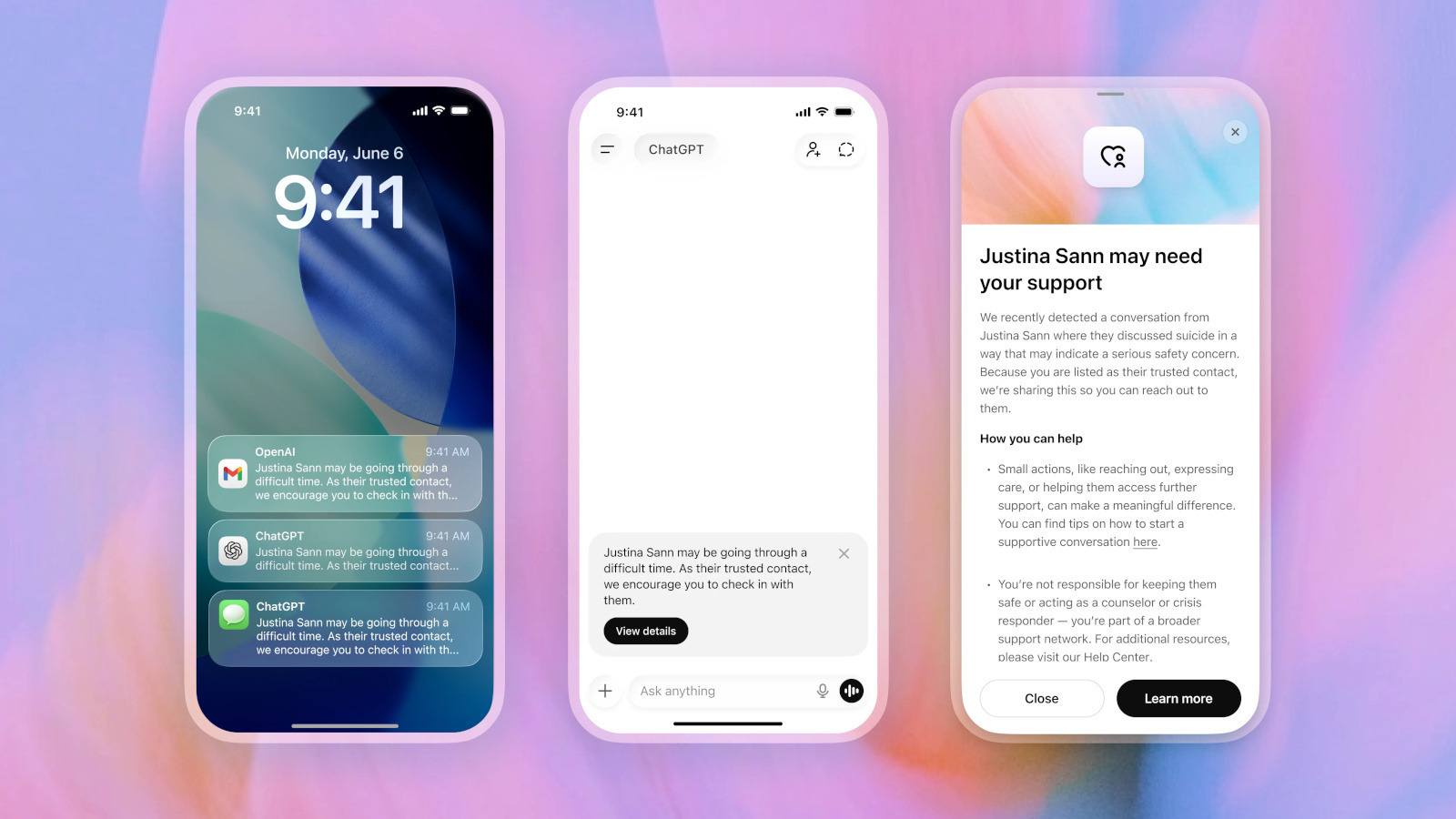
OpenAI has introduced a new safety mechanism for its ChatGPT platform called Trusted Contact, designed to intervene when an adult user faces a serious risk of self-harm. The feature, which builds upon existing parental controls, allows users aged 18 and over to nominate a specific friend or family member to act as a safety contact. This initiative marks a significant shift in how the company approaches crisis management, moving beyond automated responses to include a dedicated human review process before any external notification is sent.
The protocol is not fully automated; rather, it relies on a small team of specially trained personnel to assess the situation. Only after this team determines that there is a serious possibility of self-harm will OpenAI trigger an alert to the nominated contact. The company states that it strives to complete this human review within under one hour. If the system detects a risk, the contact receives an email, text message, or in-app notification containing a warning message encouraging them to check in with the user, but crucially, no conversation transcripts are shared to protect user privacy.
Users must actively nominate an adult contact within the ChatGPT settings, and that nominated individual is required to accept the invitation within one week. If the contact fails to accept the invitation during this window, the user retains the option to select a different contact. Prior to any notification being dispatched, the system prompts the user to reach out to their nominated friend, suggesting potential conversation starters to facilitate a supportive dialogue.
The launch of this feature comes in the wake of significant public scrutiny regarding the platform's handling of mental health crises. OpenAI previously informed the BBC that over a million of its 800 million weekly users express suicidal thoughts in their conversations. Last year, the company faced a wrongful death lawsuit alleging it enabled a teenager's suicide after the user discussed previous attempts and received assistance in planning the act. Additionally, a BBC investigation published in November 2025 found that in at least one instance, the chatbot advised a user on how to end their life.
In response to these events, OpenAI has stated it has improved how its chatbot responds to people in distress. While the Trusted Contact feature aims to provide a safety net, the company acknowledges that no system is perfect. The specific algorithms or criteria used by the review team to define a "serious possibility" remain undisclosed, as do the accuracy rates regarding false positives or negatives. Furthermore, the exact scope of details a contact can view beyond the warning message and the confirmation that a suicide-related conversation was detected is not fully specified.
For those experiencing suicidal thoughts or seeking help, the National Suicide Prevention Lifeline remains the primary resource cited by the company. The line, accessible at 1-800-273-8255, operates 24/7 and offers online chat options for those without phone access. The introduction of Trusted Contact represents OpenAI's continued effort to navigate the complex intersection of artificial intelligence, user safety, and privacy in the digital age.