OpenAI expands ChatGPT access to personal bank accounts via Plaid integration
The move follows OpenAI’s acquisition of the Hiro team and builds on monthly usage by more than 200 million users for budgeting queries.
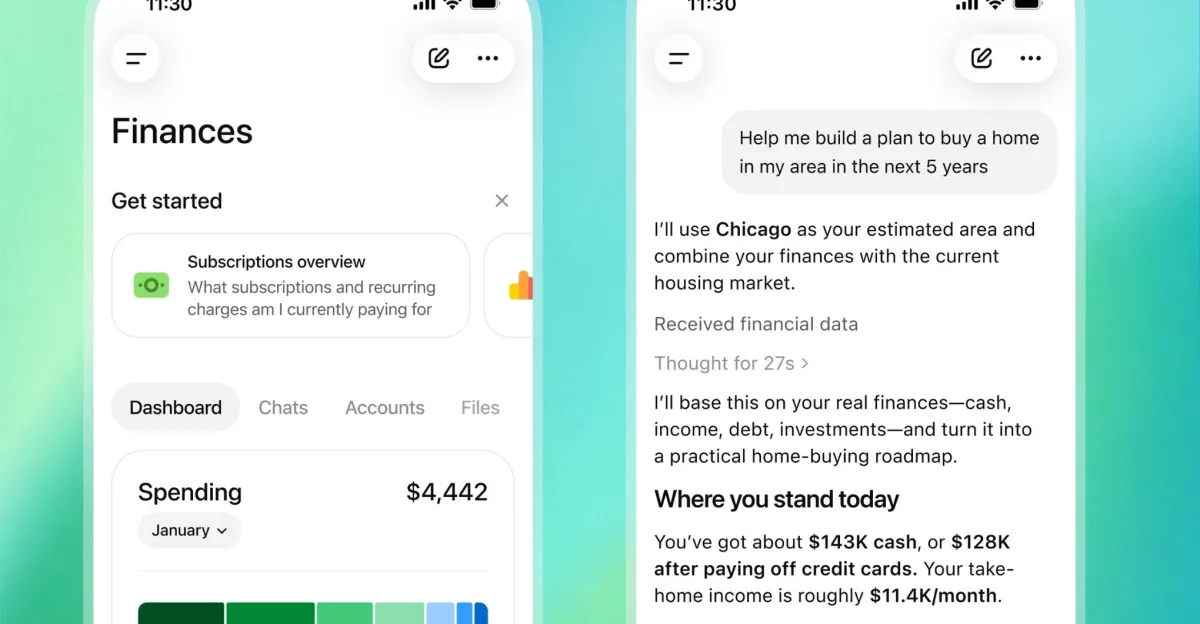
OpenAI has announced a new feature enabling ChatGPT users to securely link their financial accounts through the Plaid platform. The integration allows subscribers to view spending history, active subscriptions, balances, and liabilities, while receiving personalised financial advice. The service is initially available to US subscribers of the $200-per-month Pro tier, with plans to expand to the Plus tier later.
The feature supports over 12,000 financial institutions, including major entities such as Schwab, Fidelity, Chase, Capital One, and Robinhood. Users can access the tool via the web or iOS by selecting the “Finances” option or typing a specific command to connect accounts. Once linked, the chatbot provides a dashboard detailing portfolio performance, upcoming payments, and spending habits.
OpenAI states that more than 200 million people already use ChatGPT monthly for finance-related questions, such as budgeting and spending tips. The new capability is designed to help users with major financial decisions, such as buying a house or applying for credit cards, by providing context based on their personal goals and lifestyle. The system can also flag changes in spending habits to assist with financial management.
While the integration offers detailed insights, OpenAI emphasises that ChatGPT cannot make changes to bank accounts or view full account numbers. Users retain control over their data, including the ability to disconnect accounts and delete financial memories. However, data may be retained for up to 30 days and can be used for AI model training if users opt in via the “Improve the model for everyone” setting.
This launch follows OpenAI’s introduction of ChatGPT Health in January and its acquisition of the Hiro team in April. Although OpenAI promises user control, the company has not specified what it will do with financial information outside of AI training or detailed additional protections against system hacks. The move tests user trust in AI as the company seeks to expand its utility in sensitive personal sectors.