OpenAI claims AI model disproves 80-year-old geometry conjecture
The company states its general-purpose reasoning model has autonomously solved a prominent open problem in mathematics, marking a shift in how AI systems handle complex, cross-disciplinary logic.
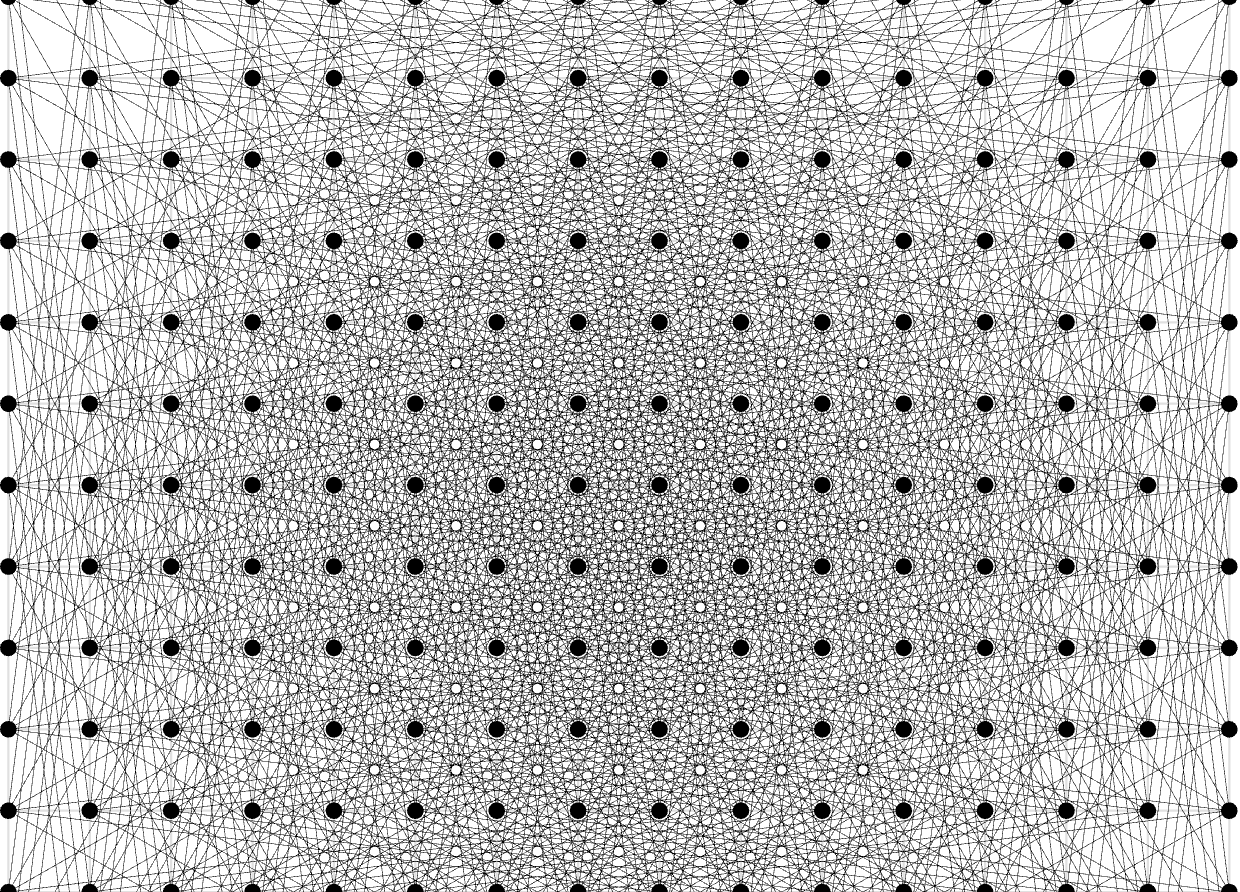
OpenAI has announced that its latest general-purpose reasoning model has autonomously disproved a geometry conjecture originally posed by Paul Erdős in 1946. The company stated that the model identified a new family of constructions that outperforms the previously assumed optimal solutions, which had long been believed to resemble square grids. This achievement marks the first time an AI system has solved a prominent open problem in mathematics, according to the firm.
The announcement is supported by mathematicians Noga Alon, Melanie Wood, and Thomas Bloom, who maintain the Erdős Problems website. Their backing is significant given the company’s recent history in the field. Seven months prior, OpenAI’s former vice-president Kevil Weil posted on X that its GPT-5 model had found solutions to 10 previously unsolved Erdős problems. It was later revealed that the model had merely identified existing solutions already present in academic literature, a claim that drew sharp criticism from rivals including Yann LeCun and Google DeepMind CEO Demis Hassabis.
Thomas Bloom had previously described the GPT-5 assertion as a dramatic misrepresentation, leading Weil to remove the post. In contrast, the current disproof of the 80-year-old conjecture has received endorsement from the same group of experts. OpenAI clarified that the proof was generated by a general-purpose reasoning model rather than a system specifically designed for mathematical problem-solving, highlighting the model’s ability to sustain long chains of reasoning and connect ideas across different fields.
OpenAI noted that the model’s success suggests AI systems are now more capable of exploring complex logical structures in ways researchers may not have previously anticipated. The company stated that these capabilities have potential implications for fields such as biology, physics, engineering, and medicine, although the long-term impact of this specific discovery remains speculative.
Bloom commented on the development, stating that AI is helping to more fully explore the mathematical frameworks built over centuries. He questioned what other unseen wonders might be waiting to be discovered as these technologies advance. The announcement underscores a maturing relationship between artificial intelligence and rigorous academic verification, moving past the premature claims that characterised the company’s earlier forays into mathematical problem-solving.
