Oil prices surge past $100 a barrel for first time since May
Brent crude hits psychological milestone as geopolitical tensions add to existing inflationary pressures, while US equities face headwinds from capital expenditure concerns.
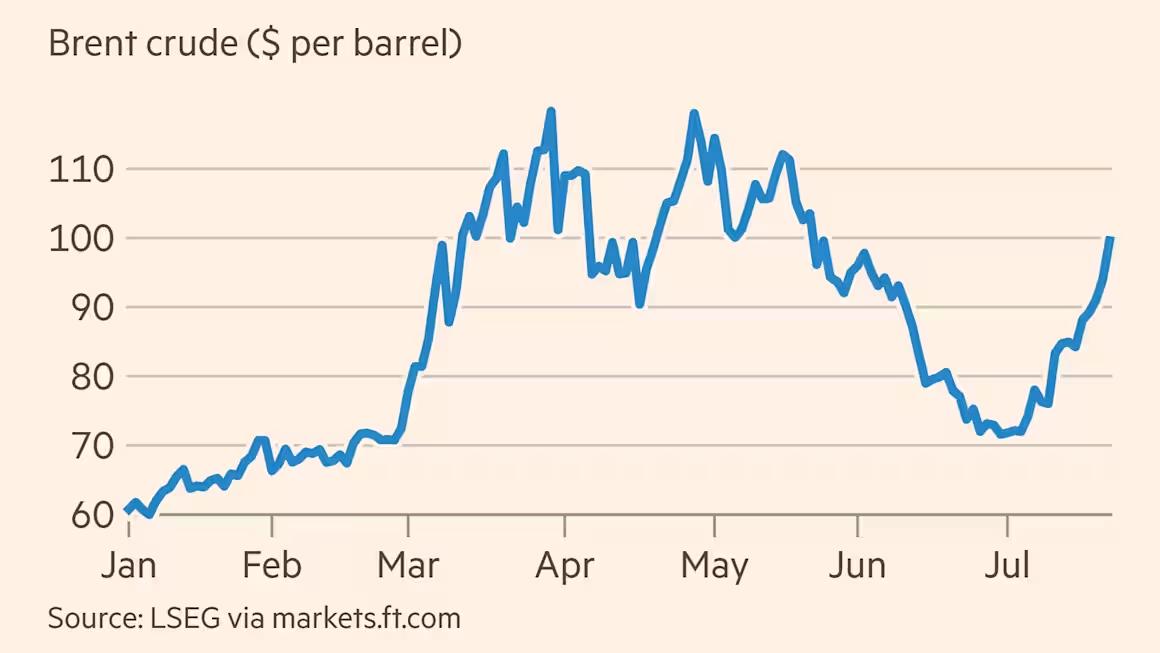
Oil prices have climbed to $100 per barrel for the first time since May, driven by escalating tensions in the Middle East. The surge follows Houthi attacks on Saudi Arabian tankers in the Red Sea, a development that threatens to further constrain global energy supplies. The move marks a significant psychological barrier for crude benchmarks, reflecting growing market anxiety over the stability of energy flows from the region.
According to the Financial Times, the escalation in the Red Sea has directly impacted trading sentiment. Brent crude oil futures had previously climbed to $97 per barrel, nearing the $100 mark, while West Texas Intermediate (WTI) futures rose to $89 per barrel. The divergence between the two benchmarks highlights the specific impact of geopolitical risk on global pricing structures, with Brent often serving as the primary gauge for international supply concerns.
The attacks have added a new layer of inflationary pressure to an already complex economic landscape. As energy costs rise, policymakers and investors are monitoring the potential for broader price increases across the supply chain. The uncertainty surrounding the duration and extent of any potential supply squeeze remains a key variable, with the situation in the Red Sea evolving rapidly.
Market volatility extended beyond energy sectors, as US futures slipped due to concerns over capital expenditure by major technology firms such as Alphabet and Tesla. While these factors contributed to broader market sentiment, the primary driver of the oil price surge remains the direct threat to shipping lanes and energy infrastructure in the Middle East.
Historical precedents suggest that such geopolitical shocks can trigger rallies in exploration and production firms. In early 2026, similar tensions led to share price gains for US producers like Antero Resources, which reported record production levels in the first quarter. However, the current environment is distinct, with the $100 per barrel threshold representing a new benchmark for pricing in the wake of recent hostilities.