Octopus arms possess distributed intelligence with independent neural control
Each appendage operates with a degree of independence, capable of tasting, feeling, and moving without constant direction from the central brain, a trait unique to cephalopods.
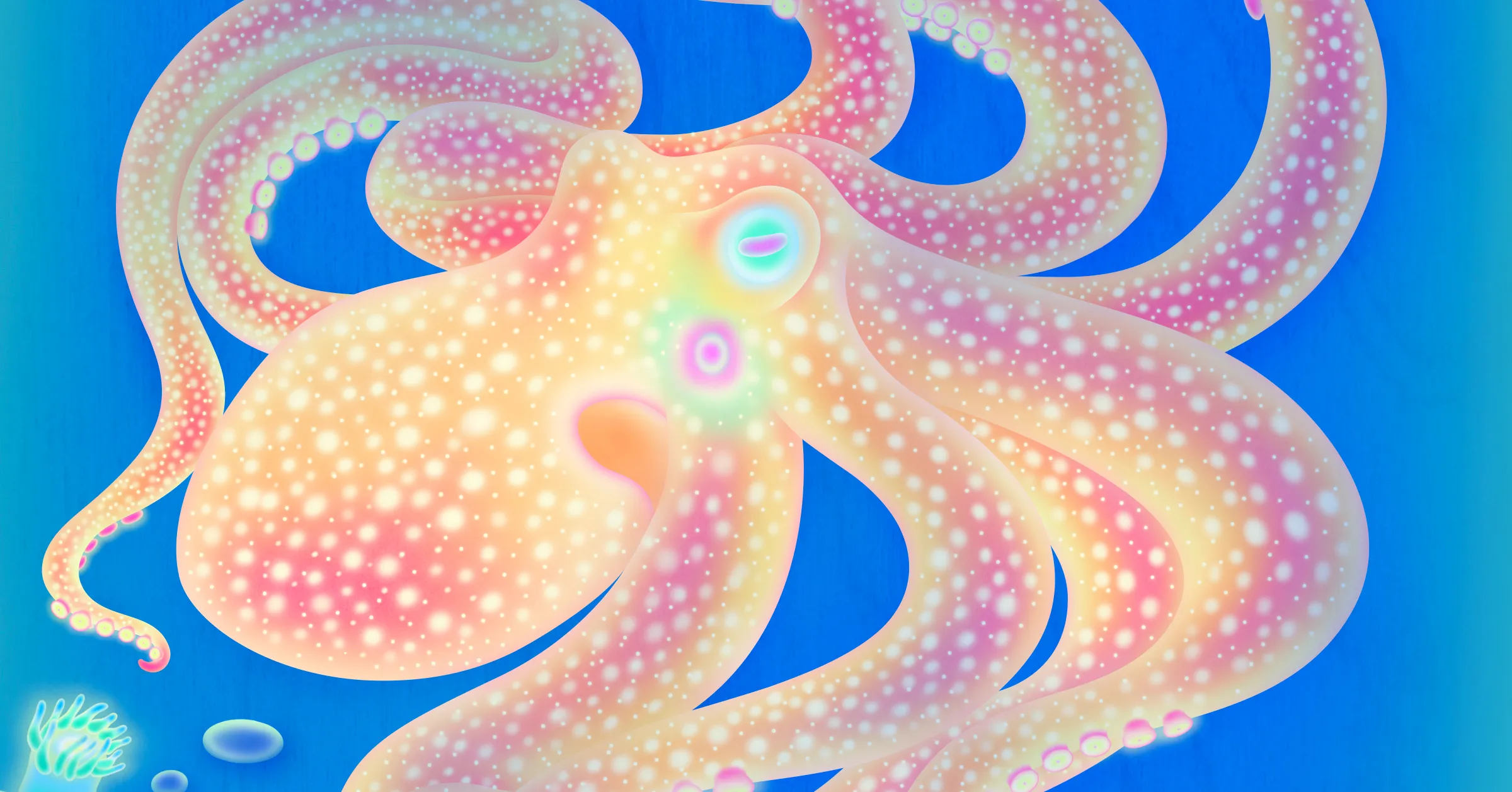
Recent reporting from WIRED underscores the unique neural architecture of octopuses, revealing that over two-thirds of their approximately 500 million neurons are distributed across their eight arms rather than concentrated in the central brain. This structure enables a form of distributed intelligence where each appendage can independently taste, feel, and move without constant direction from the central, doughnut-shaped brain. This trait is currently understood to be unique to cephalopods among invertebrates, contrasting with the vertebrate model of centralised cognition.
The octopus employs one of its arms for sexual reproduction, demonstrating the specific functional autonomy of these limbs. The central brain retains oversight, but arm actions are not always governed by it, allowing for complex behaviours such as unscrewing jars from the inside or manipulating objects with specific arms. A nerve ring connecting all eight arms facilitates this coordination, enabling explorations of the seafloor that operate with significant independence from the central nervous system.
This neural distribution allows octopuses to exhibit behaviours that challenge traditional understandings of animal intelligence. The creature’s ability to throw sand at neighbours or interact with its environment through its arms highlights the sophisticated sensory and motor capabilities housed within the appendages. These actions occur without the need for constant direction from the central brain, illustrating the practical application of this distributed neural network.
While the concept of arms having a mind of their own is often used metaphorically, the biological reality involves complex neural processing rather than human-like consciousness in each arm. The extent to which arm actions are truly independent versus coordinated by the central brain remains a subject of ongoing scientific exploration. Current understanding suggests variable control rather than total autonomy, with the central brain playing a role in broader coordination.
Scientific understanding of octopus anatomy and behaviour remains incomplete, with many mysteries regarding their neural architecture and philosophical implications still unresolved. The specific count of 500 million neurons is an approximation, and scientific estimates can vary. However, the consensus that cephalopods possess a unique form of distributed intelligence is well-supported by current research, offering new insights into the diversity of neural systems in the animal kingdom.
