Oasis comeback film traces a reunion staged in public
Oasis: Don’t Look Back In Anger follows the band’s 2025 Live 25 tour and the apparently improved relationship between Liam and Noel Gallagher.
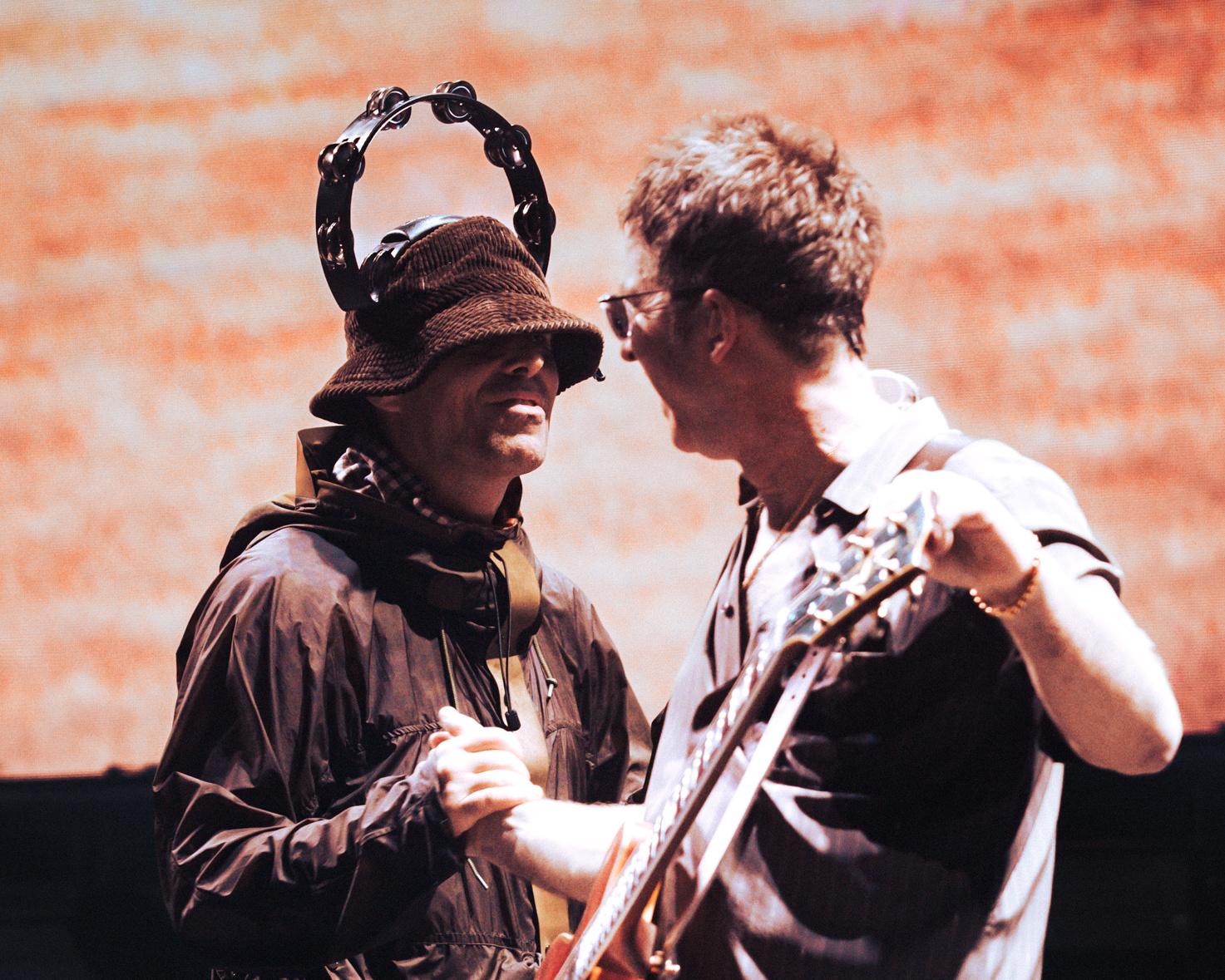
Oasis: Don’t Look Back In Anger turns the band’s 2025 comeback tour into a study of reunion, memory and mass feeling. Directed by Will Lovelace and Dylan Southern, the documentary follows 41 concerts across 14 countries and five continents, after Oasis had spent 16 years apart following their 2009 split.
The film’s central tension arrives before the opening concert in Cardiff, where Liam Gallagher’s absence leaves 74,500 fans waiting and Noel Gallagher pacing backstage. When the brothers finally appear together, the moment becomes one of the documentary’s defining images: not a confrontation or an embrace, but a return to work.
Thirteen concerts were filmed, generating hundreds of hours of footage. The directors also captured rehearsals, where cameras hidden in sound equipment recorded the brothers’ cautious reintroduction. According to Lovelace and Southern, the distance between them began to soften once the Live 25 shows were under way.
The film widens its focus beyond the stage. Fans appear in moments of grief, prayer and recognition, including a South Korean free diver who describes the band’s lyrics as helping her through depression, and a survivor of the 2017 Manchester Arena bombing reflecting on the meaning of “not looking back in anger”. A vicar’s sermon on forgiveness, and a police briefing built around Oasis song titles, add unexpected texture to the tour’s mythology.
There is also loss. In São Paulo, the band learns of the death of Stone Roses bassist Gary “Mani” Mounfield, aged 63. Liam dedicates Live Forever to him, while Noel plays the guitar solo beneath Mounfield’s image on the screen.
The documentary presents the Gallagher relationship as publicly repaired rather than definitively resolved. In a joint interview, the brothers praise each other and reflect on Oasis’s “madhouse” history. Noel says they are now in contact “way more than we ever were before”, suggesting that the reconciliation took shape not in private, but in front of the audience that had been waiting for their return.