NVIDIA’s Rubin architecture slashes data centre energy and water costs with high-temperature liquid cooling
As AI capacity expands, NVIDIA’s Rubin servers utilise 45-degree Celsius coolant to reduce footprint by two-thirds and cut cooling energy bills, marking a shift away from traditional air-cooling methods.
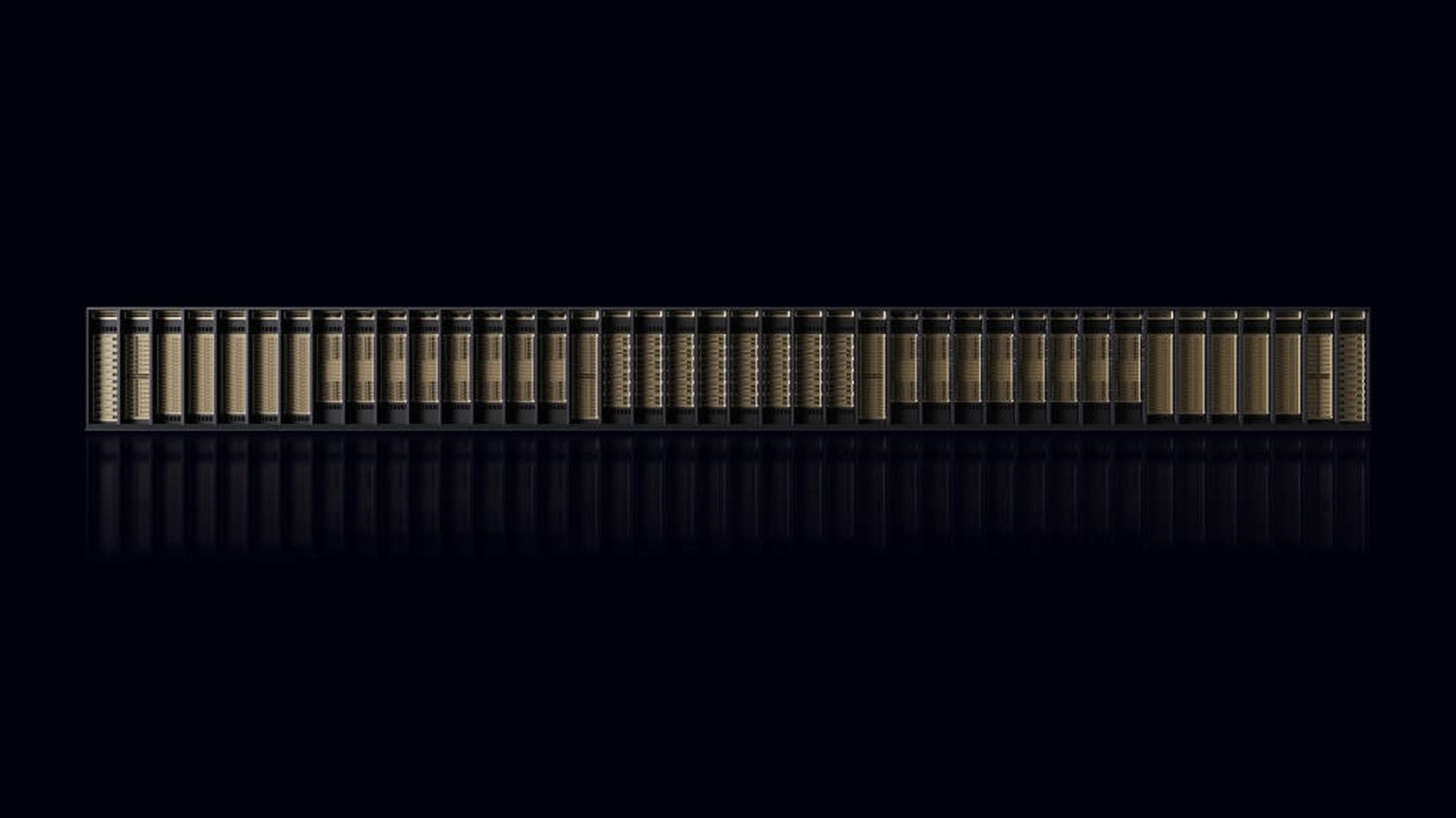
NVIDIA has launched its Rubin generation of AI infrastructure, introducing fully liquid-cooled servers that operate with coolant at 45 degrees Celsius. This architecture eliminates the need for mechanical chillers and evaporative cooling towers, significantly reducing energy consumption, water usage, and noise pollution in data centres. The new design also improves space efficiency, reducing the server footprint from six rack units to two.
The Rubin servers utilise a closed-loop liquid cooling system where coolant enters at 45 degrees Celsius and exits at approximately 55 degrees Celsius after absorbing heat from the processors. This approach contrasts with historical data centre practices that relied on air cooling, involving chilling air and pushing it across components using loud fans and chillers. Industry estimates suggest that raising chiller temperatures by one degree can cut cooling energy costs by around 4%; scaling this to a 50-megawatt facility could result in approximately $4 million in annual energy savings.
Conventional cooling-tower systems can consume roughly 2.6 million gallons of water per megawatt per year, whereas NVIDIA’s new architecture aims to bring water consumption to nearly zero. The shift to liquid cooling allows for the use of outdoor dry coolers to reject heat efficiently for most of the year, removing the need for loud fans and mechanical chillers. This addresses historical data centre challenges, including high energy bills where cooling previously accounted for up to 40% of electricity costs, massive water usage, noise pollution, and land use.
The move comes as the broader industry expands capacity, highlighted by Hut 8 recently securing a $9.8 billion lease to fully commercialise a Texas AI campus. Hut 8 reported that total contracted AI data centre capacity across its portfolio has increased to 949 megawatts, backed by 1,330 megawatts of utility capacity. Geography plays a significant role in cooling efficiency, with temperature management expectations varying between locations such as deserts and mountains, but the Rubin architecture is designed to operate effectively across these environments.
NVIDIA’s data shows that silicone chips run hot by nature, and the new cold plates keep components within safe operating limits despite the higher coolant temperatures. The Rubin gear does not just cut down costs on energy and water consumption and reduce noise levels, but also offers greater space efficiency. While the new architecture does not fix problems with existing data centres, it provides a pathway for improved infrastructure in the future, aligning with the sector’s growing demand for sustainable and efficient computing power.
