Nvidia Unveils Vera Rubin Benchmarks as It Targets Full Data Centre Dominance
The chipmaker positions its new Vera Rubin system as a plug-and-play solution for agentic AI, leveraging monolithic CPU design to challenge Intel and AMD’s market share.
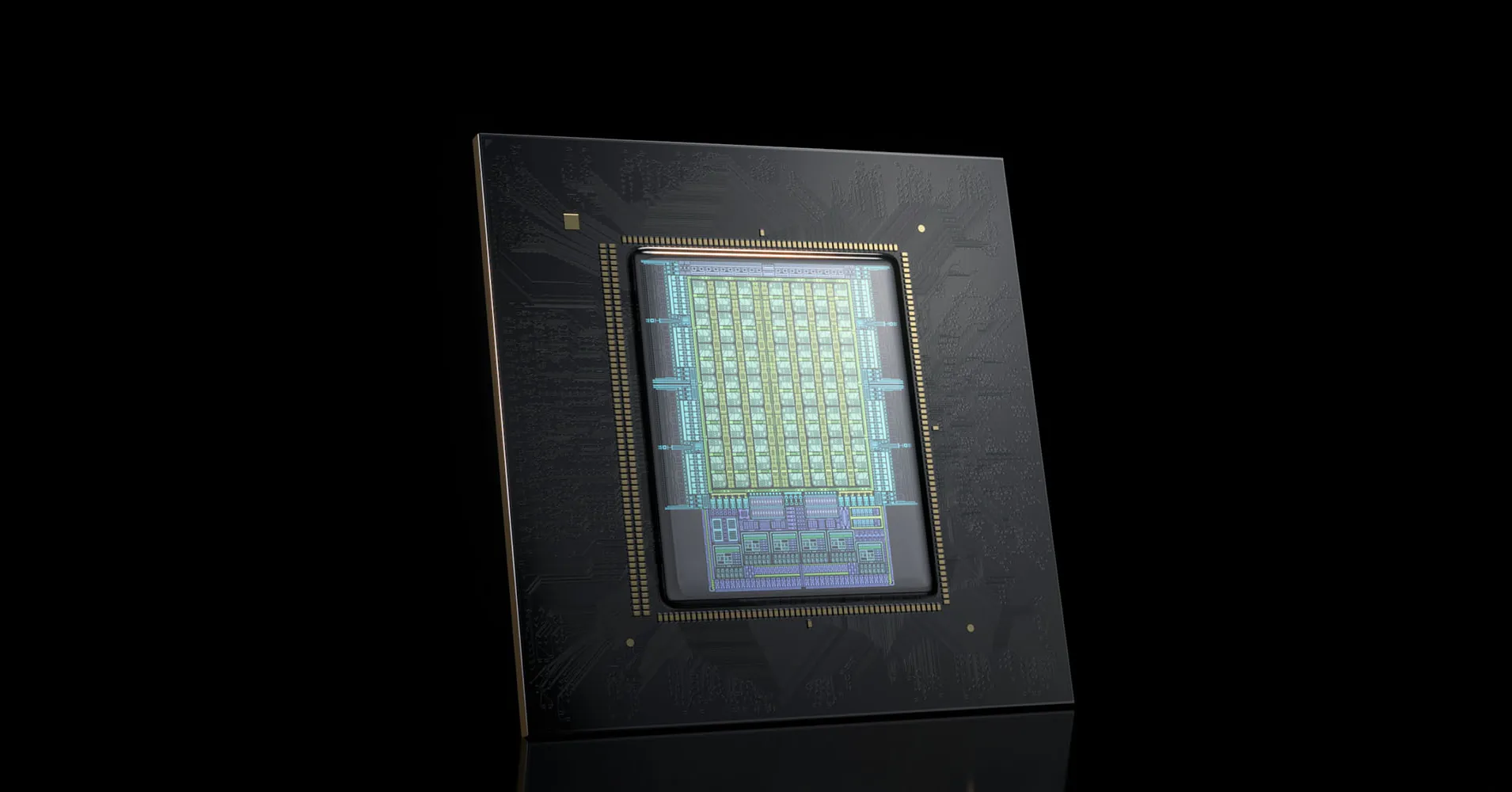
Nvidia has released performance benchmarks for its Vera Rubin platform, a hybrid computing system designed to integrate CPUs and GPUs within AI data centres. The Vera Rubin NVL 72 super chip system pairs 36 Vera CPUs with 72 Rubin GPUs, delivering ten times the tokens per watt efficiency compared to its predecessor, the Grace Blackwell. The announcement comes ahead of rival AMD’s annual conference, where the company is expected to showcase its competing Helios AI chip rack.
Executives at Nvidia’s Santa Clara headquarters described the Vera Rubin NVL 72 racks as significantly more “plug-and-play” than previous iterations. The system features full liquid cooling and a “cable-free compute” architecture, which the company claims reduces installation time from hours to minutes. OpenAI has reportedly already deployed one Vera Rubin rack in a data centre lab, while Microsoft and Oracle are listed as early customers.
Nvidia is increasingly positioning itself as a supplier of CPUs to power AI agents, not just GPUs. The Vera CPU utilises a monolithic chip design, abandoning the chiplet architecture employed by rivals such as AMD and Intel. Nvidia executives argue that stitching together multiple chiplets imposes a heavy tax on memory bandwidth, whereas the monolithic approach allows data to move more quickly across a single integrated circuit.
The company also highlighted that localized memory subsystems on the new chips offer nearly three times the memory bandwidth of the Blackwell system. This feature addresses ongoing industry shortages of high-bandwidth memory. Nvidia is selling the Vera CPU as a standalone product, with reports indicating that Chinese customers could receive shipments as early as August.
While the event digest cites a release in the second half of 2026, structured understanding notes that Nvidia executives stated the system is scheduled for release in the second half of 2025. The company remains sensitive to delay allegations following overheating issues with its previous Blackwell chips. Nvidia CEO Jensen Huang was in Japan announcing robotics partnerships during the briefing, which was led by Ian Buck and Andrew Bell.
