NVIDIA unveils RTX Spark superchip to challenge Apple and Qualcomm in PC market
The integrated system-on-chip combines MediaTek processing with NVIDIA graphics, positioning the tech giant to compete directly with Apple Silicon and Qualcomm’s Snapdragon X2 Elite in the portable computing sector.
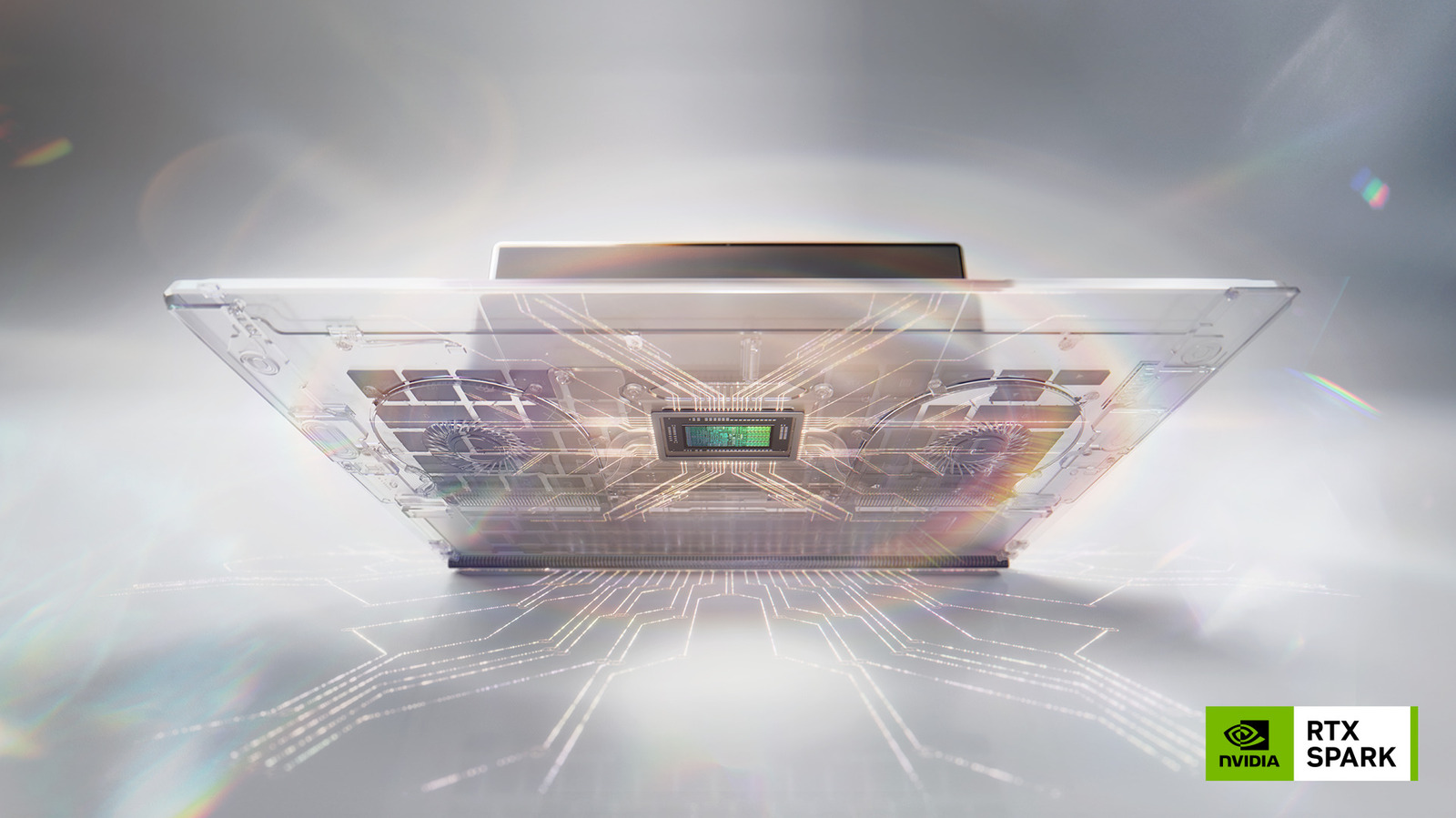
NVIDIA has announced the RTX Spark, an integrated system-on-chip designed for Windows notebooks and desktops, marking a significant expansion of its hardware portfolio beyond dedicated graphics cards. The new superchip combines a 20-core ARM CPU manufactured by MediaTek with an NVIDIA integrated GPU and unified memory ranging from 16GB to 128GB. The company claims the unit delivers unprecedented levels of artificial intelligence computing power within a low-power mobile form factor.
The RTX Spark is positioned as the portable counterpart to NVIDIA’s existing DGX Spark AI mini-desktop. Internal specifications suggest the integrated GPU offers performance comparable to the RTX 5070, aiming to provide substantial bandwidth for local AI workloads. This move places NVIDIA in direct competition with established players in the mobile silicon space, including AMD’s Ryzen AI Max, Qualcomm’s Snapdragon X2 Elite, and Apple Silicon.
Microsoft is reportedly the leading PC manufacturer interested in integrating the technology, with potential applications in devices such as the Surface Laptop Ultra. The Surface Laptop Ultra, a 15-inch notebook, has drawn comparisons to Apple’s MacBook Pro, though independent testing of the device has not yet been completed. NVIDIA stated that multiple PC makers are seeking to incorporate the RTX Spark into their upcoming hardware, signalling strong industry demand for the new architecture.
The announcement coincides with major industry events, including Computex and Microsoft Build, where hardware innovations are a central focus. By offering a unified solution for CPU, GPU, and memory, NVIDIA aims to simplify the design process for OEMs while delivering high-performance AI capabilities to Windows users. The specific timeline for when devices featuring the RTX Spark will reach the market has not been disclosed.
Performance metrics and real-world AI capabilities are currently based on NVIDIA’s claims rather than independent verification. As the competitive landscape for mobile AI silicon intensifies, the success of the RTX Spark will depend on its ability to deliver on its promises of efficiency and power in consumer and professional devices.
