Nvidia, Intel, AMD and Qualcomm reshape PC market at Computex 2026
Nvidia’s entry into consumer laptop silicon, Intel’s custom handheld chips, and AMD’s extended motherboard support signal a pivotal shift in the personal computing landscape.
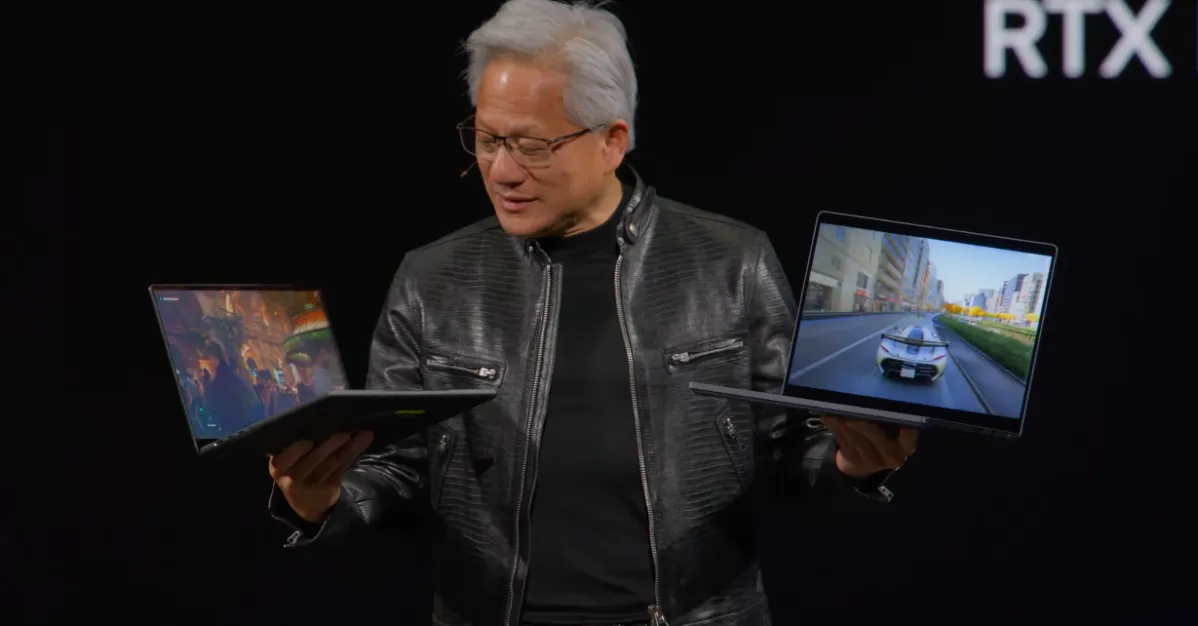
Computex 2026 has commenced in Taipei, Taiwan, marking a significant inflection point for the personal computing industry as major technology firms unveil new hardware and chip architectures. Nvidia has officially entered the consumer laptop market with the RTX Spark, its first family of consumer PC chips based on Arm architecture. The flagship version unveiled at the event features 20 CPU cores, 6,144 GPU cores, and 128GB of LPDDR5X memory, mirroring the specifications of the GB10 chip found in Nvidia’s DGX Spark personal AI supercomputer.
Microsoft, Asus, HP, Dell, Lenovo, and MSI are expected to release laptops powered by the RTX Spark chip this autumn. Microsoft also announced the Surface Laptop Ultra, a 15-inch device powered by the new Nvidia silicon, which the company describes as its most powerful Surface ever. Nvidia senior director of product management Mark Aevermann described the RTX Spark as the “most efficient PC chip ever built,” though specific performance statistics were not provided.
In response to industry-wide memory cost pressures, AMD has relaunching older hardware and committed to AM5 motherboard support through 2029. Competitors Intel and Qualcomm have also made significant announcements, with Intel launching custom handheld gaming chips, the Arc G3 and Arc G3 Extreme, and Qualcomm introducing the entry-level Snapdragon C platform for budget laptops.
Intel’s new Arc G3 chips are designed specifically for handheld gaming devices and will power upcoming hardware such as the Acer Predator Atlas 8. The chips feature a full complement of Xe3 GPU cores and are variants of Intel’s Panther Lake architecture. Qualcomm’s Snapdragon C platform aims to target the sub-$300 laptop segment, a move the company says is designed to keep entry-level devices affordable despite rising component costs.
Other notable reveals included new devices from Acer, MSI, Dell, and Alienware. Dell announced a new XPS 13 launching in July with a promotional student price of $599, while Acer introduced the Swift Air 14, a 14-inch laptop starting at $699. MSI also unveiled the Claw 8 EX AI Plus, described as the world’s first handheld to contain the Intel Arc G3 Extreme processor.
