Nvidia Enters Consumer PC Market with Arm-Based RTX Spark Processor
The RTX Spark combines a 20-core Grace CPU with up to 6,144 Blackwell GPU cores, aiming to deliver high-performance AI and gaming capabilities in power-efficient devices.
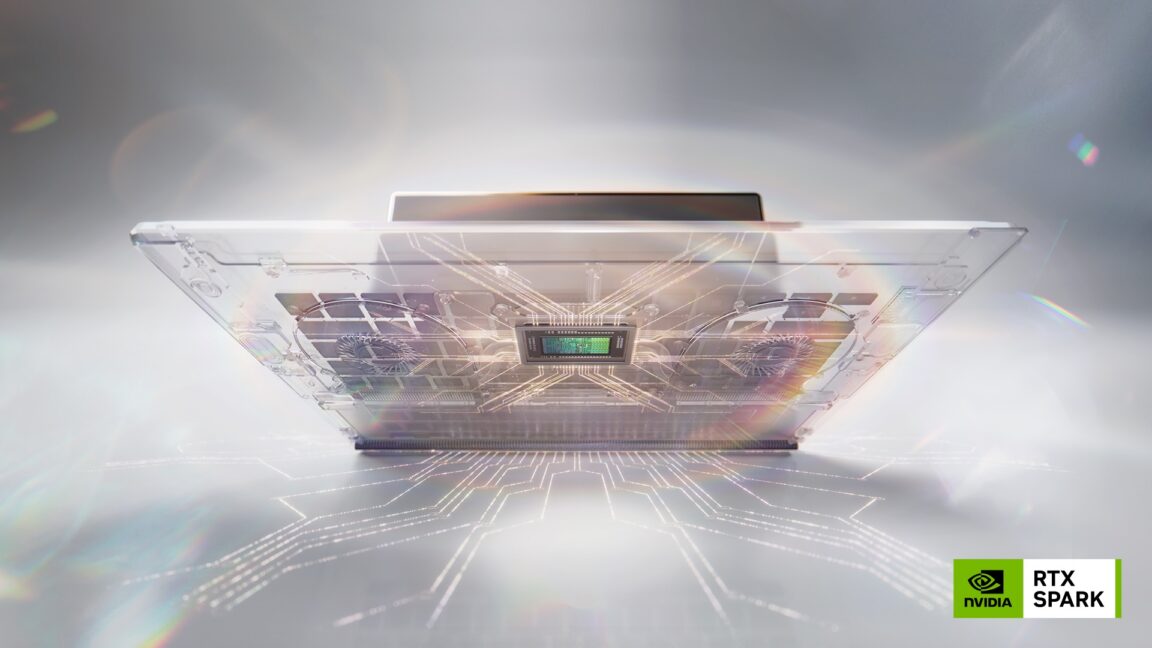
Nvidia has officially entered the consumer laptop market with the announcement of the RTX Spark, an Arm-based processor designed for Windows PCs. Unveiled at Computex 2026 in Taipei, the chip marks a significant strategic shift for the company, which has primarily focused on AI data centre products in recent years. The RTX Spark integrates a 20-core Nvidia Grace CPU, co-developed with MediaTek, with up to 6,144 Blackwell-based GPU cores and supports up to 128GB of unified LPDDR5x memory.
The processor is targeted at slim Windows laptops and compact desktops, with availability expected this autumn. Partners including Asus, Dell, HP, Lenovo, Microsoft, MSI, Acer, and Gigabyte are slated to release devices powered by the new silicon. Microsoft simultaneously announced the Surface Laptop Ultra, a 15-inch device described as its most powerful Surface ever, which will be powered by the RTX Spark. Nvidia senior director of product management Mark Aevermann described the chip as the “most efficient PC chip ever built.”
The RTX Spark appears to be a consumer rebrand of the DGX Spark silicon launched late last year for AI developer workstations. The flagship configuration features 10 high-performance Arm Cortex-X925 cores and 10 medium-sized Cortex-A725 cores, with a maximum power draw of 80W. This architecture mirrors Apple’s M5 Pro and M5 Max chips, utilising a mix of performance and efficiency cores without smaller efficiency cores. The GPU performance is comparable to the desktop GeForce RTX 5070, although it will be limited by laptop power envelopes and slower LPDDR5x memory compared to desktop GDDR7.
Unified memory allows the CPU and GPU to access over 100GB of VRAM, offsetting the slower memory speed for AI and machine learning workflows. This design makes the chip particularly relevant for developers and users running local AI models, similar to the utility of Apple’s Mac mini and Mac Studio. The Blackwell architecture also enables the use of DLSS upscaling and frame generation features, including the upcoming DLSS 5 release.
Nvidia is actively collaborating with Microsoft, Riot Games, Krafton, and developers of anti-cheat software such as Easy Anti-Cheat, BattlEye, and Denuvo to improve gaming support on Arm-based Windows systems. This effort aims to address historical issues with translated games and kernel-level anti-cheat requirements. Lower-end variants, codenamed N1, are reportedly in development with up to 12 CPU cores and a 45W power envelope, potentially targeting thin-and-light laptops.
