Nuro targets San Francisco robotaxi launch with ‘second mover’ strategy
Co-CEO Dave Ferguson says the company will avoid incremental rollouts, aiming for a broad operational domain from day one while learning from competitors’ operational challenges.
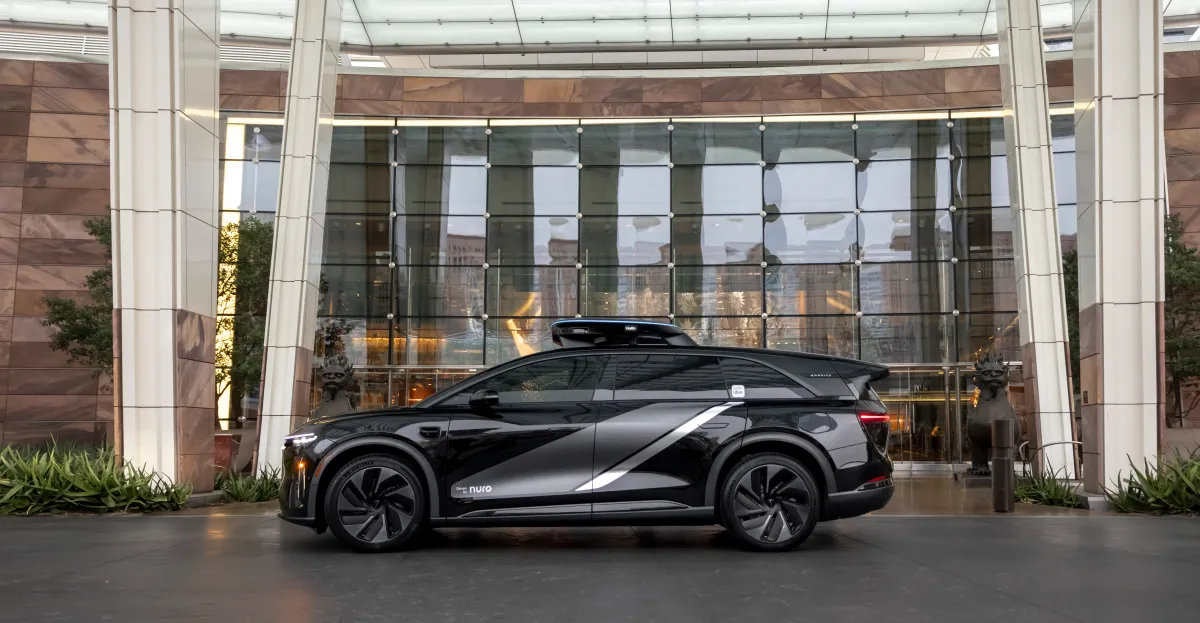
Nuro has secured initial regulatory permits to launch its robotaxi service in San Francisco later this year, marking a significant pivot for the autonomous vehicle company. Co-founder and co-CEO Dave Ferguson stated that the firm intends to capitalise on its position as a ‘second mover’ in the market, aiming to refine its systems by analysing the operational challenges and mistakes of industry leader Waymo.
The service is the result of a tripartite partnership involving Uber and Lucid. Nuro has received hundreds of millions of dollars in investment from Uber, which will own and operate the fleet. The vehicles will be Lucid Gravity SUVs, with Nuro’s sensing and compute stack integrated directly into the production line to provide Level 4 autonomy. Uber will manage the depots, infrastructure, and remote assistance for the vehicles.
Ferguson emphasised that Nuro plans to launch with a “very broad” operational design domain rather than an ultra-incremental rollout. Unlike some competitors who may begin with limited scenarios such as protected intersections, Nuro aims to provide a broadly useful service from day one, although it acknowledged that features like freeway driving may be added later. The company intends to build public trust by being transparent about driving statistics, mirroring the approach taken by Waymo.
The role of remote assistance has drawn political scrutiny, with some members of Congress demanding greater transparency regarding offsite workers. Ferguson clarified that Nuro’s remote operators do not actively control the vehicles like a video game but instead provide prompts to assist when the system is confused. He described the public perception of remote workers as driving cars as a misconception that is far from the reality of how the technology functions.
Founded in 2016 by Ferguson and Jiajun Zhu, veterans of Google’s self-driving car project, Nuro originally operated as a robot delivery service before pivoting to robotaxis in 2024. While Waymo currently leads the market with over 3,000 driverless cars across at least 10 US cities, Nuro believes its technology is transferable and that observing early competitors provides a strategic advantage. The company also plans to license its autonomous driving technology to other manufacturers for advanced driver-assist systems, though no deals have been announced.
