NSF decommissions deep-ocean monitoring network, sparking alarm in Alaska’s fishing sector
Critics warn the loss of Ocean Station Papa threatens the state’s $5.3 billion seafood industry and coastal resilience, while the agency cites strategic reprioritisation.
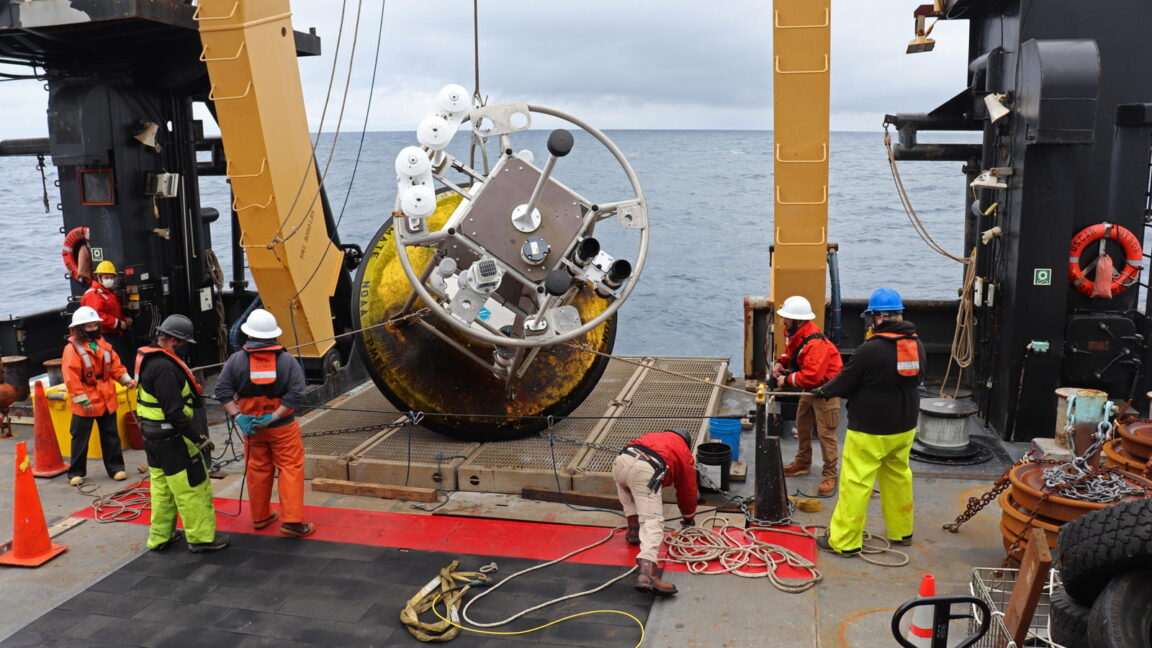
The US National Science Foundation (NSF) has announced plans to decommission the Ocean Observatories Initiative, a deep-sea monitoring network valued at nearly $368 million. The decision removes real-time data streams on ocean chemistry, temperature, salinity, and wave action, specifically impacting Ocean Station Papa, a key observing system in the Gulf of Alaska situated at a depth of nearly 14,000 feet. The move has triggered significant concern in Alaska, the nation’s top fish-producing state, where temperatures are warming at twice the global average rate.
Alaska’s commercial seafood industry, valued at $5.3 billion and employing nearly 42,000 people, faces increased risk due to the loss of monitoring data. Michelle Stratton, executive director of the Alaska Marine Community Coalition, stated that the removal of Ocean Station Papa eliminates one of the state’s primary systems for documenting real-time ocean changes. She noted that the decision comes during a period of salmon crashes, crab collapses, and repeated marine heatwaves, arguing that the loss of data undermines efforts to understand and manage these fisheries.
The NSF stated that the decommissioning aligns with a strategy to prioritise evolving scientific priorities and emerging technologies, alongside smart lifecycle management of its research infrastructure. Spokesperson Cassandra Eichner confirmed that all previously collected data will remain accessible to the public and that the agency remains committed to ocean science. The Ocean Observatories Initiative consists of approximately 900 deep-sea instruments distributed across the Pacific and Atlantic Oceans.
Critics have linked the decision to Project 2025, a conservative governance blueprint prepared by the Heritage Foundation and enacted by the Trump administration, which has characterised government-sponsored oceanic research as climate alarmism. Rick Thoman, a climate specialist at the University of Alaska Fairbanks, warned that other nations, potentially including China, may deploy instruments to fill the data void in international waters. He emphasised that stopping US monitoring does not halt global understanding of the ocean, as such efforts are inherently international.
The loss of data also impacts coastal hazard planning and weather forecasting, which are critical for vulnerable Indigenous communities. Typhoon Halong devastated villages in Western Alaska last October, highlighting the need for accurate storm forecasting. Ocean Station Papa’s sensors help forecasters model storm intensification and water levels, providing early warnings for super-storms. With Alaska preparing for potential El Niño conditions later in the summer, experts argue that retaining deep-ocean monitoring is essential for economic, cultural, and safety resilience.
