NPC warns UK supply chains vulnerable to geopolitical shocks
The National Preparedness Commission highlights patchy compliance with buffer stock requirements and a lack of strategic reserves, citing the US-Israel war with Iran and Donald Trump’s 'America First' policy as key drivers of increased vulnerability.
Britain’s vital supply chains are ill-equipped to withstand major geopolitical shocks, including a potential war with Russia, according to a new report by the National Preparedness Commission (NPC). The commission has urged ministers to adopt ‘worst-case scenario’ planning, arguing that the UK is falling behind other European states in the strategic stockpiling of critical medicines and food.
The report, titled *Future-proofing Security of Supply in a Contested World*, was launched privately at Westminster last week. It identifies the US-Israel war with Iran in March 2026, the ongoing conflict in the Middle East, and Donald Trump’s ‘America First’ policy as significant factors increasing the UK’s vulnerability. The commission warns that the transformation of the United States into a less reliable partner necessitates a shift in how London approaches national security resilience.
In the health sector, the report highlights that while medicine suppliers are required to hold at least eight weeks of buffer stock for hospitals, compliance is described as patchy and is not mandated for primary care pharmacies. The government currently has no intention to produce a critical medicines list or strategically stockpile medical equipment, except for military personnel in the event of a chemical, biological, radiological and nuclear (CBRN) attack. This stands in contrast to many EU states, which require pharmaceutical companies to hold buffer stocks ranging from one to six months.
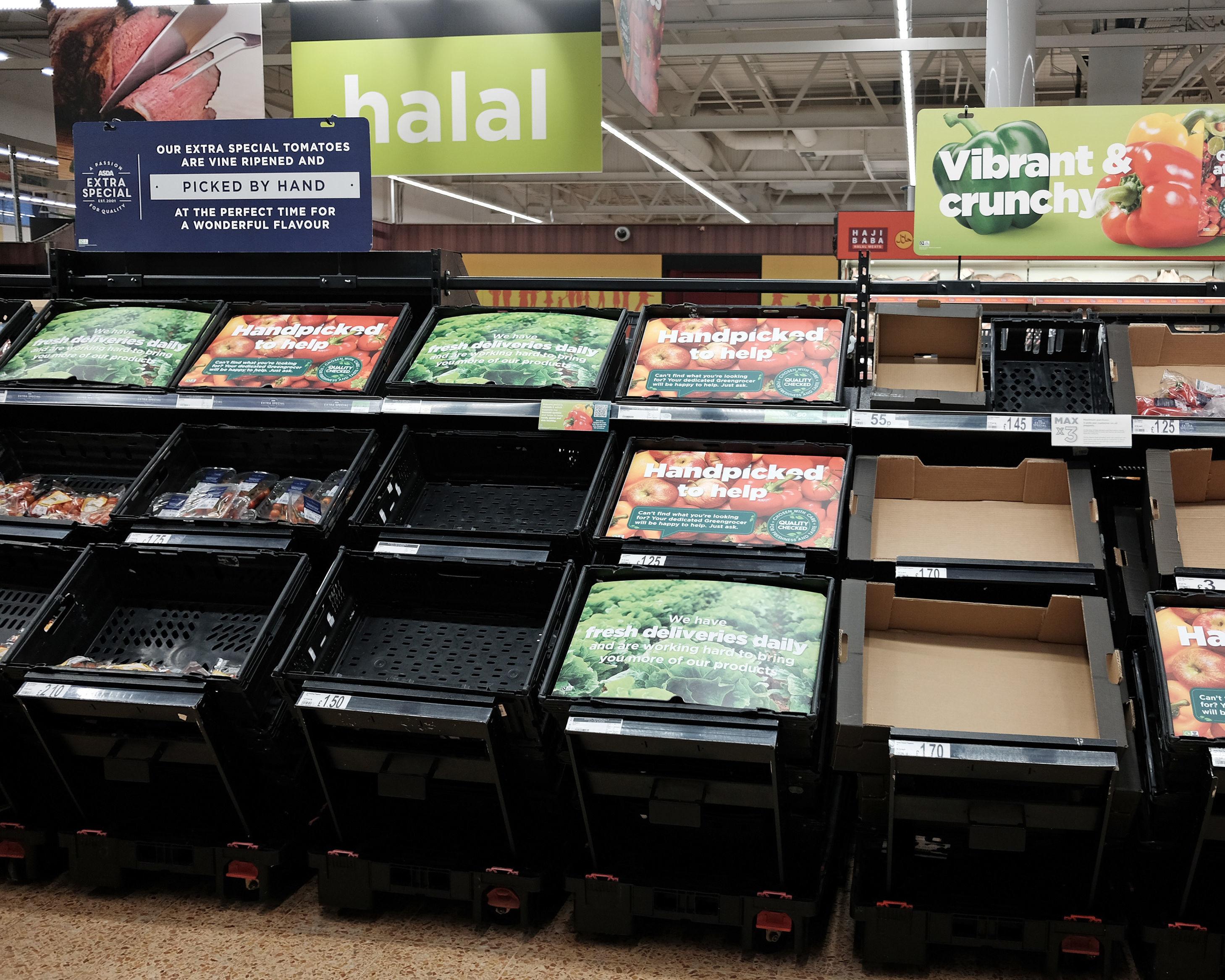
Food security presents similar challenges, with the UK described as one of the least self-sufficient countries in Europe regarding food supply. The government maintains no strategic stockpile and does not require wholesalers to hold buffer stocks. Meanwhile, countries such as Norway and Sweden have begun rebuilding emergency grain reserves, and other EU states actively encourage households to store several days’ worth of food and water for emergencies.
Richard Smith-Bingham, the report’s author and former head of insights at Marsh, stated that ‘hard choices’ are needed to reduce vulnerability to coercion. His comments come nearly a year after the government’s national security strategy and despite Prime Minister Keir Starmer’s calls for a ‘whole-of-society’ approach. However, the Commons defence committee reported in November last year that the ‘national conversation’ on security resilience had yet to begin, with little public engagement.
A government spokesperson defended the UK’s position, stating that supply chains are strong and resilient. The spokesperson cited the recent reopening of a CO2 plant in the north-east as evidence of the government’s ability to act quickly to protect supplies when pressures emerge.