NOAA deploys low-cost seafloor-hopping submersibles for Pacific deep-sea survey
The mission aims to collect high-resolution imagery and sediment cores containing critical minerals, though experts caution regarding ecological risks
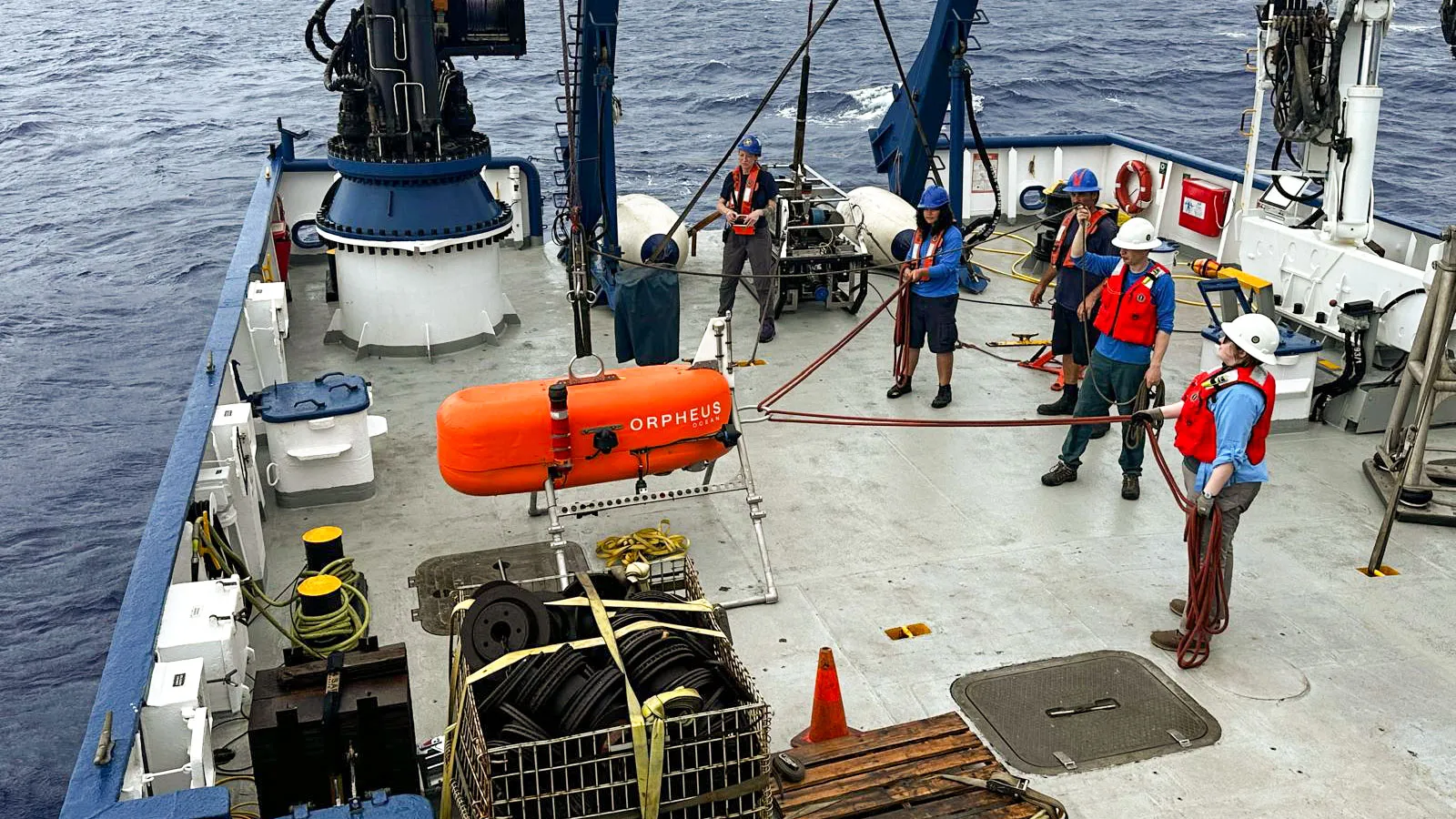
The US National Oceanic and Atmospheric Administration (NOAA) research vessel Rainier has begun a major expedition to map more than 8,000 square nautical miles of the Pacific seafloor. Deployed from the ship are two autonomous underwater vehicles manufactured by the company Orpheus Ocean, marking the biggest test yet for the technology. The mission involves operations over large ranges for multiple weeks, focusing on the ocean floor between Australia and South America.
These short, stout submersibles are designed to dive nearly 6,000 metres and hop along the seabed to collect high-resolution imagery alongside physical sediment cores. The vehicles are specifically engineered to push into soft sediment and extract samples containing critical mineral nodules, including copper, cobalt, nickel, and manganese. This approach allows the autonomous vehicles to gather data that has never been explored in detail by NOAA or the wider scientific community.
A key feature of this deployment is the cost efficiency of the equipment. Each Orpheus submersible costs approximately $200,000 to build, a fraction of the $5 million to $10 million price tag associated with traditional deep-sea vehicles. Unlike standard gliding autonomous underwater vehicles, these units use legs to navigate the terrain and can travel up to 10 kilometres from the ship, capturing one high-resolution image every second.
Experts such as Victoria Orphan from the California Institute of Technology and Andrew Sweetman from the Scottish Association for Marine Science note that while there have been growing pains with previous prototypes, the technology offers a unique ability to combine wide-area surveying with precise sampling. Sweetman suggests the small size of the vessels may help democratise deep-sea science for nations without access to large research vessels.
The expedition aims to advance deep-sea science and inform potential mining activities, though experts warn of the ecological risks associated with seabed disturbance. Orphan highlights that organisms living in these deep-sea communities are not adapted to significant disturbance and may take a very long time to recover if the environment is disrupted.
As the neon-coloured robots plunge into the Pacific, they represent a shift towards smaller, more accessible robotic explorers capable of probing the interconnected ecological and biogeochemical systems of the deep sea. The data collected will help establish these vehicles as a tool for government agencies, scientists, and companies, potentially raising the standards for how the seabed is surveyed and regulated.
