NFL Executives Debate Running Back Value Amid Record-Breaking Contracts
Despite historic extensions for Detroit’s Jahmyr Gibbs, Atlanta’s Bijan Robinson, and Indianapolis’ Jonathan Taylor, contract negotiators argue that running backs still offer significant salary cap value relative to their on-field impact.
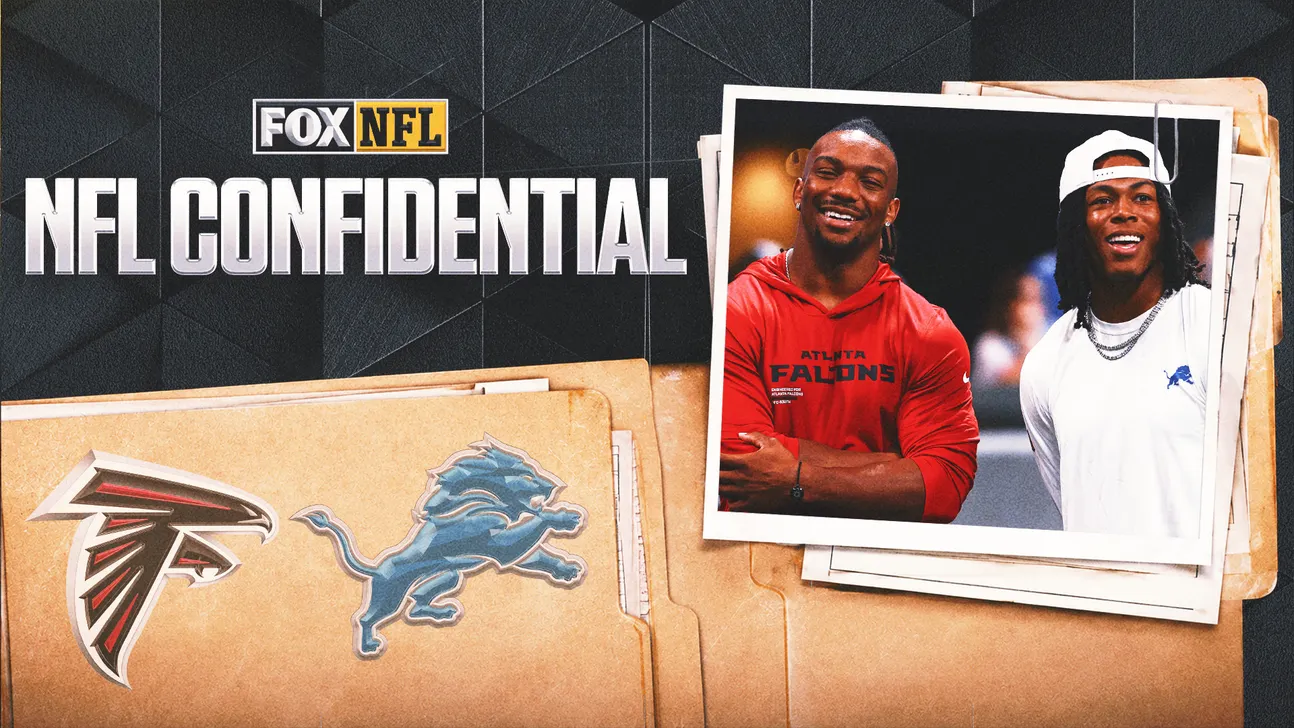
NFL executives are reassessing the market value of the running back position following a series of high-profile contract extensions for Jahmyr Gibbs, Bijan Robinson, and Jonathan Taylor. All three players secured multi-year deals exceeding $20 million annually, marking a significant shift from years where the position was often viewed as dispensable. Gibbs signed a three-year, $67.5 million pact with the Detroit Lions, becoming the highest-paid running back in NFL history. This followed Robinson’s three-year, $66.75 million agreement with the Atlanta Falcons, which previously held the record, and Taylor’s two-year, $44 million extension with the Indianapolis Colts, making him the third highest-paid player at the position.
These financial commitments coincide with the Arizona Cardinals selecting running back Jeremiah Love with the third overall pick in the 2026 NFL Draft, the first time a running back has been taken in the top five in eight years. The convergence of draft capital and lucrative extensions has prompted debate regarding whether the position is undergoing a renaissance or if the market remains distorted.
Despite the historic nature of these contracts, league sources indicate that front offices continue to view running backs as a value opportunity for salary cap management. A contract negotiator noted that while Robinson and Gibbs are effective playmakers and pass catchers, their salaries pale in comparison to those of top wide receivers, despite comparable on-field impact. The source argued that Robinson and Gibbs function as $30 million to $40 million players in terms of impact, yet their actual compensation reflects a different valuation metric.
To illustrate this discrepancy, the negotiator compared Gibbs’ average annual salary of $22.5 million to that of Seattle Seahawks wide receiver Jaxon Smith-Njigba, who commands $42.15 million annually. Smith-Njigba earns 87% more than Gibbs, yet the negotiator contended that he is not 87% more impactful on the field. This comparison underscores a prevailing sentiment that the running back market has not yet aligned with the true value these players bring to their teams’ offensive schemes.
Robinson leads all running backs in scrimmage yards with 5,648 since entering the league in 2023, a statistic that highlights the elevated role of modern running backs. However, the broader market remains constrained by the salaries of elite wide receivers. Saquon Barkley remains the only other running back to previously command an average annual salary exceeding $20 million, with a deal worth $20.6 million. The recent extensions for Gibbs, Robinson, and Taylor represent a breakthrough, occurring just three years after Robinson and Gibbs were drafted in the first round of the 2023 NFL Draft.