Neutrino Detection Enters Precision Era as JUNO Releases Initial Data
A WIRED analysis outlines the evolution of neutrino detection from the 1956 Cowan-Reines experiment to modern observatories, highlighting recent breakthroughs in oscillation measurements and ongoing construction of major international projects.
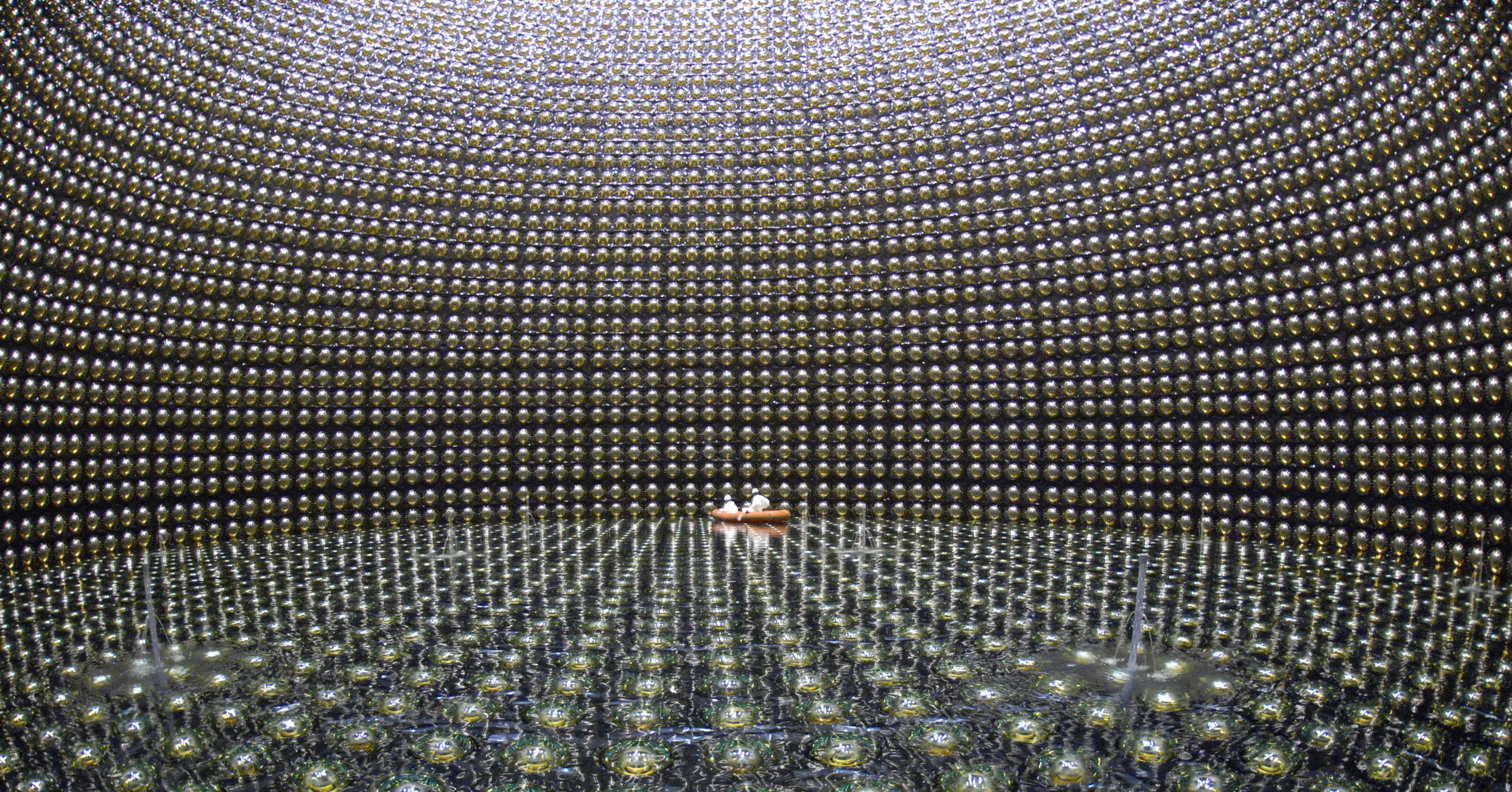
A recent analysis by WIRED details the trajectory of neutrino detection, tracing the field from the first successful experiment in 1956 to the current generation of massive underground and underwater observatories. The report underscores how scientists have utilised mines, Antarctic ice and the Mediterranean Sea to address fundamental questions regarding solar neutrinos and particle oscillations.
The journey began with Wolfgang Pauli’s 1930 postulation of a particle to explain missing energy in beta decay, a hypothesis confirmed by Clyde Cowan and Frederick Reines in 1956 at the Savannah River Plant. Their detection of the neutrino, a virtually undetectable particle with almost no mass or charge, opened a new avenue for observing nuclear reactions within stars, including the sun.
In the 1960s, Raymond Davis Jr. identified the solar neutrino problem after detecting only one-third of the predicted neutrinos using a chlorine-based detector in the Homestake mine. This discrepancy was later resolved by experiments such as Kamiokande, Super-Kamiokande and the Sudbury Neutrino Observatory, which demonstrated that neutrinos oscillate between three flavours and possess mass, a finding that challenged existing physics models.
Recent developments include the launch of China’s Jiangmen Underground Neutrino Observatory (JUNO) in 2025. Initial data published in June 2026 provided the most precise measurements of neutrino oscillation reported to date. Meanwhile, the Cubic Kilometer Neutrino Telescope (KM3NET) in the Mediterranean has detected the highest-energy cosmic neutrino on record, although its source remains unidentified.
Looking ahead, Japan’s Hyper-Kamiokande and the Deep Underground Neutrino Experiment (DUNE) in the American Midwest are expected to begin operation later this decade. These projects, alongside the IceCube Neutrino Observatory in Antarctica, continue the tradition of building large-scale detectors to unravel the secrets of the particle that Pauli once deemed impossible to catch.