NASA satellites pinpoint GPS jammer in Iran, offering new tool for navigation safety
Analysis of satellite data reveals CYGNSS outperformed NISAR in locating a high-power interference source near Shiraz, with implications for aviation and maritime sectors facing rising signal disruption.
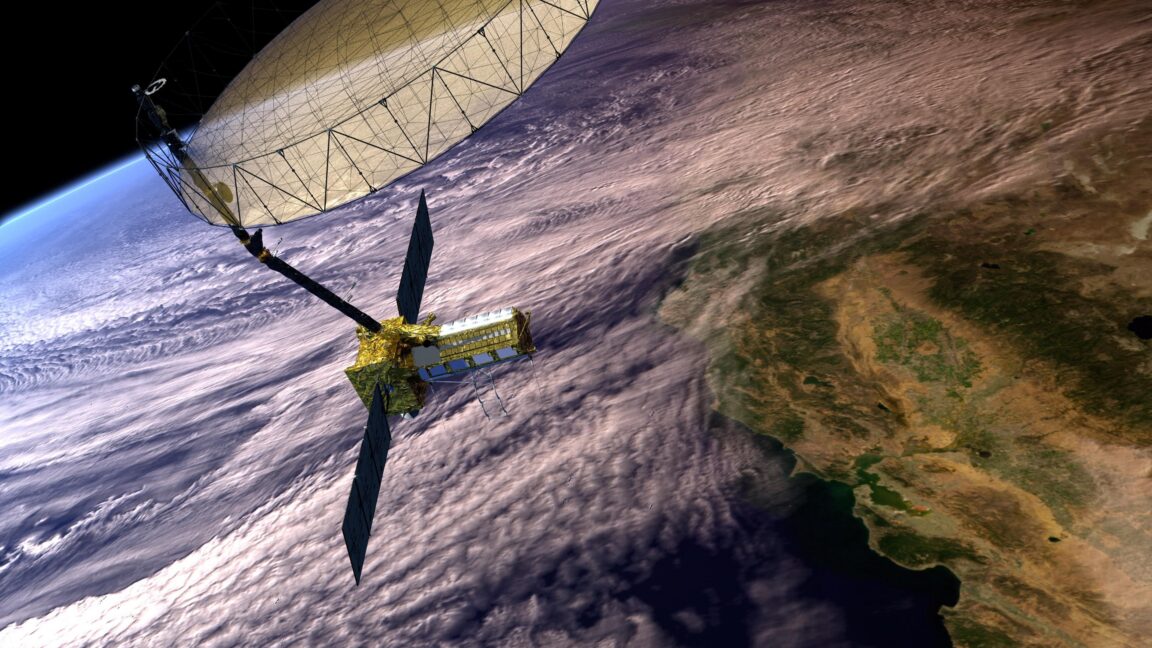
An experiment led by Sean Gorman of Zephr.xyz has demonstrated that NASA satellites can identify the approximate locations of GPS jammers, marking a significant step in monitoring navigation interference. Using data from the Cyclone Global Navigation Satellite System (CYGNSS) and the NASA-ISRO Synthetic Aperture Radar (NISAR), researchers successfully located a high-power jammer near Shiraz, Iran, which has been active since early 2026. The findings suggest potential applications for aviation and maritime safety warnings in regions experiencing increased GPS interference, including the Persian Gulf following recent military operations.
The study focused on a mystery jammer that increased its signal intensity fivefold since the start of the Middle East conflict, which began with US and Israeli attacks on Iran on 28 February 2026. To validate the satellite systems’ performance, Gorman and colleagues first used independent signals intelligence to identify and locate the jammer. They then conducted a controlled experiment using data from two jammer-on dates in January 2026 and two jammer-off dates in late December 2025, applying various detection and signal analysis techniques to approximate the source’s position.
The CYGNSS system, which uses eight microsatellites to detect GPS signals reflected from ocean surfaces, located the jammer within 4.33 kilometres of its actual position. The system achieved a circular error probable (CEP) of 3.48 kilometres, meaning 50 per cent of estimates from repeated analyses would fall within this radius. This performance outperformed the NISAR system, which located the jammer within 6.26 kilometres with a CEP of 6.88 kilometres, and a combined fused approach that resulted in a location within 4.69 kilometres and a CEP of 7.85 kilometres.
Clara Chew, principal scientist at Muon Space, noted that while the satellites cannot provide near-real-time monitoring due to data availability delays, identifying approximate locations could be helpful for flight planning and indicating high-risk areas for maritime shipping. The research builds on earlier work by Chew and colleagues that used CYGNSS data to map regions rife with GPS interference, though Gorman’s study uniquely attempted to geolocate specific jammers rather than just gridding noise variables.
The demonstration comes as navigation interference spreads beyond major conflict zones to impact shipping in the Baltic Sea, Mediterranean, and South China Sea. Approximately 900 flights experience GPS disruptions daily, including a dozen transatlantic flights. During the initial phase of the conflict, more than 1,100 ships experienced GPS interference across the Persian Gulf between 28 February and 1 March 2026, with much of the contested Strait of Hormuz still experiencing jamming and spoofing.
