NASA engineers validate supersonic rotor design for Mars helicopter missions
A breakthrough at NASA's Jet Propulsion Laboratory demonstrates that next-generation rotor blades can safely exceed the speed of sound, delivering a significant lift boost for future aerial exploration of the Red Planet.
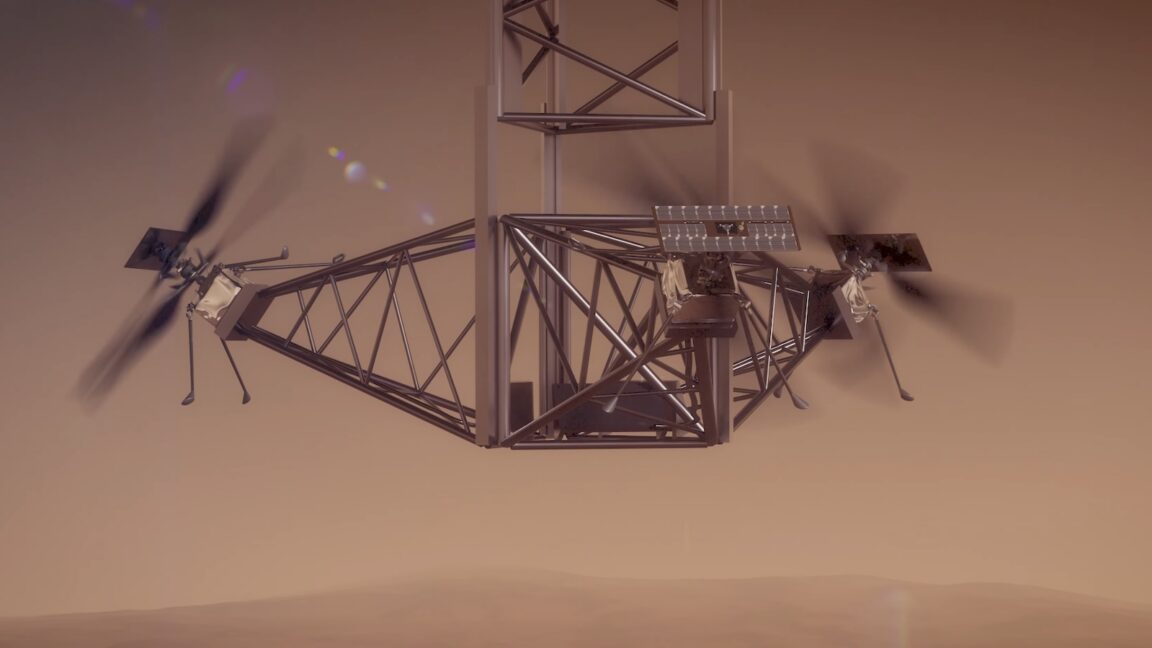
Engineers at NASA's Jet Propulsion Laboratory have successfully validated next-generation rotor blades capable of operating at supersonic speeds within a chamber simulating Mars' thin atmosphere. The tests confirmed that the new design can safely exceed the speed of sound without structural failure, addressing previous concerns regarding carbon-fibre integrity that limited earlier missions. This technological leap delivers a 30 per cent increase in lift capability compared to prior designs, enabling future Mars helicopters to carry heavier scientific payloads and batteries for extended flight durations.
The validation comes as NASA prepares for the upcoming SkyFall mission, which plans to deploy three such helicopters to Mars by late 2028. During the trials, rotor tips reached a top speed of Mach 1.08, surpassing the Mach 1 barrier without disintegrating. This achievement is critical because the dual-bladed Ingenuity helicopter, which pioneered air travel on Mars, was deliberately restricted to subsonic speeds to prevent the carbon-fibre rotors from shattering. The new configuration allows the aircraft to generate the necessary lift in the planet's rarefied air, which is only one per cent the density of Earth's sea-level atmosphere.
To ensure the reliability of the hardware, the testing protocol involved a two-stage approach. Initial trials utilised a three-bladed design, followed by tests using the actual two-bladed configuration intended for the SkyFall mission. These blades are slightly longer, allowing them to reach supersonic speeds at a lower revolutions per minute compared to the Ingenuity helicopter. Engineers also employed active headwinds generated by an internal fan to simulate worst-case flight conditions while pushing rotor speeds to their limits, ensuring the design could withstand high-stress scenarios.
The implications of this breakthrough extend beyond the immediate mission timeline. By confirming that rotors can operate safely beyond the Mach 1 barrier, the technology supports the deployment of heavier vehicles required for advanced scientific instruments, such as sensors to search for ice in the Martian soil. Future rotorcraft will also rely on larger batteries to enable longer flights, a necessity given that the SkyFall helicopters will operate without a nearby rover for communication or battery recharging.
While the blades survived supersonic speeds in simulation, the integration of this new technology into the SkyFall mission relies on consistent replication across all three units planned for launch. The success of the two-bladed configuration must be maintained to meet the ambitious schedule, with any delays in manufacturing or further testing potentially impacting the launch window. Long-term durability under actual Martian dust and radiation conditions remains to be fully verified in flight, though the laboratory results provide a strong foundation for the next phase of planetary exploration.
