NASA confirms end of MAVEN mission, seeks commercial relay replacement by 2030s
After 11 years of operation, the Mars Atmosphere and Volatile Evolution probe has been decommissioned following a loss of signal. NASA is now inviting commercial proposals to establish a dedicated telecommunications network for the planet.
NASA has officially ceased search efforts for the MAVEN spacecraft, marking the conclusion of an 11-year mission that significantly exceeded its original prime duration. The spacecraft lost contact with Earth on 6 December during a routine occultation behind Mars, and despite contingency plans to restore the link, ground teams were unable to regain signal after the expected one-hour window. Mike Moreau, MAVEN’s project manager at NASA’s Goddard Space Flight Center, confirmed that the agency is now beginning activities to decommission the mission.
Engineers have recovered telemetry fragments indicating the spacecraft was tumbling at approximately 2.7 revolutions per minute, a rate faster than expected. This uncontrolled rotation likely prevented the solar arrays from charging the batteries, leading to power depletion. While the root cause of the initial anomaly remains under review by an investigation board, the data confirms the spacecraft reached a power state that was not supportable for continued operations. MAVEN, which launched in 2013, will remain in an elliptical orbit around Mars for 50 to 100 years before naturally decaying into the atmosphere.
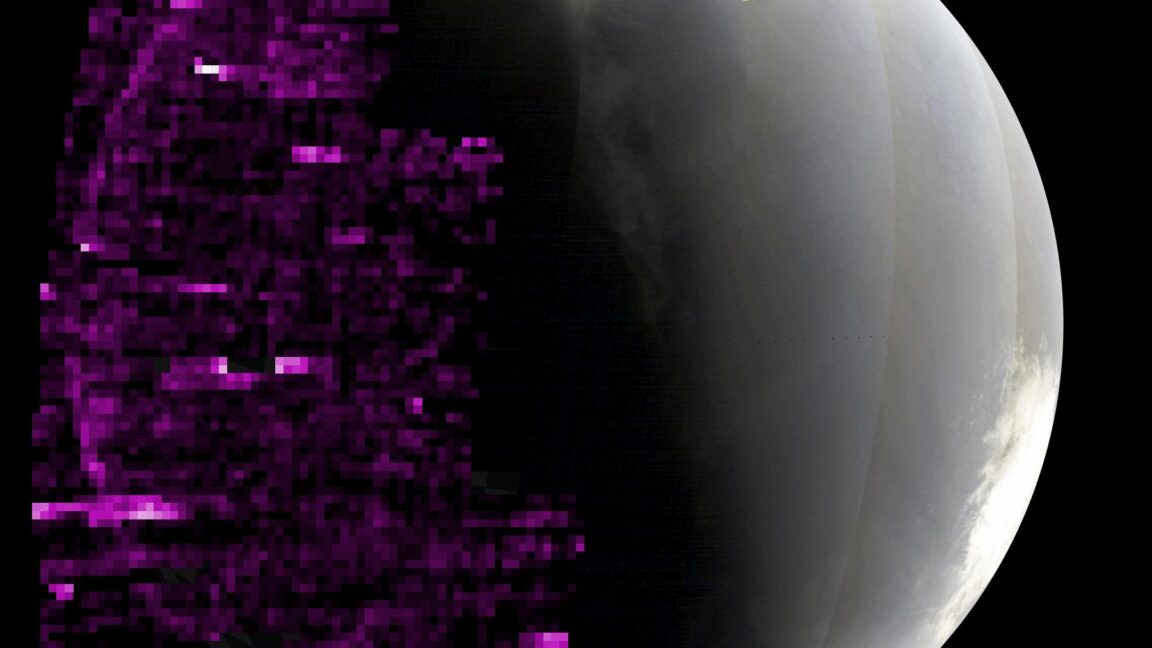
The mission delivered substantial scientific returns, particularly in identifying atmospheric escape mechanisms. Principal investigator Shannon Curry highlighted MAVEN’s discovery of sputtering, a process where charged particles from the solar wind strip the Martian atmosphere. This finding provided critical evidence of how Mars lost its thicker, warmer atmosphere over billions of years. The spacecraft also captured significant data during a 2024 solar storm, observing orders of magnitude more atmospheric escape and images of glowing aurora across the planet.
The loss of MAVEN impacts the Mars Relay Network, which the spacecraft supported for more than 8 percent of planned relay sessions but accounted for nearly 18 percent of all data returned. Tiffany Morgan, director of NASA’s Mars Exploration Program, noted that while the network remains resilient, the absence of MAVEN has caused occasional delays in returning science data from rovers such as Perseverance and Curiosity. Three of the four remaining relay orbiters are older than MAVEN, raising concerns about long-term capacity.
To address these infrastructure gaps, NASA is seeking commercial replacements through the Mars Telecommunications Network. The agency released a request for proposals last month, aiming for operational status by the 2030s. Greg Heckler, deputy program manager at NASA’s Space Communications and Navigation office, stated there is urgency in establishing this new architecture to support current operations and enable future missions. The commercial system is designed to provide higher throughput and broader coverage than the current government-operated network.
