NASA commences training with Blue Origin Mark 2 moon lander prototype at Johnson Space Center
The space agency has deployed a full-scale crew cabin mock-up to simulate mission scenarios and communications checks ahead of the Artemis program's next milestones.
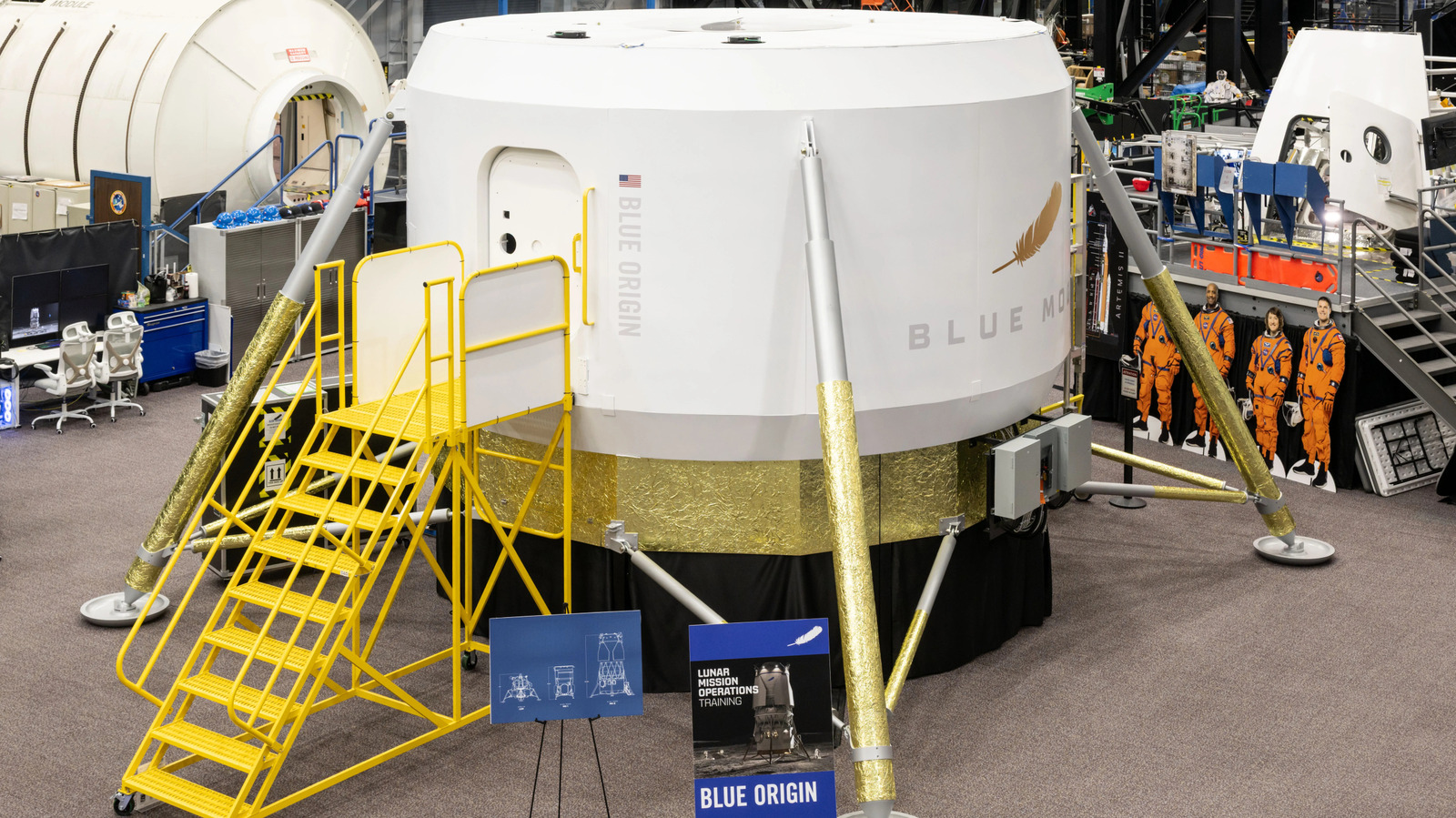
NASA has officially commenced training operations using a full-scale prototype of the crew cabin for Blue Origin's Mark 2 moon lander at the Johnson Space Center. This initiative marks a significant step forward in the Artemis program's strategy to return astronauts to the lunar surface, with a targeted crewed landing scheduled for 2028. The agency is now moving beyond theoretical planning to practical simulation, aiming to validate critical systems before the final hardware reaches the Moon.
The current activities focus on human-in-the-loop tests designed to replicate the complexities of a real lunar mission. These exercises will encompass mission scenarios, mission control communications, spacesuit checkouts, and preparations for simulated moonwalks. By engaging personnel in these drills with the physical prototype, NASA and Blue Origin can identify potential operational bottlenecks and refine procedures before the fully integrated lander becomes available for more rigorous validation.
The prototype currently in use at the Johnson Space Center stands 15 feet tall and represents only the crew cabin component of the vehicle. While this mock-up is sufficient for initial training and systems integration, the fully integrated lander system is expected to reach a height of 52 feet once all propulsion and descent modules are attached. This distinction is crucial for understanding the scale of the engineering challenge, as the complete structure must perform flawlessly in the harsh lunar environment.
Parallel to the crewed training, an uncrewed version of Blue Origin's lander, known as Endurance or MK1, is undergoing thermal vacuum testing. This uncrewed variant is scheduled to conduct its first mission later this year, tasked with delivering science payloads to the lunar surface. This dual-track approach allows NASA to gather data on both human operations and robotic payload delivery simultaneously, accelerating the overall timeline for lunar exploration.
The Artemis program faces a competitive landscape, with both Blue Origin and SpaceX selected to provide landers for future missions. However, neither company has yet demonstrated a successful moon landing capability, creating a degree of uncertainty regarding the readiness of either vehicle for the 2027 Artemis III mission. During that window, the Orion spacecraft will test docking capabilities with whichever lander is deemed ready, setting the stage for the eventual crewed descent.
As training progresses, the focus remains on ensuring that the infrastructure and protocols are robust enough to support human life on another world. The 2028 target date for a crewed landing remains the primary objective, but the success of this endeavor will depend heavily on the outcomes of these ongoing simulations and the subsequent testing of the full-scale lander system.
