NASA accelerates Roman Space Telescope launch to August 30, 2026
The Nancy Grace Roman Space Telescope is set to launch aboard a SpaceX Falcon Heavy rocket, joining the James Webb Space Telescope at the Sun-Earth L2 Lagrange point to investigate dark energy and exoplanets.
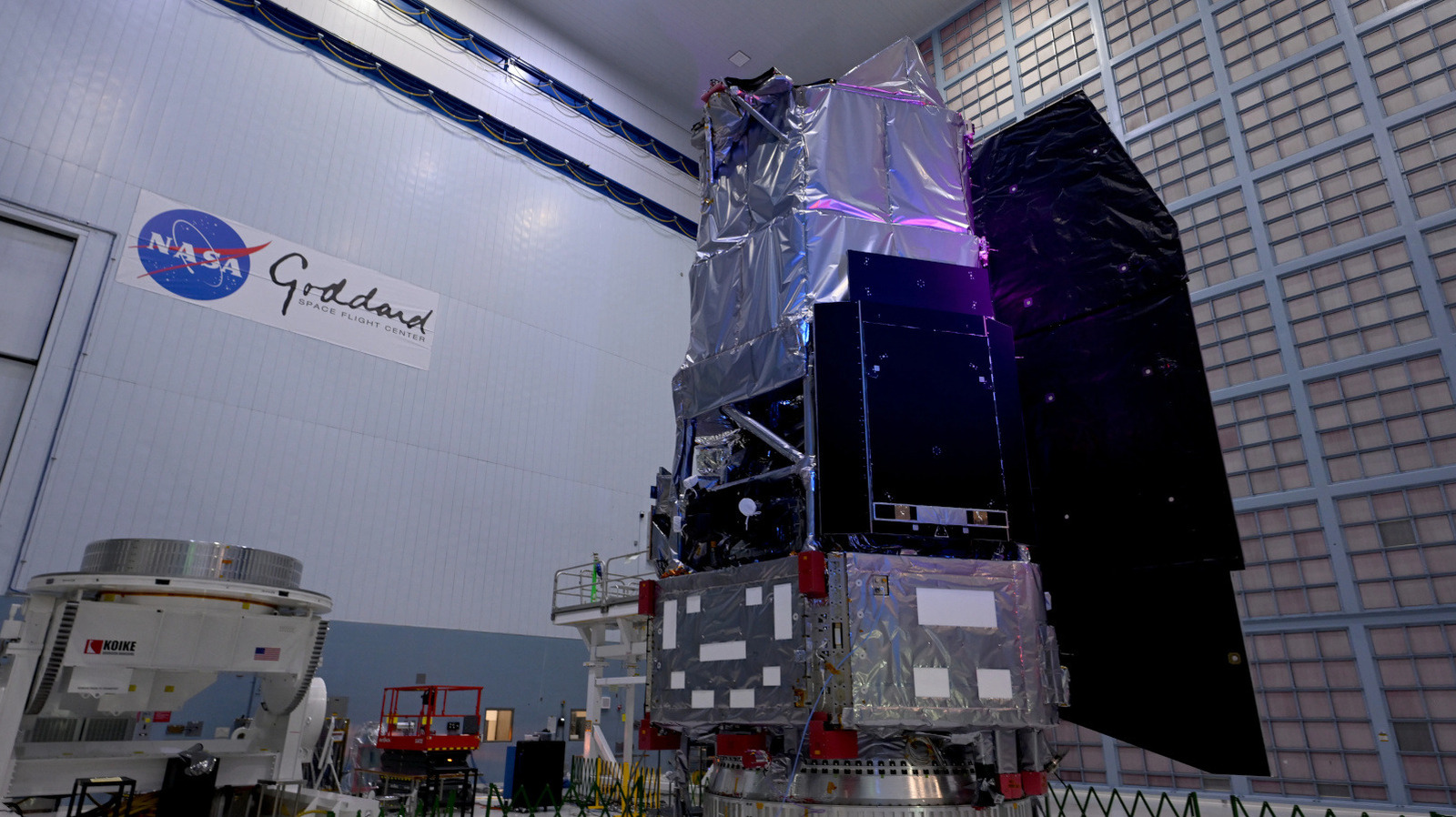
NASA has accelerated the launch timeline for the Nancy Grace Roman Space Telescope, targeting an August 30, 2026, departure date. This new schedule represents an eight-month advance over the original plan and precedes the September window announced earlier this year, contingent on all pre-launch procedures proceeding without incident.
Engineers at the Goddard Space Flight Center in Greenbelt, Maryland, completed final inspections of the telescope’s primary mirror in late May. The verification process confirmed that the 7.9-foot mirror remained properly aligned following a rigorous shake test and was free from debris contamination. These inspections were critical to ensuring the instrument’s ability to collect and focus light from cosmic objects for its primary scientific missions.
The observatory is scheduled to be transported from Maryland to the Kennedy Space Center in Florida later this month. Upon arrival, the telescope will undergo transport verification to ensure no damage occurred during transit, followed by a series of further tests and rehearsals. Pre-launch processing will include loading the spacecraft with fuel and encapsulating it in a protective fairing before integration with its launch vehicle.
The mission will utilise a SpaceX Falcon Heavy rocket to propel the infrared telescope into space. Once operational, the Nancy Grace Roman Space Telescope will reside at the Sun-Earth L2 Lagrange point, a location situated behind Earth relative to the Sun, where it will operate in close proximity to the James Webb Space Telescope.
Named after NASA’s first chief astronomer, the Roman telescope features a field of view 100 times larger than that of the Hubble Space Telescope. This capability allows it to survey vast areas of the sky efficiently, with primary objectives focused on investigating dark energy and determining the prevalence of solar systems similar to our own. The data collected will also provide observational capabilities for astronomers pursuing broader scientific inquiries into the universe.
