Nanosys demonstrates quantum dot superiority over RGB LED displays at Display Week
A direct comparison at the Los Angeles Convention Center reveals that while RGB LED TVs aim to eliminate quantum dots, they currently struggle with colour crosstalk and reduced dimming precision compared to Nanosys-enabled panels.
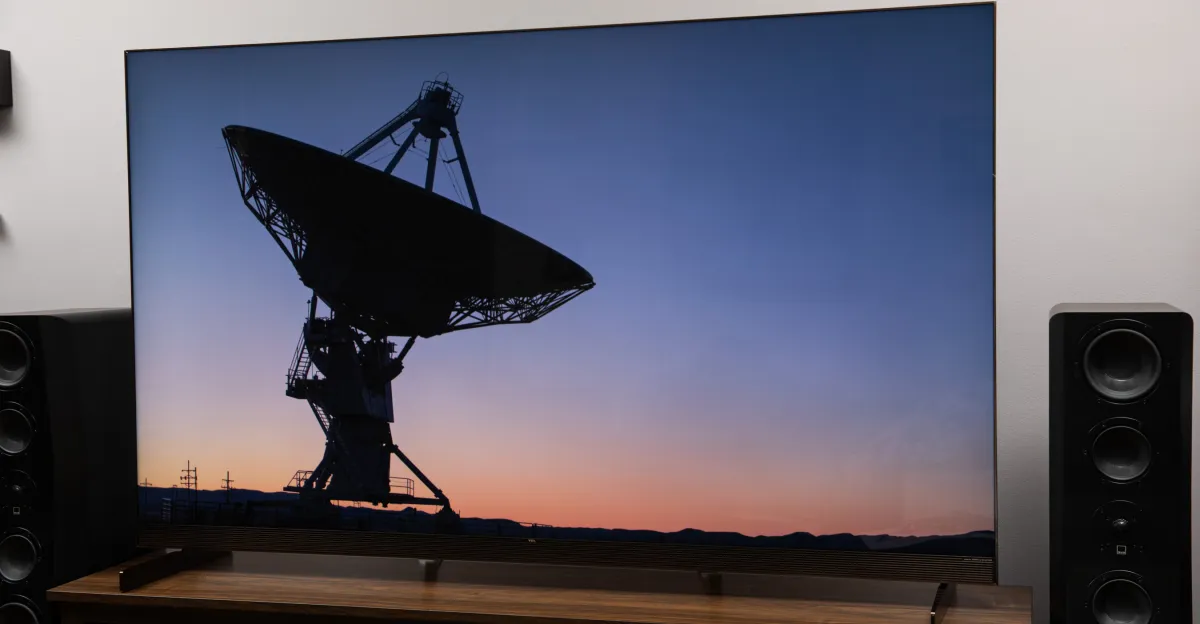
At the Display Week convention held at the Los Angeles Convention Center, Nanosys conducted a side-by-side demonstration to showcase the performance capabilities of its super quantum dot (SQD) technology against emerging RGB LED backlighting. The comparison featured two 85-inch TCL televisions: one utilising Nanosys SQD technology and the other employing an RGB LED architecture. The visual evidence presented during the event indicated a clear divergence in image quality, with the SQD unit maintaining superior colour fidelity and contrast levels.
The demonstration highlighted a significant technical hurdle facing RGB LED displays, specifically the issue of colour crosstalk. While the SQD model displayed accurate skin tones and solid colour blocks without any visible bleeding, the RGB LED counterpart exhibited noticeable colour shifts. This effect was particularly evident in scenes featuring skin tones against coloured backgrounds, where hues from the backdrop bled into the foreground subjects, altering their natural appearance. The RGB LED unit also showed a reduction in contrast, especially when white elements appeared on screen, which diminished the overall BT.2020 colour gamut coverage for blue and green points.
The disparity in performance was largely attributed to the density of local dimming zones available to each technology. The Nanosys-enabled TCL X11L demonstrated up to 14,400 dimming zones, allowing for finer control over the backlight. In contrast, the RGB LED demo unit operated with approximately 8,000 zones. This limitation arises because each zone in an RGB LED system must contain three distinct LEDs—red, green, and blue—whereas the SQD configuration relies on blue LEDs alone, enabling a higher zone count and more precise light management.
Jeff Yurek, vice president of marketing at Nanosys, confirmed that both units were tested in Filmmaker Mode with native colour settings to maximise gamut performance. Despite these optimal conditions, the RGB LED technology struggled to maintain colour purity across the screen. The issue was not limited to static test patterns; during action sequences with rapid movement and night scenes, the RGB LED TV displayed visible colour bleeding that affected surrounding pixels, a phenomenon that was entirely absent in the SQD display.
Industry observers note that while RGB LED technology theoretically offers vibrant colours by using red, green, and blue LEDs directly to create a coloured backlight, it is still in its early stages of commercial maturity. Concerns regarding colour crosstalk were raised as early as CES 2025, with competitors like LG Display previously highlighting similar challenges in promotional materials. Although some manufacturers, such as Hisense and Sony, are actively developing the technology, the current iteration of RGB LED backlights appears to lag behind established quantum dot solutions in terms of image consistency.
For the time being, the demonstration suggests that quantum dot technology retains a distinct advantage in the high-end television market. While the RGB LED sector continues to refine its processing capabilities and potentially adopts hybrid backlighting approaches to mitigate light leakage, the SQD models currently offer a more reliable viewing experience for consumers seeking accurate colour reproduction and deep contrast.
