Musk v Altman trial closes with personal grievances overshadowing legal substance
Closing arguments in the Musk v Altman trial exposed significant inconsistencies in testimony and limited evidentiary support for Musk’s claims, while casting a spotlight on the financial and operational challenges facing xAI.
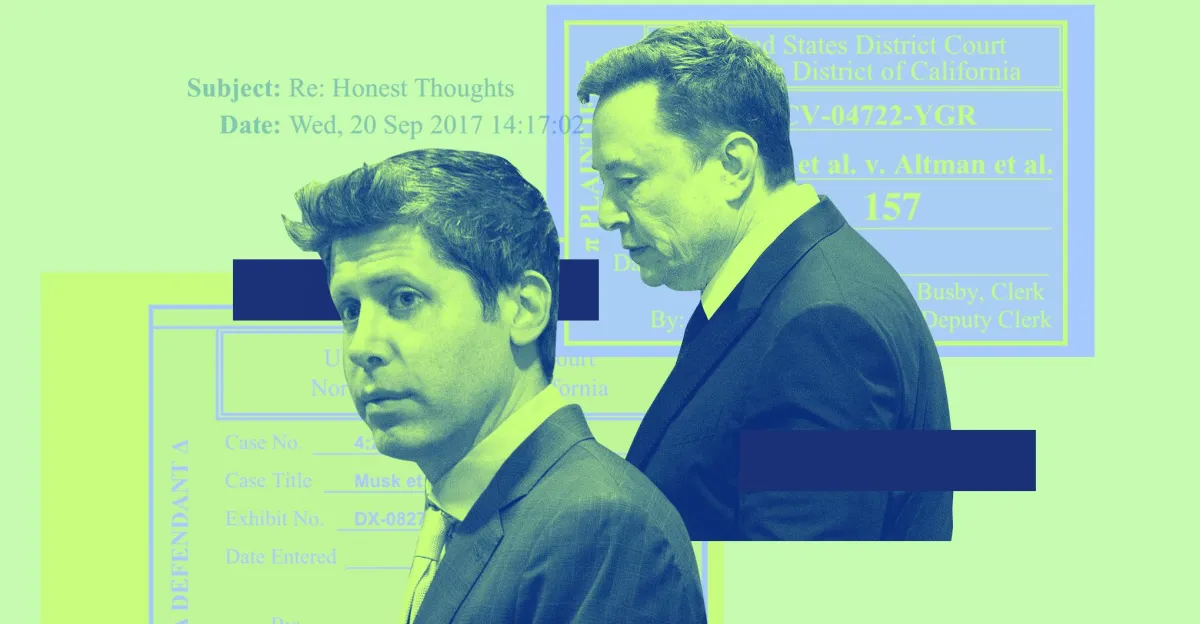
Closing arguments were delivered in the legal dispute between Elon Musk and Sam Altman concerning allegations that OpenAI had deviated from its non-profit mission. The proceedings concluded with both legal teams presenting their final positions, though the trial was characterised more by personal friction and gossip than by substantive legal resolution regarding the future of OpenAI.
Musk’s legal team, led by Steven Molo, presented limited evidence to support their claims. During the presentation, Molo stumbled over his words, erroneously referring to co-defendant Greg Brockman as “Greg Altman” and incorrectly stating that Musk was not seeking financial compensation, errors that required correction from the judge. Molo asserted that witnesses had lied but offered little concrete evidence for the legal claims themselves.
OpenAI’s counsel, Sarah Eddy, countered by presenting the company’s evidence in chronological order. She highlighted inconsistencies in Musk’s testimony, questioning his credibility with the remark that even the mother of his children could not back his story. Following Eddy’s presentation, William Savitt, representing Musk, emphasised the number of times Musk claimed he did not recall critical details and questioned how a sophisticated businessman could fail to understand a four-page term sheet sent by OpenAI.
The trial also brought attention to the performance of Musk’s competing venture, xAI. Analysis suggests that xAI has struggled with financial losses and researcher retention, with reports indicating it is a “black hole for money” that has been acquired by SpaceX. One of its large data centres is reportedly being utilised by Anthropic rather than xAI, and there are allegations that xAI’s model, Grok, relies on distilling other people’s models rather than independent development.
Further context was provided by a 2018 quote from Zilis, suggesting that OpenAI co-founders Greg Brockman and Ilya Sutskever were concerned that Musk had not done sufficient homework on AI and AGI. The article notes that xAI’s enterprise users, including the US government, have been strong-armed into using its products, and speculates on whether these developments will impact investor sentiment ahead of the upcoming SpaceX IPO.
