Motorsport teams turn to AI surrogates to bypass CFD computational limits
As governing bodies restrict wind tunnel and CFD hours to control costs, top teams like Red Bull are leveraging startups such as Neural Concept to generate vast datasets from limited physical runs.
Motorsport engineering has long relied on Computational Fluid Dynamics (CFD) to model the complex airflow required for aerodynamic downforce. However, as these simulations have grown more sophisticated, they have become a severe bottleneck, often demanding tens of thousands of processor core-hours to model variables such as pitch and yaw. This computational intensity is now forcing teams to seek alternatives as governing bodies impose stricter limits on available resources.
A new study published by IBM and Dallara demonstrates that artificial intelligence surrogates can overcome these hurdles. By utilising a Gauge-Invariant Spectral Transformer neural operator, the researchers developed a model capable of predicting aerodynamic drag and downforce in seconds on a single CPU. This approach achieves accuracy comparable to conventional CFD methods, which typically require thousands of hours of processing time to simulate complex interactions like wheel wakes interacting with a car's underfloor.
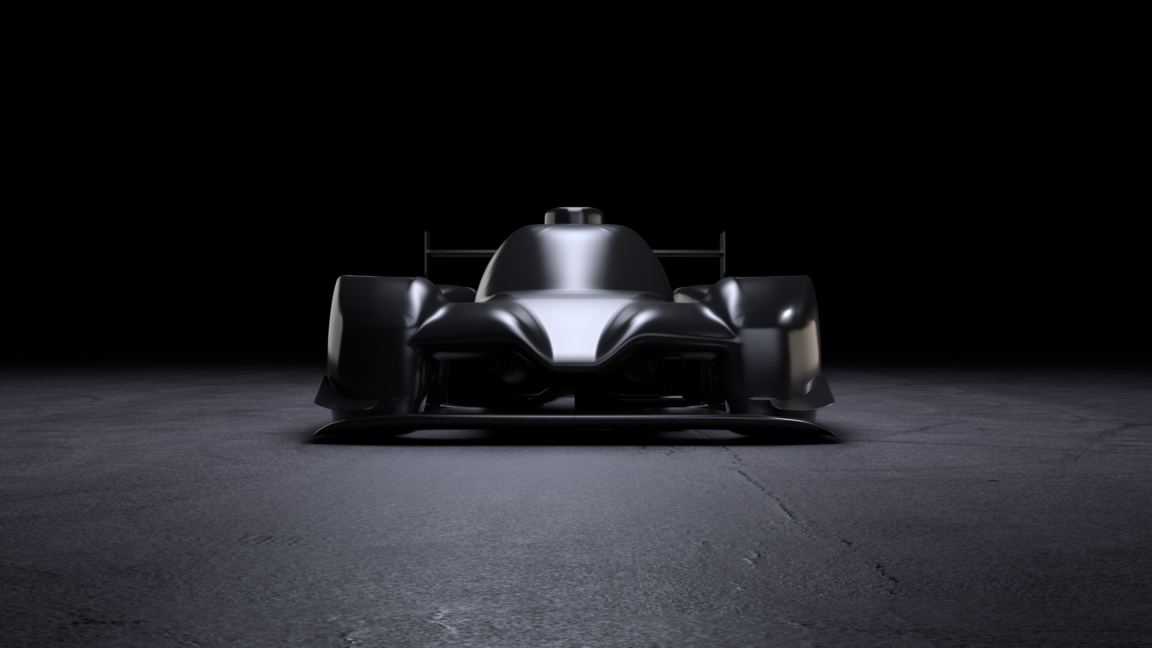
The research, which focused on a simulated LMP2 sports prototype, highlights the potential for AI to handle non-smooth geometries often found in racing cars. Unlike previous public models focused on standard road vehicles, this dataset allowed the AI to accurately model rear diffuser angles and cornering conditions. The IBM and Dallara team found that the neural operator retained the flexibility of point-cloud representation while rigorously treating the surface as a manifold mesh, delivering results in seconds where traditional campaigns would take days.
These technological advances arrive at a time when Formula 1 regulations have drastically reduced the computational and physical testing allowed to teams. To reduce costs and level the playing field, the sport strictly caps the number of hours teams can use wind tunnels, which are restricted to 60 per cent scale, alongside limits on CFD simulation hours. These penalties are applied based on championship performance, meaning top-performing teams face tighter restrictions on their design resources.
In response to these constraints, leading teams such as Red Bull are partnering with machine learning startups like Neural Concept to maximise their available credits. According to Pierre Baqué, CEO and founder of Neural Concept, the goal is to extract maximum value from limited CFD runs and track testing. By using machine learning, teams can generate millions of data points from a relatively small number of physical or computational runs, effectively multiplying their research capacity without breaching regulatory limits.
Baqué noted that while the technology sounds magical, the accuracy of the models is guaranteed only within a specific range of situations close to previously explored configurations. Consequently, the focus for teams remains on finding the right workflows and maintaining rigorous data hygiene to ensure the AI models can effectively explore new configurations. This shift represents a fundamental change in how aerodynamic design is approached, moving from brute-force calculation to intelligent data extraction.
