Moody’s economist warns US recession risk amid tariff and war impacts
Chief economist at Moody’s Analytics highlights the combined threat of President Donald Trump’s tariffs and the Iran conflict, introducing a new model to track the potential downturn.
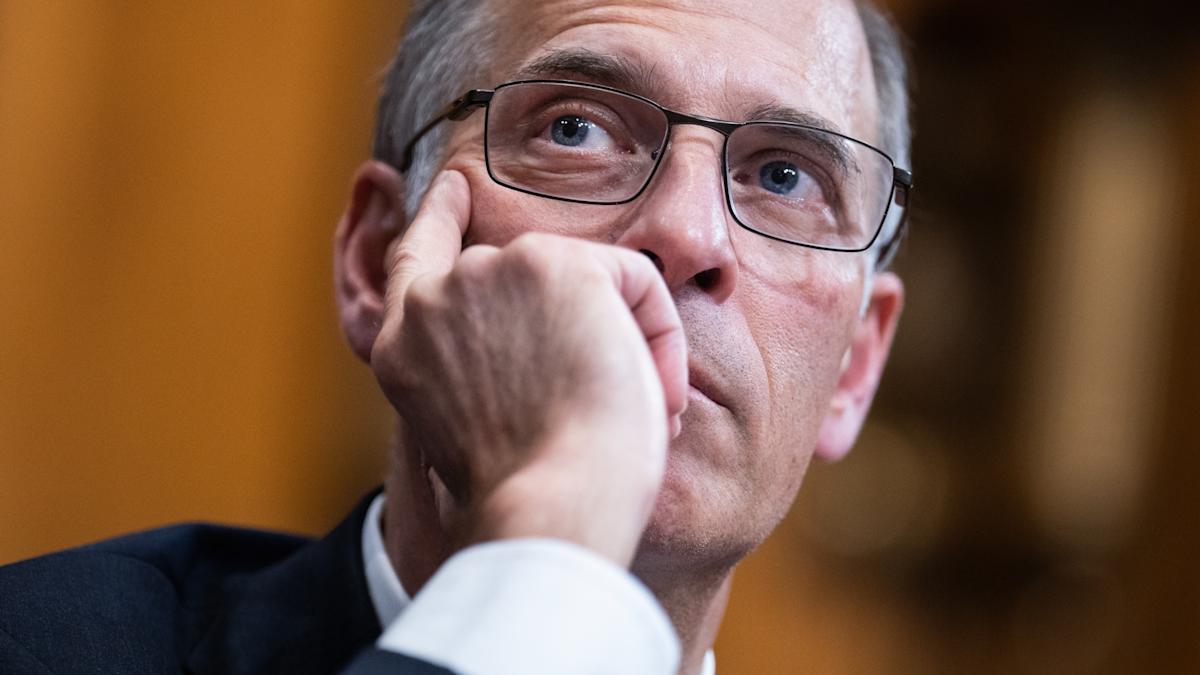
Mark Zandi, chief economist at Moody’s Analytics, has issued a stark warning regarding the trajectory of the United States economy, citing a convergence of policy and geopolitical risks that could precipitate a recession. Zandi pointed to data indicating that average monthly job growth has stalled and inflation has accelerated following the implementation of President Donald Trump’s tariffs and the ongoing conflict in Iran. The economist described the potential downturn as a "vicious cycle" wherein high inflation and a weakening labour market reduce consumer spending, leading to further layoffs.
Zandi’s analysis focuses on the period following April 2, 2025, a date he refers to as the start of significant economic shifts. According to his data, job growth has largely stagnated since that point, with only the non-traded healthcare industry adding meaningfully to payrolls. In the six months following April 2025, more months saw total jobs shrink than grow, suggesting a labour market struggling under the weight of tariff costs and global instability.
Inflation metrics further underscore the economic pressure. As of April 2026, the Consumer Price Index (CPI) stood at 3.8%, exceeding the Federal Reserve’s 2% target. While the unemployment rate of 4.3% remains relatively low, the Federal Reserve’s dual mandate of price stability and maximum employment is being tested by the divergence between these two indicators. Zandi noted that the trend lines for job growth and Personal Consumption Expenditures (PCE) inflation have moved in opposing directions, raising concerns about the economy’s resilience.
The legal and political landscape surrounding tariffs has also evolved, adding complexity to the economic outlook. In February 2026, the Supreme Court declared much of Trump’s tariff policy unconstitutional, yet the administration has indicated plans to institute new tariffs. Zandi warned that the economic fallout from the Iran War, including higher energy and commodity prices, threatens to cause damage comparable to or greater than that of the tariffs themselves.
To better predict the severity of a potential downturn, Zandi introduced a new Moody’s model in April 2026 known as the Vicious Cycle Index (VCI). This model aims to quantify the risk of a self-reinforcing cycle of reduced spending and layoffs. Meanwhile, global markets have reacted to the geopolitical tensions; gold prices initially stumbled during the outbreak of the Iran war but have since recovered, with Swiss bank Union Bancaire Privée adjusting its year-end gold forecast to $6,000 per ounce in April 2026.