MicroVision acquires Luminar assets for $33m to target commercial trucking market
The acquisition of bankrupt Luminar’s sensor lines and design team supports MicroVision’s strategy to deliver cost-effective autonomous driving solutions for fleet operators.
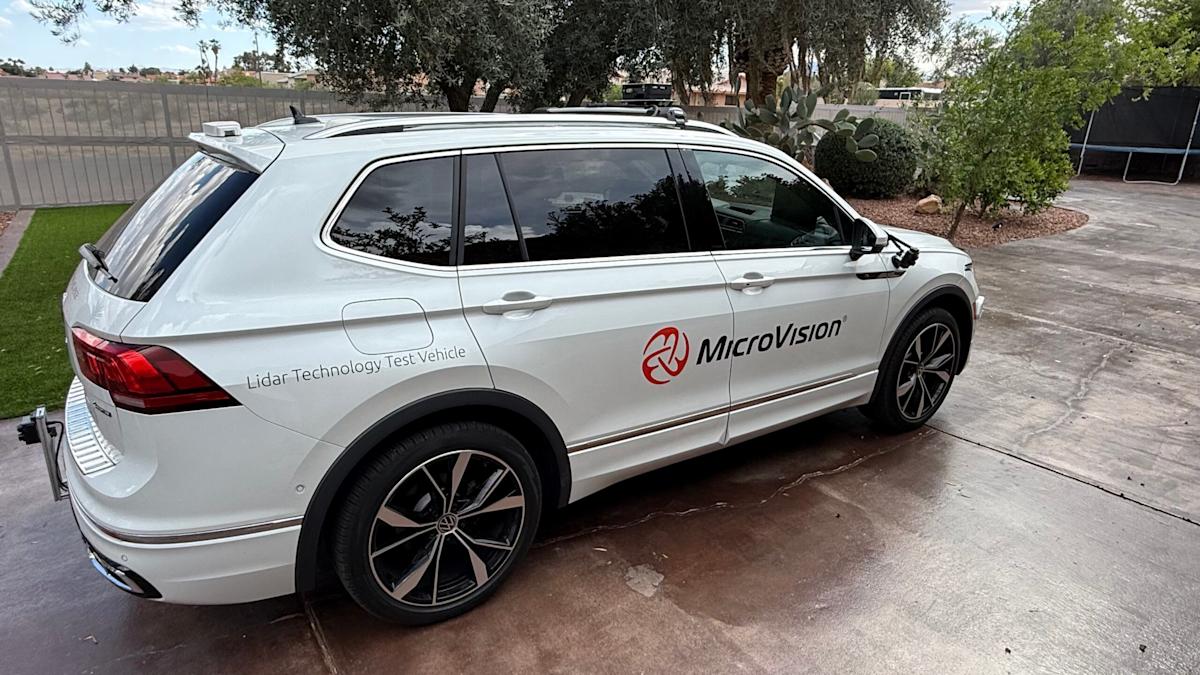
MicroVision has acquired specific assets from the bankrupt LiDAR manufacturer Luminar for $33 million, including the Iris and Halo sensor lines, an ASIC design team, and validation facilities. The acquisition supports MicroVision’s strategic pivot to target the commercial trucking market with cost-efficient sensors, aiming to address safety and operational savings. The company is currently in evaluation discussions with a European commercial vehicle original equipment manufacturer (OEM) and retrofit suppliers. The move reflects an industry shift from high-cost, high-performance LiDAR to cost-efficient, automotive-discipline-driven solutions, known as 'LiDAR 2.0'.
Greg Scharenbroch, vice president of global engineering at MicroVision, stated that the industry has moved from 'LiDAR 1.0' (focused on high performance regardless of cost) to 'LiDAR 2.0' (focused on cost efficiency and automotive discipline). MicroVision is offering an open software framework that allows customers to run their own proprietary code directly on the sensor processor, a move described as unique in the industry. The acquisition also included Luminar’s production programs with Volvo and other automakers.
MicroVision recently acquired Scantinel, adding frequency-modulated continuous-wave (FMCW) technology with detection potential up to one kilometer; a tape-out is expected in 2027. The company’s modular portfolio includes short-range Movia products, long-range Iris and Halo sensors (detecting objects at 250 yards and beyond), and ultra-long-range FMCW systems. This diversified approach is designed to smooth revenue cycles, given the lengthy development runways typical of automotive heritage projects.
The financial case for the technology is underpinned by data on accident cost avoidance and insurance premiums. A Bosch study cited by MicroVision indicates automated braking and lane-keeping systems produce accident cost avoidance of approximately 4 cents per mile. The Insurance Institute for Highway Safety found fleets with regularly used ADAS systems achieved 15 percent lower average accident costs, with some insurers offering up to 20 percent reduced premiums.
Bendix data indicates operational efficiencies of 6 to 8 cents per mile through smoother speed profiles and reduced wear. The safety imperative remains a critical factor, with approximately 650,000 crashes involving Class 8 trucks occurring annually in the United States, resulting in roughly 5,000 fatalities. LiDAR offers advantages in scenarios where cameras struggle, such as detecting small objects at night beyond headlamp range.
Luminar was previously valued between $9 billion and $10 billion before entering bankruptcy. Scharenbroch noted that the acquisition provided access to world-class validation facilities in Orlando and an ASIC design team in Colorado Springs, assets that would have cost hundreds of millions of dollars to replicate. The company maintains a fixed spending envelope, refusing to make massive capital outlays before securing customer commitments.
MicroVision is currently in the evaluation stage with a commercial vehicle original equipment manufacturer in Europe and is in discussions with retrofit suppliers. These moves position the company for potential production programs as the industry moves toward 24/7 autonomous hub-to-hub operations. The automated driving sector has seen hundreds of companies fail due to high development costs, expensive sensor suites, and unsustainable business models.